


With the end of parental leave fast approaching, many parents face the overwhelming stress of solo parenting or the “return-to-work blues.” For dual-income families without relatives nearby, a babysitter can be a vital lifeline. However, hiring someone for the first time often triggers intense anxiety. Parents naturally worry about leaving their child with a stranger, what might happen when care takes place out of sight, and the financial burden of it all.
Understanding proper safety standards, how to choose a provider, and practical tips for the first visit can help turn that anxiety into peace of mind. This article covers everything you need to know, from a “5-Point Safety Checklist” based on guidelines from Japan’s Ministry of Health, Labour and Welfare (MHLW), to pre-interview strategies and the latest ways to utilize financial subsidies, such as Tokyo’s support programs and corporate welfare coupons.
[Key Takeaways from This Article]
- Use the “5 Selection Criteria” to assess providers: Focus on (1) Qualifications, (2) Liability insurance, (3) Agency reliability, (4) Reviews, and (5) Compatibility. For first-timers, choosing a “dispatch-style” agency with thorough background checks and clear dispute protocols provides added security.
- Minimize anxiety with short, supervised sessions and a nanny cam: Rather than leaving your child alone for hours right away, start with a brief 1-to-2-hour session while you are at home. Using a nanny cam can also help ease your transition.
- Offset costs with the latest subsidy systems and corporate benefits: You can reduce out-of-pocket expenses by combining resources like the Children and Families Agency’s babysitter discount tickets, the Tokyo Metropolitan Government’s “Babysitter Use Support Project,” and corporate welfare coupons like Relo Club.
Table of Contents
Why Does Hiring a Babysitter Cause Anxiety? Common Worries and Hurdles
When using a babysitter for the first time, many parents hit a psychological wall. The guilt of leaving your child with someone else, combined with vigilance fueled by troubling news reports, are completely natural responses.
Understanding the Hesitation to Let a Stranger In
Fears like “Will my child cry or be treated roughly when I’m not around?” or “Will they judge the state of my home?” stem from uncertainty about the sitter’s background.
An effective way to reduce this anxiety is to choose a service based on official safety standards. By having clear standards in place, the whole process will feel much more manageable and trustworthy.
Dispatch vs. Matching Models: What First-Timers Need to Know
In Japan’s growing babysitter market, there are two main types of arrangement systems.
It is helpful to understand the difference before making your first booking.
- Matching Model (Platform-based): Parents contract directly with a sitter through a dedicated app or website. This offers the freedom to choose your sitter and is generally more affordable, but it may be less clear who is responsible if something goes wrong.
- Dispatch Model (Agency-based): The operating company directly employs or partners with sitters and sends them to homes. While slightly more expensive, these agencies offer a structured management system, including mandatory background checks, interviews, training, corporate dispute resolution, and liability insurance.
For families who prioritize safety and want comprehensive backup support, a management-focused “dispatch” service is often a very sensible choice.


[Definitive Guide] The 5-Point Safety Checklist for Choosing a Babysitter

1. Qualifications and Education: Check for National Certification
While Japanese law allows uncertified individuals to work as babysitters, families seeking extra peace of mind can choose a service that allows you to request holders of national qualifications, such as a certified childcare worker (Hoikushi) or kindergarten teacher.
These professionals possess the expertise to provide developmentally appropriate play, ensuring interactions are grounded in specialized knowledge.
2. Insurance Coverage and Agency Reliability
It is essential to verify whether the agency or the sitter holds liability insurance in case your child is injured or property is damaged during care.
Additionally, the strictness of the hiring process and the availability of a coordinator to mediate disputes are strong indicators of an agency’s reliability.
3. Pre-Interviews and Compatibility Checks
Always confirm whether a pre-interview (online or in-person) is required before the first session.
Evaluating the sitter’s responsiveness and observing how they initially interact with your child helps you identify any immediate concerns, which is a highly effective preventative measure.
4. Transparent Reporting During Care
Check if the service provides frequent updates on your child’s well-being through photos or detailed care reports.
It is also vital that they have established communication protocols for sudden illnesses and clear procedures for medical emergencies.
(Source: “Points to Note When Using Babysitters,” MHLW | Children and Families Agency)
5. Assessing True Character Through Reviews
Feedback from actual users is a valuable resource for understanding a sitter’s character and the quality of their service.
Look beyond basic ratings and check exactly what is being praised—such as punctuality, skill in handling children, or the thoroughness of their reporting.
Minimizing Anxiety: Actionable Steps for a Successful First Visit
Even after selecting a solid service, the actual day of the booking is bound to be nerve-wracking. Here are steps to ensure your first experience is as stress-free as possible.
Steps 1 & 2: Start with Short Sessions While Working from Home
Rather than immediately leaving your child for a full day, start with a brief 1-to-2-hour session while you are working from home. Working in a separate room allows you to listen through the wall to monitor how the sitter engages with your child, which significantly eases the anxiety of handing over care.
Step 3: Gain Physical Peace of Mind with Nanny Cams and Smart Locks
To practically ease concerns about what happens out of sight, a growing number of families are installing nanny cams in living areas. Informing the sitter in advance that “cameras are installed for security and safety purposes” maintains transparency for both parties. Additionally, using a smart lock eliminates the anxiety surrounding key handovers and unauthorized duplication.
Easing Anxiety with Providers like Mammy’s Service
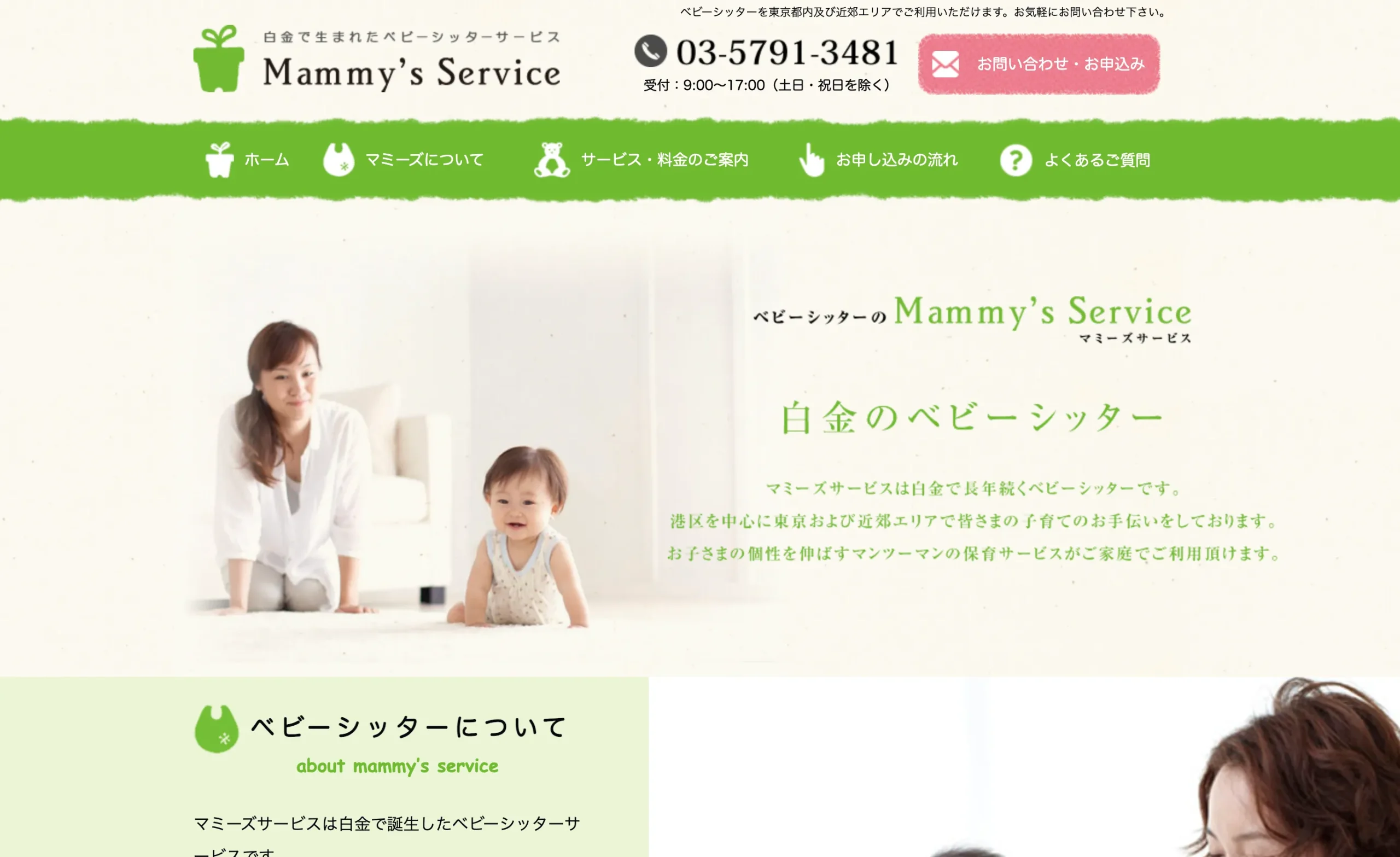
For example, “Mammy’s Service,” originating in Tokyo’s Shirokane district, is a dispatch-style agency frequently used by dual-income families with children ranging from newborns to 10-year-olds.
With its structured hiring standards, staff training, and support from dedicated coordinators, it helps reduce the uncertainty many first-time users feel, allowing parents to hand over care with greater confidence.

Alleviating Financial Worries: Smart Ways to Use 2026 Subsidy Systems
The financial concern of wanting a safe service but balking at the cost can be mitigated by smartly utilizing government systems and corporate welfare benefits.
The Cabinet Office Babysitter Discount Tickets and Tokyo’s Support Project
The “Babysitter Dispatch Business Discount Ticket” overseen by the Children and Families Agency is a useful system for employees of eligible companies. As of March 2026, it provides a discount of up to two tickets (2,200 yen per ticket) per use, per eligible child.
(Source: “Babysitter Dispatch Business Discount Ticket,” All Japan Childcare Services Association)
Furthermore, local municipalities offer independent subsidies, such as the Tokyo Metropolitan Government’s “Babysitter Use Support Project.” Programs are tailored to specific needs, including a “business collaboration model” for children on daycare waiting lists, and “temporary childcare support” that can even be used when parents just need a break (*subsidy amounts and conditions vary by municipality).
By utilizing these programs, out-of-pocket expenses can be significantly reduced.
Combining Subsidies with Corporate Welfare Coupons (e.g., Relo Club)
Corporate welfare services implemented by your employer (such as Relo Club’s “Fukuri Kousei Club” or “Benefit Station”) often provide discount coupons for babysitting services.
Confirm in advance whether your chosen agency is a “certified provider” for these coupons and if they can be combined with other subsidies to maximize your savings.
Conclusion: Step Forward with Clear Criteria for a Happier Parenting Journey
The psychological hurdles of hiring a first-time babysitter are much easier to overcome when you rely on objective selection criteria and implement practical first-visit measures, like short sessions and nanny cams.
Relying on a babysitter does not mean “taking the easy way out,” nor does it indicate a lack of love. It is simply a tool to help parents regain their physical and mental bandwidth so that the entire family can thrive. By maximizing the available subsidy systems and finding a reliable childcare partner, you can discover a sitter that fits your family’s needs and adds a vital layer of support to your parenting journey.


