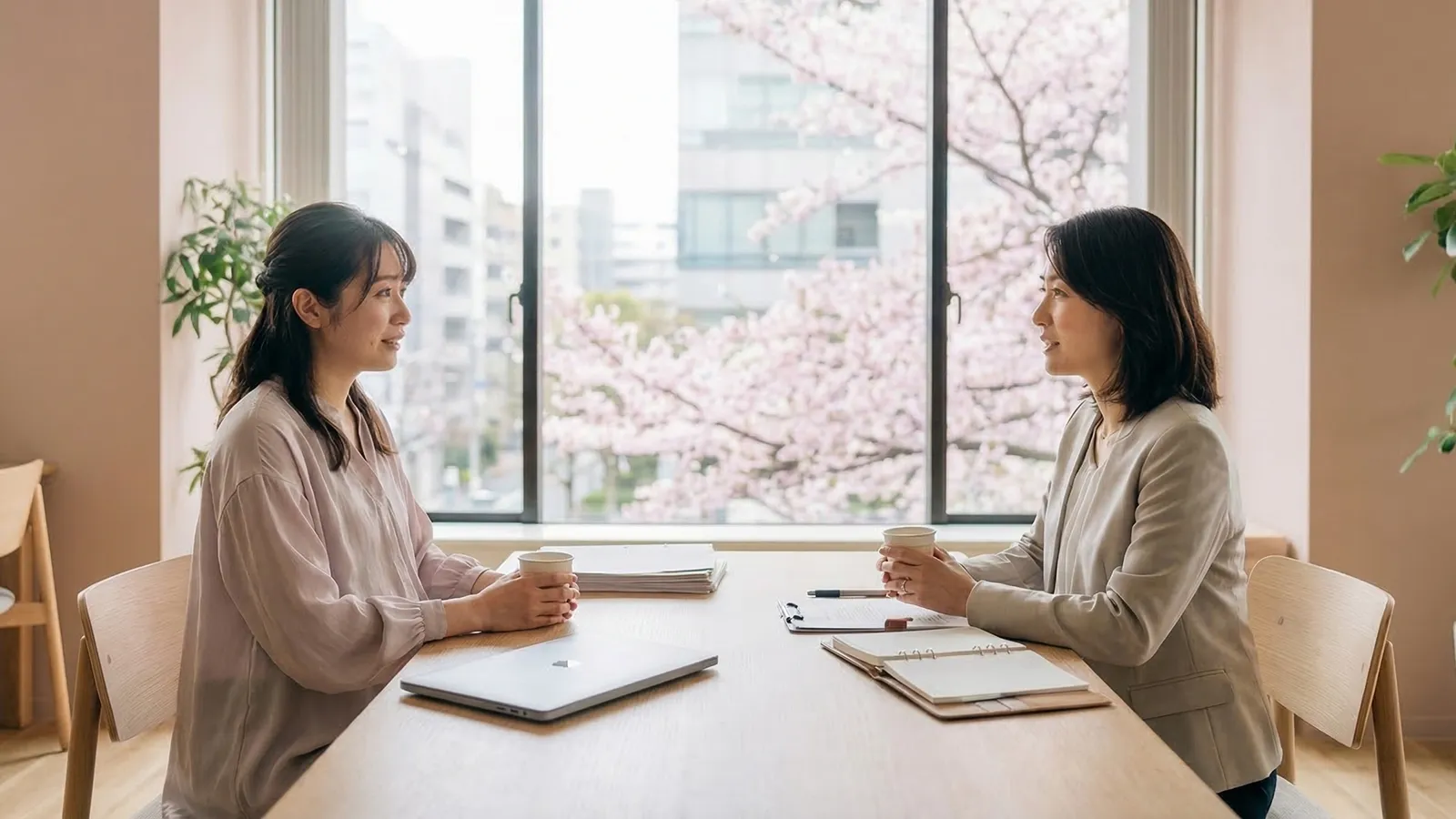
Getting a rejection notice in the mail — that moment when your mind goes completely blank. Many parents in Japan know exactly what that feels like. After months of preparing for an April return to work, the disappointment hits hard.
But there are real next steps available, even after a rejection. Secondary application rounds, unlicensed childcare facilities, temporary nursery services, babysitter subsidies, parental leave extension — knowing which options exist, and in what order to pursue them, can help you move from that initial shock to a concrete plan.
This guide pulls together everything you need to do between receiving your rejection notice and returning to work. Where practices vary by municipality, we say so clearly. The goal throughout is simple: help you understand what to do next.
Table of Contents
The First 72 Hours After a Daycare Rejection: What to Do

The most important thing after receiving a rejection notice is to start moving — quickly. Secondary application windows vary by municipality, but in some areas they close within days of the first-round results being released. Use the first few days to review your notice, check your local government’s official website, and map out your next steps.
Unlicensed childcare facilities also tend to get flooded with inquiries right after first-round results come out. Waiting until you have secondary round results before looking into alternatives means arriving late. Running multiple options in parallel from the start gives you far more to work with.
Keep Your Rejection Notice Safe
The first practical task is straightforward but important: store your rejection notice somewhere you can find it. It will come up repeatedly in the weeks ahead.
The official rejection notice — called a 不承諾通知 (fuishōdaku tsūchi), an 入所保留通知書 (nyūsho horyu tsūchisho), or a similar name depending on your municipality — is required for extending childcare leave benefits, reapplying in secondary rounds, and exploring regional spots at employer-sponsored nurseries. Under the updated procedures that took effect in April 2025, this document is the starting point for the parental leave extension process. If you receive multiple copies, keep all of them together.
Check Whether Your Municipality Runs a Secondary Application Round
Secondary application rounds are not a national system — how they work varies significantly from one municipality to the next.
- Some municipalities automatically carry first-round applicants forward into the secondary selection process
- Others require you to submit a new application
- Some do not run a secondary round at all
Check the guidance enclosed with your rejection notice first. If the information is unclear, call your municipality’s childcare placement office directly. The most common mistake here is assuming you are automatically reconsidered when in fact a new application is required.
Start Looking Into Unlicensed Facilities, Temporary Care, and Babysitter Subsidies at the Same Time
While you are waiting on secondary round results, begin gathering information on unlicensed (認可外, ninkagai) childcare facilities, temporary nursery services, and babysitter subsidy programs in parallel.
There is no guarantee of a secondary round offer. And even if one comes through, there may be very little lead time before the placement begins. The approach of “wait for secondary results, then start looking” significantly narrows your options. Unlicensed facilities and temporary care services are easier to assess — and easier to secure a spot at — the earlier you reach out.
The sections below walk through each of these options in detail. Take them one at a time.
How to Reapply in the Secondary (and Third) Application Rounds
A first-round rejection does not close the door on a licensed daycare placement. Secondary rounds exist to fill spots that open up after first-round applicants decline offers or when capacity adjustments are made. The range of available facilities is narrower than in the first round, but it is worth pursuing.
What Secondary Rounds Are — and How They Differ From the First Round
The first application round is a large-scale simultaneous selection process covering most licensed facilities for the following April intake. Secondary rounds are smaller, targeted at specific vacancies that emerged after that first selection. The number of available facilities and spots is considerably more limited.
Timelines vary by municipality. Check the notice enclosed with your rejection letter and your municipality’s official website for specific dates — and act quickly once you have them.
Whether first-round applicants are automatically reconsidered or need to reapply, and whether you can change your facility preferences at this stage, also depends on your municipality. If you want to update your preferred facilities, ask the childcare placement office whether that is possible during the secondary round.
Broadening Your List of Preferred Facilities
The secondary round is a reasonable moment to revisit which facilities you are applying to. A few angles worth considering:
- Facilities along your commute route: These tend to be more workable in practice — they make the daily logistics of drop-off and pick-up easier to sustain
- Less central locations: Popular facilities near major stations attract heavy competition. Facilities that are slightly less conveniently located sometimes have more availability
- Facilities where a sibling is already enrolled: Some municipalities apply additional weighting to applications from families with an older child already attending the same facility
- Small-scale nurseries (小規模保育, shōkibo hoiku, for ages 0–2): These are a recognized subcategory of licensed childcare under Japan’s regional childcare framework. Including them can meaningfully expand your options
Holding strong preferences is reasonable, but widening the geographic and facility-type range of your application increases the likelihood of a placement.
Third Rounds and Mid-Year Placements Are Also Worth Pursuing
Limiting yourself strictly to April entry can close off options unnecessarily. Some municipalities run a third application round. Others operate on a rolling monthly vacancy basis — what is sometimes called 随時募集 (zuiji boshū), or ongoing recruitment. Depending on the municipality, you may need to reapply each month, or a single application may keep you in consideration automatically.
May and June placements do happen. If the secondary round does not result in an offer, ask your municipality’s childcare office how to stay in the running for mid-year vacancies — and keep that application active.
Unlicensed Facilities, Employer-Sponsored Nurseries, and Temporary Childcare
When a licensed daycare (認可保育園, ninka hoikuen) placement is not available, there are other regulated options worth considering. It is important not to assume that “unlicensed” automatically means lower quality. In Japan, the term 認可外 (ninkagai) simply means a facility operates outside the standard licensed daycare framework — many are required to notify local authorities and are subject to periodic inspections. What matters is understanding how each type of facility is structured, and choosing based on your family’s actual situation.
Unlicensed Childcare Facilities: A Bridge Option or a Long-Term Choice

Unlicensed childcare facilities (認可外保育施設, ninkagai hoiku shisetsu) are facilities that either do not meet the national licensing criteria or have not applied for licensed status. They vary considerably in how they accept children, what hours they offer, and what kind of care environment they provide. For some families, they serve as a temporary arrangement while waiting for a licensed daycare placement; for others, the flexibility they offer makes them a preferred long-term option. Availability can change quickly, so it is worth contacting facilities you are interested in sooner rather than later.
Fee structures at unlicensed facilities are set by each individual facility, which means pricing varies widely. The actual cost to your family will depend on the specific facility and your circumstances — comparing multiple facilities directly is the most reliable approach.
To be eligible for Japan’s free early childhood education and care subsidy system (幼児教育・保育の無償化), the facility must have filed the required notification with the relevant prefectural or municipal authority, and the parent must hold a childcare necessity certification (保育の必要性の認定). Confirm eligibility with both the facility and your municipality before enrolling.
Employer-Sponsored Nurseries: Community Spots May Be Available

The Employer-Sponsored Nursery Program (企業主導型保育事業, kigyō shudōgata hoiku jigyō) is a Cabinet Office initiative that provides subsidies to companies that set up and operate their own nursery facilities. These are classified as unlicensed facilities, but they receive public funding. While they are primarily intended for employees’ children, some facilities reserve a portion of their capacity — called 地域枠 (chiiki waku), or community spots — for children from the general public.
Whether a given facility has community spots, and whether any are currently available, differs by facility. Search the official portal and contact facilities directly to check.
(Reference: Employer-Sponsored Nursery Program Portal | Cabinet Office)
Temporary Childcare Services: Useful for Specific Days and Transition Periods

Municipal temporary childcare services (一時預かり事業, ichiji azukari jigyō) allow parents to leave children at licensed nurseries or certified children’s centers on a short-term basis. They are used for things like unexpected errands, job interviews, or easing a child into group childcare before a permanent placement begins.
These services are not designed for daily full-time working arrangements, but they work well as a supplement — using them alongside an unlicensed facility for specific days, for instance, or for one-off occasions like appointments. Fees and booking conditions vary by municipality and facility. Check your local government’s website under 一時預かり or 一時保育 for details.
Unlicensed Facilities and Small-Scale Nurseries Are Not the Same Thing
The terms “unlicensed childcare facility” (認可外保育施設) and “small-scale nursery” (小規模保育事業所) are frequently confused, but they fall under entirely different regulatory categories.
| Type | Regulatory Status | Age Range | Fees |
|---|---|---|---|
| Small-Scale Nursery (小規模保育事業所) | Licensed (a subcategory of regional childcare) | Ages 0–2 (standard) | Set by municipality; eligible for fee subsidy program |
| Unlicensed Childcare Facility (認可外保育施設) | Unlicensed (notification-based) | Varies by facility | Set by facility; conditionally eligible for fee subsidy |
Small-scale nurseries go through the same municipal application and selection process as standard licensed daycare centers. Unlicensed facilities each set their own terms around fees, hours, and care content. When you are researching a specific facility, the first thing to clarify is whether it is licensed or unlicensed — everything else follows from that distinction.
Babysitter Subsidies, FamiSapo, and the Universal Nursery Access Program
Beyond nursery-based care, there are additional support structures that can help families cover the period before a licensed daycare placement comes through. Municipal subsidy programs, community-based mutual aid, and a newer national childcare program can each play a role depending on your situation.
Check Whether Your Municipality Offers a Babysitter Subsidy

Babysitter services in Japan carry a reputation for being expensive, but municipal subsidy programs can substantially reduce the out-of-pocket cost for eligible families.
The most well-known example is the Tokyo Metropolitan Babysitter Utilization Support Program (東京都ベビーシッター利用支援事業). For families who meet the eligibility criteria and use a designated provider, the subsidy can cover up to ¥2,500 per hour (up to ¥3,500 per hour for early morning and evening slots). Most wards and cities in Tokyo participate, but eligibility conditions and implementation details vary by municipality. Contact your local child-rearing support office (子育て支援窓口) to confirm what is available where you live.
Separately, some employers offer access to the Employer-Supported Babysitter Discount Voucher Program (企業主導型ベビーシッター利用者支援事業), a national scheme that provides discounted rates for babysitter services through authorized providers. Check with your company’s HR department or the Japan Babysitting Service Association for details.
(Reference: Work-Life Balance Support Programs | Children and Families Agency)
Receiving any subsidy typically requires registering with the municipal program in advance and confirming that the babysitter or agency is a designated provider. Verify this before booking. Eligibility and procedures may vary depending on your municipality, employer, and household situation — check with your local child-rearing support office for the most current requirements.
FamiSapo: A Community-Based Supplement
Japan’s Family Support Center program — commonly called FamiSapo (ファミサポ) — is a municipal mutual-aid scheme in which community members help each other with child drop-off and pick-up, and short-duration childcare. It is not professional childcare, but it functions as a practical supplement in situations where nursery or formal babysitter options are not available.
To use the service, you need to register in advance as a “requesting member” (依頼会員). Fees and conditions are set by each municipality. FamiSapo works particularly well for covering drop-off at times that regular childcare arrangements do not reach, or for short-notice care needs.
(Reference: Family Support Center Program | Children and Families Agency)
The Universal Nursery Access Program: A New Option Coming into Effect

Japan’s “Everyone Can Attend Nursery” program (こども誰でも通園制度, kodomo dare demo tsūen seido — sometimes referred to in English as the Universal Nursery Access Program) is a new national initiative that allows children aged 6 months to under 3 years to use nursery facilities regardless of whether their parents are employed. The aim is to give all young children access to group childcare environments, and to reduce parental isolation.
The program is being introduced in stages. Some municipalities are already running pilot programs, with a broader national rollout planned for fiscal 2026. The standard usage limit is 10 hours per month at a rate of ¥300 per hour. Check with your municipality to find out whether a pilot is already running in your area.
(Reference: Universal Nursery Access Program | Children and Families Agency)
The monthly cap means this program is not a substitute for full-time childcare coverage after a daycare rejection. However, it offers a meaningful entry point into group childcare and a connection to the support networks that nurseries provide.
Safety Checks Before Using Any Unlicensed Facility or Babysitter
Whatever childcare arrangement you are considering, verifying safety and suitability before committing is essential. Cost and convenience matter, but they come after this step.
What to Check at an Unlicensed Childcare Facility
When evaluating an unlicensed childcare facility, look into the following:
- Whether the facility has filed a notification with the prefectural or municipal authority: Facilities above a certain size are legally required to notify the relevant authority. Facilities that have done so are subject to periodic on-site inspections and a degree of ongoing oversight. You can confirm this with the facility directly, or by consulting the list of notified unlicensed facilities published by your prefecture or municipality.
- Whether you can visit in person: Bring your child and observe the environment — cleanliness, how staff interact with children, and the general atmosphere. This cannot be replaced by an online review.
- Staffing and qualifications: Unlicensed facilities are not held to the same staffing ratios and qualification requirements as licensed daycare centers. Ask about the proportion of qualified childcare workers on staff and what ongoing training they receive.
- Emergency and accident procedures: Ask how the facility contacts parents in an emergency, what arrangements exist for hospital transport, and whether the facility carries appropriate insurance.
- Hours and extended care: Confirm that the facility’s available hours match what you actually need.
What to Check When Using a Babysitter
The Children and Families Agency (こども家庭庁, CFA) outlines the following key checks for first-time babysitter users:
- Request a pre-service meeting: Arrange for your child and the babysitter to meet before any booking begins. Use this to assess how they interact with your child and how easily you can communicate with each other.
- Verify identity and contact details: Confirm the agency or individual’s name, address, and contact information. If you are using a matching platform, check what identity verification steps the platform carries out on its sitters.
- Insurance coverage: Confirm that the babysitter or agency holds liability insurance that would cover incidents during a session.
- Emergency contact arrangements and session reports: Establish in advance who to call in an emergency, and ask whether a written or digital report is provided after each session.
(Reference: Points to Note When Using Babysitter Services | Children and Families Agency)
For a more detailed introduction to using babysitters in Japan for the first time, see TamagoDaruma’s First-Time Babysitter Guide.
Subsidy Eligibility Depends on Whether the Provider Is Registered
Choosing a facility or service based on cost alone can create problems when it comes to subsidy eligibility. Municipal subsidies and fee reduction programs are generally only available for facilities and providers that are officially registered or designated by the relevant authority. A facility may have excellent reviews but still fall outside the scope of available subsidies. Before committing to any provider, check your municipality’s list of confirmed facilities (確認施設) and designated subsidy providers. Your local childcare support office can usually walk you through which subsidies apply and which providers are registered.
Parental Leave Extension and Return-to-Work Planning
When daycare falls through, extending parental leave is often the first thing parents think about. In Japan, parental leave can generally be extended up to the day before a child turns two, and childcare leave benefit payments (育児休業給付金, ikuji kyūgyō kyūfukin) can be extended for the same period — though eligibility depends on employment status and other conditions. However, the application procedure changed in April 2025 — if you are working from older information, stop and verify the current process before taking any steps.
The Parental Leave Extension Procedure Changed in April 2025
Previously, submitting the municipal rejection notice was the central requirement for extending childcare leave benefits. From April 2025, the procedure has been revised.
Key documents for the extension application
- Declaration form for certifying the grounds for extending the childcare leave benefit payment period (厚生労働省 prescribed form)
- A copy of your childcare facility application submitted to the municipality
- The municipal notice confirming that placement was not available (your rejection or holding notice)
This revision was introduced to prevent situations where parents deliberately applied only to facilities with very low acceptance rates in order to obtain an extension. The updated rules apply to parents whose child reaches age one or age one-and-a-half on or after April 1, 2025.
(Reference: Childcare Leave Benefit Extension Procedure | Ministry of Health, Labour and Welfare)
Note that applying only to unlicensed facilities does not qualify you for an extension. The extension requires that you have applied to licensed facilities (認可保育所等). Additionally, if your application does not include facilities within a reasonable distance from your home, the extension may not be approved. Confirm the full requirements with your company’s HR department or your nearest Hello Work (ハローワーク) — Japan’s public employment service office. This article is intended as a practical overview and is not a substitute for official guidance.
The Choice Is Not Just “Extend or Return”
The decision often gets framed as a binary — extend leave or return on the original schedule — but the practical range of options is wider than that.
Some parents start a phased return to work using reduced working hours (短時間勤務制度) while using an unlicensed facility to cover childcare. Others use a combination of remote work arrangements and temporary nursery services to manage the settling-in period. In some families, one partner transfers the remaining parental leave to the other to extend the total period of coverage.
Extending leave is an option available to eligible employees under Japanese law, but it carries real implications for household income and career continuity that are worth thinking through carefully as a family. Gradually building up to a return to work — using unlicensed facilities or temporary care during the parental leave period — can sometimes reduce the pressure of the transition.
What to Tell Your Employer
Once you have received a rejection notice, inform your direct manager and HR department as early as possible. Even if your return date is still unclear, early communication gives the company time to plan — which is better for everyone.
The basic points to convey are:
- That you were not offered a place in the first round of licensed daycare applications
- That you are continuing to apply through the secondary round
- That you are also looking into unlicensed facilities and temporary care options in parallel
- That you will follow up with a specific return date once the situation becomes clearer
Once you have a firmer timeline, follow up with a concrete proposed return date. If you need help thinking through how to word that conversation or message, the related articles on TamagoDaruma cover this in more detail.
What to Read Next on TamagoDaruma
This guide has covered the main actions available after a daycare rejection in Japan — both the procedural steps and the broader range of childcare options. Below are related articles that go deeper on specific topics.
For More on Tokyo’s Babysitter Subsidy Program
A detailed breakdown of the Tokyo Metropolitan Babysitter Utilization Support Program — including which wards and cities participate, how to apply, and how to confirm whether your provider is designated — is covered in a separate article.




Summary
In the immediate aftermath of a rejection notice, it can feel like the options have run out. But working through the available systems one by one, it becomes clear that there is more room to maneuver than it first appears.
Check secondary round timelines right away, and start looking into unlicensed facilities and temporary care at the same time — not after. Factor in subsidy eligibility when evaluating babysitter options. Each of these tools has a different fit and different limitations, and using them in combination gives you the most flexibility.
The parental leave extension procedure changed in April 2025. Do not act on older information. Confirm the current steps directly with Hello Work or your company’s HR department before submitting anything.
TamagoDaruma’s goal is to be a practical resource for parents at exactly the moments when things feel most uncertain. We hope this page helps you take a clear next step.