


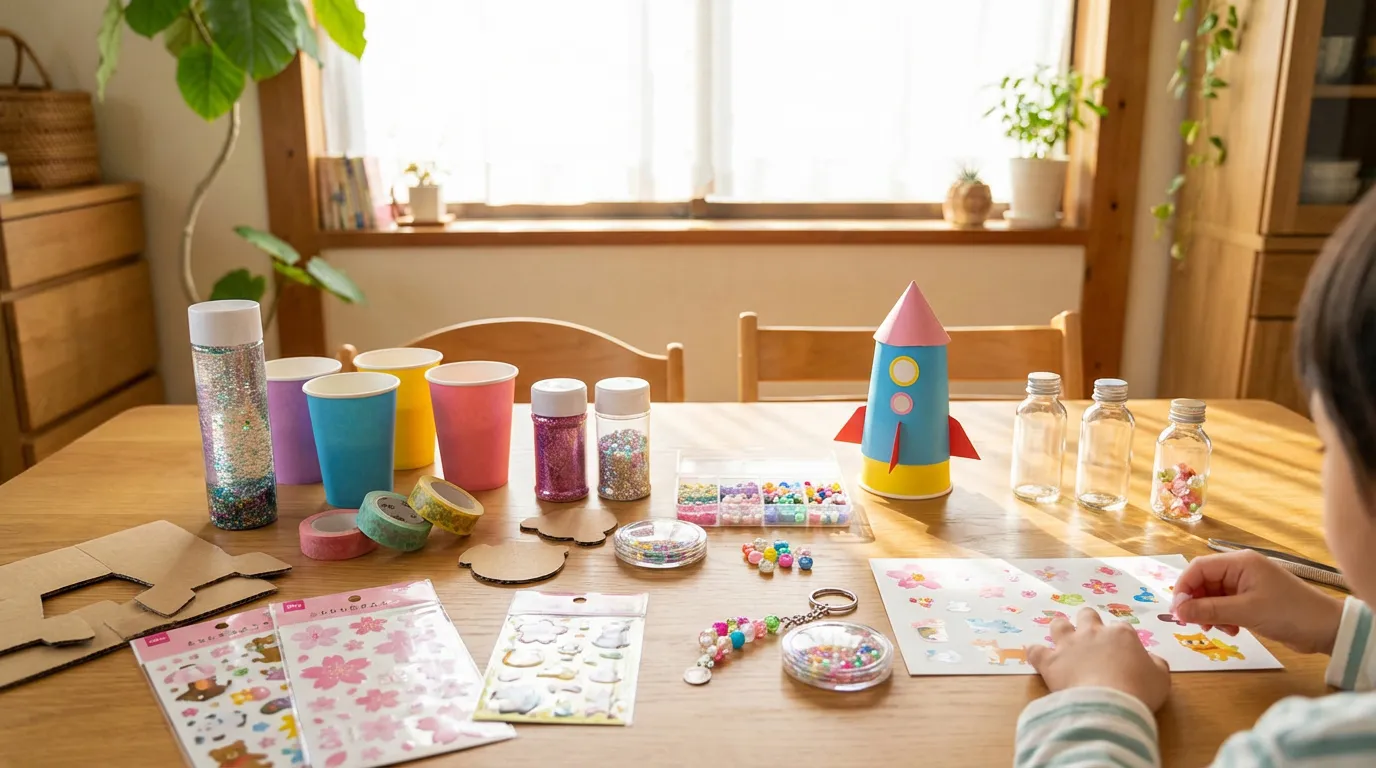
Spring break often leaves parents wondering how to keep their children entertained every single day. Popular outing spots get crowded quickly, and leaving the house daily just isn’t realistic.
This is where budget-friendly “dollar store crafts” come in. These at-home activities are inexpensive, easy to set up, and a great way to encourage creativity and focus while spending quality time together.
- Accessible dollar store materials: You can start right away using items easily found at local discount shops or dollar stores.
- 10 ideas for different ages: Tailored for developmental stages ranging from preschoolers to elementary school students.
- Safety and cleanup tips: Covers choking hazard prevention (the 1.5-inch/39mm rule), tool safety, and ways to minimize the mess.
Table of Contents
10 Easy Dollar Store Crafts for Different Ages and Interests
First, here is a breakdown of simple craft ideas that are perfect for a spring break routine. Even if you only read this section, you will have plenty of actionable activities to try today.
[Preschoolers (Ages 3–5)] Sensory Play to Engage Little Hands
1. Mesmerizing Liquid Art: “Sensory Bottles”
Simply fill a clear bottle with water, clear liquid glue, and dollar-store glitter or beads. This has become a popular, calming activity that helps kids practice focusing as they watch the contents slowly drift.

2. Dollar Store Montessori-Inspired Play
Using an ice cube tray, colorful pom-poms, and tongs, children practice “transferring.” This is a simple, Montessori-inspired activity that helps children practice coordination and fine motor control.

3. Round Dot Sticker Art
Placing stickers along lines drawn on construction paper. This simple activity is a fun way to build fine motor skills.


4. Homemade Flour Playdough
The tactile sensation of kneading and rolling dough encourages open-ended creative play.
![[What's the recipe for soft flour dough...?] #HomePlay #TimeAtHome #SensoryPlay #ParentAndChild](https://i.ytimg.com/vi/32HBPAuqi6Q/hqdefault.jpg)
[Early Elementary (Ages 6–8)] At-Home STEAM Crafts to Spark Curiosity
5. “Shaker Keychains”
A keychain made from a hard card sleeve, foam sheets, and sequins. It is a fun craft that produces a satisfying sound whenever it moves.

6. Paper Cup Rockets
Using paper cups and rubber bands, children get a fun, hands-on demonstration of elasticity and energy.
![[You'll want to race these!!] DIY Rocket that flies surprisingly well and takes 5 mins to make #short Instructions in description🚀](https://i.ytimg.com/vi/rgv5y7bQll8/hqdefault.jpg)
7. Magnetic Maze
Move a paperclip on the surface of a piece of cardboard by guiding a strong magnet from underneath. It is an engaging way to explore how magnets work (Note: always supervise closely when using strong magnets).

[Upper Elementary (Ages 9+)] Practical Arts and Crafts for Focus
8. “Customized Stationery”
Decorating clear pencil cases or plain notebooks with stickers and washi tape. Personalizing their gear is a fun way to get motivated for the new school term.

9. “Flower Wreaths & Wish Boards”
Create room decor using artificial flowers and a wreath base. Using a corkboard to make a “wish board” with goals for the break is also a great project.

10. UV Resin Keychains
Making accessories using UV resin and silicone molds. This requires precise work, such as removing air bubbles, and should always be done in a well-ventilated area with direct adult supervision.
![[Experiment] Making a shaker keychain using ONLY dollar store materials!! #Handmade #ResinKeychain #DollarStoreHaul #DollarStoreHandmade #shorts](https://i.ytimg.com/vi/m-GaixLwF-E/hqdefault.jpg)
Why Dollar Store Crafts Are a Spring Break Lifesaver
Spring break is an important time to recharge, but running out of indoor activities can be stressful. While searching for “spring break ideas” often brings up theme parks, daily outings are rarely practical.
This is where easily accessible dollar store items come in handy. Crafting at home helps you avoid the crowds while offering an affordable way to support your child’s development.
Balancing Screen Time with Hands-On Play
When passive activities like watching videos stretch on for hours, many parents worry about the impact. In contrast, active, hands-on play is widely recommended for supporting focus and creativity.
Early childhood guidelines, including those from Japan’s Ministry of Education (MEXT), emphasize learning through play as a core part of a child’s overall physical and mental development.
Additionally, fine motor tasks like folding paper or assembling small parts help stimulate the brain. Child health guidelines similarly highlight how manual dexterity activities support early childhood development.
(Reference: Ministry of Health, Labour and Welfare guidelines on preschooler health and development)
Beyond physical skills, hands-on crafts can also support patience, confidence, and persistence. While government documents might not always use the term “non-cognitive skills,” educators agree that completing a craft project is a great way to nurture these essential life skills.
[Important] Crafting Safety Checklist for Parents
To keep crafting fun, a safe environment is key. Let’s review a few important reminders to prevent accidents.
Preventing Choking Hazards: The 1.5-Inch (39mm) Rule
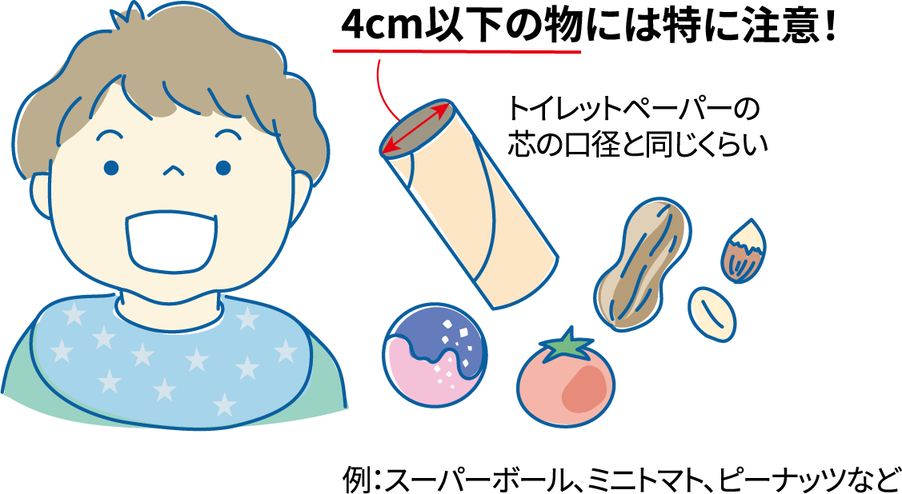

A good rule of thumb: if an item can pass through a standard toilet paper tube, it needs to be kept strictly out of reach. When using beads, marbles, or strong magnets in crafts, close adult supervision is absolutely essential.
(Source: Consumer Affairs Agency guidelines on preventing accidental ingestion in children)
Guidelines for Scissors, Craft Knives, and Adhesives
- Managing tools: Always provide safety scissors with rounded tips for young children. Utility or craft knives should only be introduced to older kids, and only after an adult has demonstrated how to use them safely.
- Using adhesives: Superglue can easily bond fingers together, so standard school glue or glue sticks are best for kids. If using UV resin, ensure the room is fully ventilated and take precautions to avoid direct skin contact.
3 Easy Ways to Make Setup and Cleanup Less Stressful
- Create a “workspace” with a plastic tarp: Lay down a dollar store picnic sheet and make a rule that crafting stays inside the borders. You can simply roll up any paper scraps inside the sheet and throw them out, making cleanup a breeze.
- Use painter’s or washi tape: This is perfect for protecting tables or temporarily holding pieces together. Since it leaves no sticky residue, it is also a great way to hang artwork on rental apartment walls.
- Choose mess-free materials: Opting for washable crayons or tape runners right from the start can save your furniture and clothing from accidental stains.
How to Store or Let Go of Kids’ Artwork Without Tears
Crafting every day during spring break means you will quickly run out of space for the finished pieces. Here is how to handle the artwork in a way that builds your child’s confidence.
First, try to focus your praise on the effort rather than just the result. Instead of a generic “Good job,” try saying, “I love the colors you chose here,” or “You worked so hard to get all those pieces glued down.” Noticing the process helps build their self-esteem and resilience.
Next, consider creating a digital album. Snap a photo of your child proudly holding their craft. Saving these photos or sending them to grandparents helps the child feel their work is valued, even if you don’t keep the physical object forever.
After displaying the item for a few days, let your child decide whether to keep it or take a picture and let it go. Giving them a say in the process is a gentle way to teach organizational skills they will use for life.
Bookmark This Guide for Your Next Spring Break Activity
Spring break means a lot of time spent at home, and dollar store crafts are a fantastic, low-cost way to break up the day.
Consider bookmarking this page so you have a quick resource ready the next time you hear, “I’m bored—what can we do today?”


