


As the new school term approaches, many parents feel anxious about the year ahead. These concerns can feel especially intense for families with a transgender child, an LGBTQ+ child, or a child who is still questioning their identity. Worries are often profound: “What are the school uniform options?”, “Will they feel safe using the restrooms or changing rooms?”, and “How should I bring this up with the teachers?”
In this guide, Tamago Daruma outlines the current landscape of LGBTQ+ support in Japanese schools as of 2026. We provide practical steps for parents to collaborate with school staff and build a secure, inclusive environment for their children.
- As of 2026, based on Ministry of Education (MEXT) guidelines, schools are expected to provide school-wide support measures for transgender students, including the option of “genderless” school uniforms and access to multipurpose restrooms.
- When consulting with the school, prioritizing the student’s own wishes is essential. Parents must establish clear boundaries regarding “information sharing” to protect their child and prevent outing (non-consensual disclosure of their identity).
- Support for diversity is also expanding into higher education, including the University Entrance Common Test and admissions at some women’s universities. Early collaboration with the school’s support team and external experts is highly recommended for long-term planning.
Table of Contents
1. What School Support Looks Like in 2026
In 2026, Japanese schools are demonstrating a wider variety of responses to support transgender and LGBTQ+ students. Guided by national and local government policies, schools are increasingly expected to have a coordinated support system in place across the school, rather than leaving accommodations up to the discretion of individual teachers.
Gender Identity in the MEXT “Student Guidance Manual”
The foundation for current school protocols is the Ministry of Education, Culture, Sports, Science and Technology’s (MEXT) revised “Student Guidance Manual.” Chapter 12, Section 4, specifically outlines careful, individualized support for students facing difficulties related to their gender identity or sexual orientation.
Based on this manual, local municipalities are actively training teachers and distributing educational materials to ensure staff provide guidance rooted in accurate knowledge.
(Source: MEXT: Student Guidance Manual (Revised) *Chapter 12: Understanding Sexual Minorities and School Responses)
How Japanese Schools Are Responding Under the “LGBT Understanding Promotion Act”
The “Act on the Promotion of Public Understanding of Diversity of Sexual Orientation and Gender Identity” (passed in 2023) provided a clearer policy basis for schools to deepen understanding within educational settings. Through official guidelines, MEXT encourages schools to form collaborative “support teams”—involving the principal, school nurse, and school counselor—so that homeroom teachers do not have to manage these situations alone.
(Source: MEXT: Notice on the Promulgation of the LGBT Understanding Promotion Act)
2. Practical Examples of School Accommodations and Recent Trends
What do these accommodations look like in daily school life? Here are some concrete examples of how schools are adapting, which can serve as a helpful reference when discussing your child’s needs with school administrators.
The Rise of “Genderless” Uniform Options
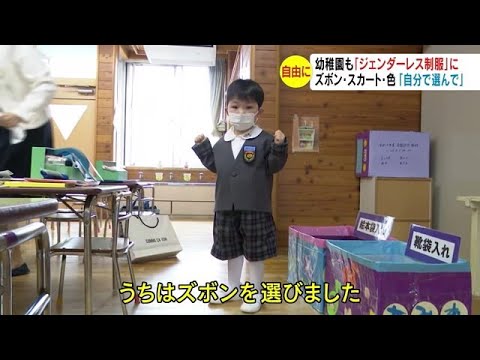
The same survey revealed that about 70% of high school students responded positively to skirt options in boys’ uniforms, indicating a strong level of peer acceptance. It is becoming increasingly common for families to successfully request uniform adjustments before enrollment or during the school year.
(Source: Kanko Student Uniforms: High School Students’ Attitudes Toward “Genderless Uniforms”)
Alleviating Stress in Restrooms and Changing Rooms
Restrooms and locker rooms are frequently the most stressful environments for transgender students. MEXT guidelines outline practical solutions, such as granting permission to use multipurpose (accessible) restrooms, allowing students to change in the nurse’s office or a separate room, or permitting them to change at staggered times. As schools undergo facility renovations, many are proactively installing multipurpose restrooms to offer flexible options tailored to individual needs.
Use of Chosen Names and Gender-Neutral Rosters
Small adjustments in the classroom can significantly impact a child’s sense of safety.
- Names and Honorifics: Many schools now allow students to use a “chosen name” (tsusho-mei) that aligns with their gender identity. Additionally, schools are increasingly adopting the gender-neutral honorific “san” for all students, regardless of gender.
- School Rosters: There is a strong shift toward mixed-gender rosters sorted strictly in alphabetical (gojuon) order, as well as the removal of unnecessary gender checkboxes on internal school forms.
Accommodations for P.E., School Trips, and Overnight Events

- P.E. and Swimming: Schools frequently allow students to wear rash guards during swimming lessons and take the student’s preferences into account when dividing classes for gender-separated activities.
- Overnight Trips: For school excursions, it is now increasingly common for schools to consult with students to arrange private rooms, assign them to comfortable peer groups, or schedule private bathing times.
3. [For Parents] How Parents Can Talk to Schools Safely and Effectively
Approaching the school requires a careful, methodical strategy. Here are the steps to build a cooperative relationship with educators while strictly respecting your child’s autonomy.
Step 1: Open Dialogue and Support at Home
According to research by the certified NPO ReBit, many transgender and LGBTQ+ teens struggle with intense feelings of isolation.
Your first priority is to make your home a safe space where they can discuss anything. Gently check in to see what specific aspects of school life are causing them distress. Always prioritize their wishes, and decide together if and when it is the right time to inform the school.
(Source: Certified NPO ReBit)
Step 2: Establish Rules to Prevent “Outing”
When consulting with the school, the greatest risk is “outing”—the disclosure of a student’s identity without their explicit consent. Before meeting with school staff, sit down with your child and clarify the following boundaries.
[Information Sharing Checklist]
- Should the information be kept strictly between you and the homeroom teacher, or can it be shared with the grade-level head and the school nurse?
- Do they want to keep their identity completely private from their classmates?
- Which name (legal name or chosen name) should the school use for official printouts and parent-teacher meetings?
Step 3: Consult the School’s “Support Team”
Avoid placing the entire burden on the homeroom teacher. Request a meeting that includes the principal, vice principal, and school nurse to request coordinated support. Framing the conversation as, “How can the school as a whole support my child’s daily life?” ensures that the accommodations will remain in place even if the homeroom teacher transfers or the child moves to the next grade.
4. Fostering Peer Understanding and Planning for University
As a parent, it is helpful to look beyond daily school life and consider your child’s broader environment and future academic path.
The Role of Allies and Campus Initiatives

The University Entrance Common Test and Higher Education
Options for higher education are also expanding. For instance, Japan Women’s University began accepting transgender women (students assigned male at birth whose gender identity is female) in the 2024 academic year, setting a precedent for other women’s colleges.
Furthermore, students can request special accommodations—such as specific testing room assignments—for the University Entrance Common Test and individual university exams based on their gender identity. Because these requests must be submitted several months in advance, communicate with your high school’s college counselor early in the process.
(Source: Japan Women’s University: Guidelines for All Women Learning Together)
5. What to Do If the School is Unsupportive
Not every school is prepared to respond immediately or appropriately. If conversations stall, here are alternative ways to move forward.
Tips for Constructive Communication
If the administration is hesitant, present the MEXT guidelines mentioned in Section 1. Maintain a stance of, “I want to work together with you to protect my child’s safety and peace of mind.” Avoiding emotional confrontation and basing your requests on the school’s own policy guidelines is often the most effective way to reach a solution.
Bringing in External Experts
If resolving the issue internally proves too difficult, consider leaning on the following professionals and organizations:
- School Counselors and School Social Workers: As designated professionals within the school system, they can act as objective mediators between parents and teachers.
- Local LGBTQ+ Support NPOs: Organizations like ReBit possess extensive experience navigating school administrations and can often provide the specific advice needed to break a deadlock.
6. Building an Inclusive School Environment Together
Providing accommodations for transgender students is not about “special treatment.” Cultivating an environment that embraces diverse gender identities—such as offering flexible uniform choices—ultimately helps create an environment where everyone can learn safely and comfortably.
When parents and teachers work hand in hand, prioritizing the best interests of the child, they help build a foundation where everyone can thrive. We hope this new school term becomes a positive and empowering step forward for your child.


