


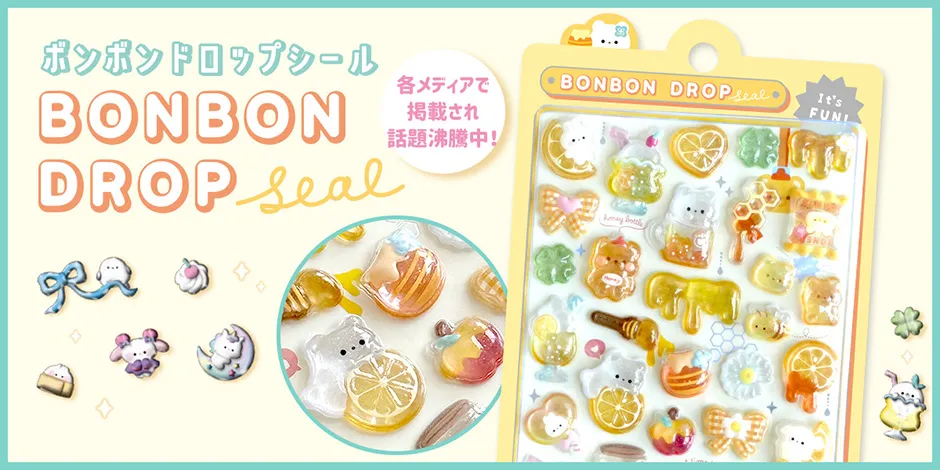
“Bonbon Drop Seal” is a sticker characterized by its plump, three-dimensional appearance and transparent look, resembling real candies or jewels. Released by stationery manufacturer Q-LiA Corporation, these stickers have gained explosive popularity, especially among children, due to their high quality and adorable design.
Beyond their beautiful appearance, the hard resin texture and highly collectible designs contribute to the satisfaction children feel during play, which is another reason for their widespread support.
However, recently, similar “drop-shaped stickers” and “3D stickers” have been sold at 100-yen shops and other stores, leading many parents to wonder, “What’s the difference from the real Bonbon Drop Seals?” This article provides an easy-to-understand explanation for first-time buyers, covering the features and popularity of Q-LiA’s “Bonbon Drop Seal,” differences from similar products, and important points to know when children play with them.
Table of Contents
What is Bonbon Drop Seal? Essential Knowledge for Parents

Starting as a trend through stationery stores, fancy shops, and social media introductions, it has now expanded its fan base beyond children to include adults, coinciding with trends like “Heisei retro” and “Y2K.” First, let’s understand the basic features that make this product so popular.
What Kind of Sticker? Features of Bonbon Drop Seal and Background of Its Popularity
Unlike typical soft, sponge-like 3D stickers, Bonbon Drop Seals are characterized by being made from hard resin material with a firm texture. This creates a premium feel similar to “glass beads” or candies. The motifs—candies, fruits, jewels, hearts, and more—are classic designs that children instinctively find “cute!” and are easy to use for decoration, which supports their popularity.
The background of this trend includes numerous videos posted on TikTok, Instagram, and other social media platforms showing decoration of smartphone cases, trading card cases, and sticker albums. Often purchased by the specific brand name “Bonbon Drop Seal,” the beauty when arranged and the “glossy appearance” that comes through even on screens stimulate the desire to collect, creating a “must-have” feeling.

Additionally, in the culture of exchanging stickers among friends, each sticker has a strong presence and is easily treated as a “special piece,” contributing to its popularity as a communication tool. The ability to enjoy them quickly without special preparation is another reason they’re chosen in busy daily life.
Understanding Target Age and Play Patterns
The main target age range is from mid-kindergarten age (when choking risks decrease) through elementary school lower and middle grades. In addition to enjoying the shapes and colors through sticking and peeling, the action of pinching the hard material helps develop fingertip sensitivity.
Common play methods include collecting them in sticker albums arranged by color or decorating pencil cases and notebook covers. Bonbon Drop Seals are relatively durable, so many children enjoy sticking them on their belongings.
However, since they look very similar to candy, families with younger siblings must be careful about choking hazards. Even at ages where children understand the rule “don’t put in mouth,” the risk of being attracted to the sparkly appearance and putting them in the mouth is not zero. It’s important to create an environment where adults can supervise, such as limiting play to tabletops.
Differences from Other Stickers (Price, Variety, Availability)
While the name “Bonbon Drop Seal” refers to Q-LiA Corporation’s product series, similar 3D stickers are now sold at 100-yen shops under names like “drop seal” or “candy seal.”
Authentic Bonbon Drop Seals are available at fancy goods stores, large bookstore stationery sections, specialty stationery stores, major variety stores like Loft, Hands, and Village Vanguard, and stationery sections in shopping malls. Prices typically range from 400 to 600 yen per sheet, varying depending on design and collaboration projects. In terms of quality, they feature high transparency and uniform, beautiful resin raised surfaces. The designs are detailed with well-unified themes for each series, conveying a sense of high completion.
On the other hand, similar 3D stickers sold at 100-yen shops are readily available at 100-yen shops and supermarket stationery sections. At around 100 yen per sheet, they’re affordable and easy to enjoy casually. However, compared to authentic products, the resin may be slightly thinner or transparency somewhat lower. It’s good to choose based on the balance between price and quality according to purpose and use.
Products sold at 100-yen shops are “Bonbon Drop-style” 3D stickers, not authentic Q-LiA “Bonbon Drop Seals.” If seeking authentic products, confirm that the package back shows “Q-LiA” or “Q-LiA Corporation” as the seller.
When children say they want “Bonbon Drop Seals,” they often mean specific designs or the brand (Q-LiA products). Understanding the difference, you can use 100-yen shop products for everyday use and save authentic ones for rewards or gifts.
Safety of Bonbon Drop Seals and Age-Specific Precautions
Due to their appealing “delicious appearance” and “small size,” Bonbon Drop Seals require careful safety considerations. Especially for young children, they pose potential risks of choking or unexpected injuries.
Being conscious of age-appropriate giving and supervision methods prevents troubles while allowing safe enjoyment. Here, we organize points to check before purchase and during use.
Checkpoints to Prevent Choking and Injuries
The most important concern is choking. The size is similar to candy or supplements, and younger children may instinctively put them in their mouths due to the shape. When purchasing, always check the “target age” and “warnings” on the package back.
Also, resin stickers like Bonbon Drop Seals are hard, so if dropped on the floor, stepping on them can hurt, or broken plastic-like pieces could cut fingers.
Before playing, check for chips or sharp edges, and immediately dispose of any damaged stickers. Playing on a table rather than the floor and establishing the habit of “counting all pieces after play and putting them away” reduces accident risks.
Age-Specific “Giving Methods” and Supervision Tips from Toddlers to Elementary Students
- For toddlers (around ages 3-4), always supervise and play together with an adult. At this age, children may not fully understand the meaning of stickers, so rather than letting them carry them freely, stick-and-enjoy style in one place is better.
- From mid-kindergarten to senior kindergarten (ages 5-6), children can understand rules. Confirm promises beforehand like “never put in mouth” and “follow usage location rules.” Providing dedicated backing like sticker albums or notebooks prevents sticking on furniture or walls.
- Elementary students increasingly exchange and show them to friends. Discussing family rules about bringing them to school and taking them out prevents troubles. Even as children age, these remain expensive stickers, so encouraging careful handling is important.
Understanding Allergy and Material Labels and Establishing Household Rules
Bonbon Drop Seals are typically made from synthetic resins like epoxy resin. For children with sensitive skin, holding them for extended periods or keeping them stuck to skin may rarely cause itching or redness. Check material labels on packaging and instruct not to stick on skin.
At home, deciding in advance “play time,” “storage location,” and “who manages them” provides peace of mind. For example, simple rules like storing unused stickers in a lidded case in a high place unreachable by younger siblings are sufficient. What’s important is not making it all prohibitions, but thinking together with children about “how to enjoy safely.”
First-Time Bonbon Drop Seal Selection | Purchase Guide to Avoid Mistakes
Bonbon Drop Seals come in series with great variety in colors, themes, and collaborations. For first-time purchasing parents, it’s easy to wonder “which should I choose?”
Here, we organize points for finding authentic products (Q-LiA made), budget-based selection methods, and precautions for both in-store and online purchases. Checking once before purchase provides peace of mind.
Identifying Authentic Bonbon Drop Seals and Cautions About Counterfeits and Price Gouging

Watch out for price gouging on online shopping sites and flea market apps. Popular designs or discontinued series may be traded at prices significantly higher than retail. Stickers are consumables, and new designs are continuously released. There’s no need to rush into expensive items with “only available now” messaging. Starting with current designs available at regular prices is wise.
While “rare” and “limited” can attract both parents and children, starting with affordable price ranges is recommended. Especially for children, assuming they’ll lose or break them allows emotional flexibility.
Budget-Based Selection of Quantity and Set Contents
For first purchases, start by buying one sheet of a design you like at a stationery store. Plump 3D stickers provide high satisfaction per piece, and even small quantities offer enough enjoyment through “sticking,” “arranging,” and “viewing.”
Once somewhat familiar, choosing sets with unified colors or motifs makes play easier. Selecting by “today pink series” or “next blue series” creates cohesion in sticker albums and makes management easier for children.
If wanting “more” or “to stick daily,” using similar 100-yen shop products (drop-shaped 3D stickers, etc.) for everyday use is one method. Distinguishing between “Q-LiA Bonbon Drop Seals for special occasions, 100-yen shop stickers for everyday play” maintains children’s satisfaction while controlling budget.
Where to Buy? Points When Purchasing Bonbon Drop Seals In-Store/Online

Online purchasing is convenient for series not available at nearby stores or bulk buying. However, gaps between photos and actual size often occur (smaller than expected), so carefully check size specifications and reviews. Also, similar products may appear in search results for “drop seal,” so always check the manufacturer name (Q-LiA notation).
In either case, prioritize safety and usability over “cheapness” alone. Starting with small quantities, watching children’s reactions, and gradually adding more is the key to long-term enjoyment.
Parent-Child Bonbon Drop Seal Play Ideas
Bonbon Drop Seals can extend beyond just collecting and sticking to connect parent-child play and learning by utilizing their distinctive appearance. Using them without rules can lead to arguments or overuse, but incorporating them with purpose reduces troubles.
With awareness of educational perspectives and lifestyle habit applications, sticker play becomes not just consumption but a useful household tool. Here are specific ideas for parent-child enjoyment without strain.
Beyond Collecting and Sticking! Educational Play Methods
Bonbon Drop Seals are ideal for sorting and number play due to clear colors and shapes. For example, “collect only red drops” or “3 hearts, 2 stars”—simply arranging while counting naturally develops number and comparison sense. Arranging them in sticker albums by theme can develop spatial awareness and composition skills.
Additionally, prompts like “What color will you choose today?” or “What name should this sticker have?” create opportunities for verbal exchange and imagination expansion. Reviewing completed pages together saying “this part is beautiful” leads to achievement and self-affirmation.
Establishing “Sticker Rules” to Avoid Sibling/Friend Conflicts
Common troubles in sticker play are arguments over “who uses which” or “taken without permission.” Preventing this requires establishing simple rules in advance. For example, create agreements like “have your own sticker case,” “always stick on your own pages when using,” “exchanges only when adults are present.”
In families with siblings, completely separating management from the start may prevent fights. When playing with friends, limiting the range to “use only this sheet today” provides security. Once rules are decided, parents consistently maintaining them is important.
Tips for Using as “Reward Stickers” for Homework and Daily Habits
Bonbon Drop Seals, with their three-dimensional and special feel, work well as reward stickers. Using them for small daily goals like finishing homework, brushing teeth, or waking up early can motivate children.
The key is not making them “stickers for everything.” Decide achievement conditions beforehand and limit sticker-giving occasions. Setting a goal like “finish when a certain number accumulates” prevents endless continuation. Visualizing “accomplishments” leads to establishing lifestyle habits.
Management Techniques to Prevent Bonbon Drop Seal Troubles
While Bonbon Drop Seals are easy and fun, troubles easily occur during carrying and sharing situations. Especially when taking them outside the home to school, kindergarten, or lessons, unclear rules can lead to loss, mix-ups, or friend misunderstandings.
Deciding management methods in advance allows children themselves to enjoy with peace of mind. Here, we organize manners when taking them out, responses to common troubles, and storage ideas to prevent excessive accumulation.
Manners and Belongings Management When Taking to School, Kindergarten, or Lessons
At schools and kindergartens, bringing stickers is often prohibited or restricted in principle, so first confirm the rules. Share facility-specific rules with children like “allowed days” or “only for sticking in contact books.” For lessons, confirming beforehand whether they can be used during wait times provides security.
When deciding to take them, minimizing quantity is basic. Put only a few favorites in a small case with name labels to prevent loss. Avoid putting them loose in bag pockets and always decide a fixed location. Establishing the routine of “return the whole case when home” makes management easier.
Parent Responses to Loss, Mix-ups, and “Can I Have One?” Problems
Common sticker play problems include “lost,” “took home by mistake,” or “friend asked for one.” For loss, showing an attitude of searching together rather than blaming and focusing on “what to do next time?” for prevention is important.
When mix-ups occur, prioritize fact confirmation without getting emotional. Name labels make resolution and returns easier. For “can I have one?” problems, promising beforehand “don’t give or receive without permission” is effective. If exchanging is desired, limit to situations when adults are present.
Storage and Organization Ideas and Personal Rules to Prevent “Too Many”
Since Bonbon Drop Seals easily accumulate, management becomes difficult without deciding storage methods. Recommended is using lidded small compartment cases or zippered bags, organizing by color or theme. Taking out only what’s needed prevents mess. Deciding sticker album page numbers is also effective.
To prevent “too many,” creating purchase rules is important. For example, “once per month,” “replenish when out,” “organize old ones when buying new”—set standards fitting your household. Deciding rules together with children creates acceptance and allows continuation without strain.
Summary
Bonbon Drop Seal is a hit product created by Q-LiA Corporation, captivating children with its quality and cuteness. While similar 100-yen shop products have increased, when selecting by the “Bonbon Drop” name, confirming Q-LiA seller notation makes finding the intended product easier.
While carrying and management mistakes can cause troubles, establishing household rules and safety considerations make them play tools that nurture children’s sensibility. Through sticker play, let’s cultivate together the joy of choosing authentic products and the heart to treat them carefully.


