


Many of the examples in this guide come from Japanese nursery and home play traditions, but the ideas can be adapted for families and educators anywhere.
Have you ever stood in front of your child, completely unsure what to do next — or found yourself falling back on the same routine, day after day?
Fingerplay songs — simple songs with hand motions, gestures, and playful repetition — ask nothing of you except your voice and your hands. No props, no prep, no special space. But it’s still easy to feel stuck: What should I sing? Is this right for their age? Why isn’t my child responding?
This guide covers 15 fingerplay songs for children ages 0 to 5, organized by developmental stage and daily scenario. Each song comes with a goal, a delivery tip, and the most common mistake to avoid — so you can start today, even if you’ve never tried this before. A set of YouTube Shorts script templates is included at the end.
Table of Contents
The Short Answer | Choose Fingerplay Songs by Scene and Goal, Not Just Age
When parents and caregivers pick fingerplay songs based on age range alone, things don’t always go as expected. Children develop at different rates, and even the same child responds differently depending on the time of day, their mood, or how much energy they have in the moment.
After many conversations with early childhood professionals and parents through TamagoDaruma, one pattern stands out clearly: people who know when to use a song tend to stick with fingerplay longer than those who simply know which songs exist.
Ages 0–2
For children under two, prioritize songs that are easy to imitate and feel safe. Slow, clear, and repetitive. It doesn’t matter how well you sing — what matters is that you’re making eye contact, smiling, and staying close. That connection is the entire point at this stage.
Ages 3–5
From around age three, children can enjoy songs with turn-taking, simple rules, and a bit of unpredictability. They start to anticipate what comes next, and that anticipation is half the fun. Songs with call-and-response structures or variations that change based on reactions tend to land well at this age.
For everyday home use, it also helps to think in terms of four recurring scenarios: the morning routine, waiting time, mood resets, and winding down before sleep. Assigning one or two “go-to” songs to each scenario makes a real practical difference — you don’t have to think, you just reach for the right tool.
Japan’s national childcare guidelines — the Hoiku Shishin, issued by the Children and Families Agency, and the Early Childhood Education Curriculum Guidelines from the Ministry of Education — both frame play as the foundation through which young children develop across five interconnected areas: physical health, relationships, engagement with the environment, language, and expression. Fingerplay naturally spans several of these at once. For families at home, you don’t need to track developmental goals formally — just knowing that these moments connect to something meaningful can make it easier to keep going when it feels like “only” a song.
(Reference: Hoiku Shishin (National Childcare Guidelines) | Children and Families Agency, Japan)
3 Reasons Fingerplay Songs Work at Home
There are three reasons fingerplay songs are particularly useful in everyday family life.
First: you can start immediately. No equipment, no space, no preparation. When your child looks bored, when you’re stuck waiting somewhere, when the mood in the room needs a reset — you can begin right now. For busy caregivers who want more connection moments without adding more to their schedule, that immediacy matters more than it sounds.
Second: they create natural back-and-forth between you and your child. Unlike screen content, fingerplay is two-directional. Your child moves, you respond; you make a face, they laugh; you slow down, they lean in. That accumulated back-and-forth builds a sense of security and trust over time. The Japan Pediatric Association has also raised concerns about media exposure among infants and young children, and fingerplay is one practical way to increase face-to-face interaction.
(Reference: Statement on Children and Media | Japan Pediatric Association)
Third: the developmental benefits layer in naturally, without effort. Fine motor coordination, rhythm, vocabulary, reading facial expressions, imitation — fingerplay touches all of these through enjoyment rather than instruction. Children absorb the rhythm, words, and movements while simply enjoying the moment with you.
A Quick Age-Based Reference
More detail follows in the next section, but here’s the short version to orient you:
- Ages 0–1: Repetition, slow pace, physical closeness. Watching quietly counts as full participation.
- Ages 2–3: Animal sounds, onomatopoeia, familiar actions. Children begin copying sounds and words naturally.
- Ages 4–5: Call-and-response, simple rules, songs that change based on what happens. Works well with siblings or friends too.
With those three tiers in mind, choosing from the 15 songs in this guide becomes much more straightforward.
Choosing Fingerplay Songs by Age | What Works for Children 0–5
Japan’s Early Childhood Education Curriculum Guidelines describe play as the primary vehicle through which young children learn — not a break from development, but its engine. Fingerplay sits at the intersection of language, expression, physical movement, and human connection, making it one of the more naturally comprehensive play formats available to caregivers.
(Reference: Early Childhood Education Curriculum Guidelines | Ministry of Education, Japan)
Ages 0–1 | Songs Built Around Closeness, Expression, and Repetition

From birth through the first year, children are steadily becoming more responsive to sound, rhythm, and faces. At this stage, fingerplay isn’t about teaching a song — it’s about building a sense of safety through shared rhythm and proximity.
The selection criteria are simple: short, repetitive, slow enough to follow. It doesn’t matter if your child doesn’t copy every movement. If they’re watching your hands, if their expression shifts, if they go still and listen — that’s engagement, and it’s enough.
This is often the stage where caregivers feel unsure whether it’s “working.” It is. Watching, listening, and feeling the rhythm are all forms of participation at this age. Keep the bar low and the enjoyment genuine.
Ages 2–3 | Songs That Invite Imitation, Vocabulary, and Rhythm

Around age two, language accelerates and the drive to imitate becomes very strong. Children at this stage want to copy what they see and say what they hear. Fingerplay becomes a natural venue for trying out new sounds and movements alongside someone they trust.
Songs work especially well at this age when they contain onomatopoeia, animal sounds, food names, and familiar daily actions — words and motions that connect to things children already know. When a song has sounds that are easy to say aloud, children start vocalizing naturally, without being prompted.
This is also the “one more time” age. Songs with simple structures that can be repeated without losing their appeal — or that allow small variations each time — tend to have the longest shelf life with two- and three-year-olds.
Ages 4–5 | Songs with Interaction, Rules, and Surprises

By age four, children can anticipate what’s coming and enjoy the pleasure of being right — or being surprised. Call-and-response formats and reaction-based songs become genuinely exciting at this stage, not just manageable.
Playing with siblings or friends becomes more satisfying too. Songs that require two people, or involve taking turns, or produce laughs when someone gets it “wrong,” all hit differently when there’s a peer or sibling involved. Getting something wrong starts to become funny rather than frustrating — and that’s a meaningful developmental shift.
In the lead-up to starting school, skills like listening carefully, matching someone else’s timing, and waiting for your turn all develop naturally through this kind of play. It’s something parents often notice before they have words for it.
15 Fingerplay Songs for Kids | Age, Scene, Goal, and Tips
Below are 15 songs organized by age group. Each includes the target age range, best-fit scenario, developmental goal, a practical delivery tip, and the most common mistake to avoid. Full lyrics are not included here for copyright reasons, but many of these songs are available through NHK’s children’s programming (Okaasan to Issho, a long-running Japanese children’s TV show | NHK) and published songbooks such as Hajimete Utaehon | Froebel-kan.
Ages 0–1 | Songs That Are Easy to Start With
① Inai Inai Baa — Japanese Peekaboo

- Age range: Approx. 3 months to 18 months
- Best scenario: After feeding, before sleep, during a carry
- Goal: Attachment and bonding; building the understanding that something hidden will return — a foundation of trust
- Delivery tip: Cover your face for just one or two seconds. Make the “reveal” bigger than the disappearance — the delight of reappearing is the whole point.
- Common mistake: Hiding your face too long, which can cause distress rather than anticipation. Watch your child’s expression and keep the hidden phase very brief. Big, slow movements and an exaggerated voice change the response noticeably.
② Zoukin no Uta — The Dustcloth Song

- Age range: Approx. 6 months to 18 months
- Best scenario: Before morning routines; mood reset
- Goal: Imitating gripping, twisting, and wringing motions; building early interest in everyday household actions
- Delivery tip: No actual cloth needed — hands alone work fine. Lean into the sound effects: “squeeeze,” “scrub scrub,” “wring it out.” Bigger, playful sounds often get a stronger response.
- Common mistake: Moving too quickly for the child to follow. Get in front of them, make eye contact, and demonstrate one motion at a time.
③ Musunde Hiraite — Open and Shut Them

- Age range: Approx. 6 months to 2 years (individual variation applies)
- Best scenario: Before meals, morning warm-up, waiting time
- Goal: Differentiating open and closed hand positions; rhythm; imitation
- Delivery tip: Start with just one motion — “close” first, then “open” in a separate round. Don’t aim for the full sequence right away. When any part of the movement appears, acknowledge it warmly: “You did it.”
- Common mistake: Implying — through tone or expression — that the child got something wrong. Watching is participating. Hold that frame and neither of you will feel frustrated.
Musunde Hiraite has been part of Japanese early childhood settings for generations. Its staying power comes from exactly the things that make it work developmentally: simple, clear, and repeatable without losing its rhythm.
Ages 2–3 | Songs That Build Vocabulary and Imitation
④ Hajimaru yo Hajimaru yo — Here We Go, Here We Go

- Age range: Approx. 18 months to 3 years
- Best scenario: Before meals, before tidying up, any activity transition
- Goal: Shifting attention; building anticipation around what comes next
- Delivery tip: This song is less about teaching and more about helping children move into the next activity. It’s used widely in Japanese nurseries and preschools (hoikuen and yochien) as a transition cue. Vary your tempo and volume — getting quieter just before a reveal makes children lean in.
- Common mistake: Singing it half-heartedly. The song works when you commit to it: bigger voice, bigger smile to start, clear intention. That energy is what signals to children that something is shifting.
⑤ Pan-ya-san ni Okaimono — Shopping at the Bakery

- Age range: Approx. 2 to 4 years
- Best scenario: Before pretend play, mood reset
- Goal: Learning food names; early number concepts; practicing “choosing” as an action
- Delivery tip: Let the child name their own favorite bread. From around two-and-a-half, many children will confidently shout “curry bread!” or “melon pan!” — that moment of ownership makes it their song.
- Common mistake: Moving at adult speed. Leave a beat after each item for the child to respond. Once they can fill the gap, they’ll feel like they’re co-performing rather than following along.
⑥ Curry Rice no Uta — The Curry Rice Song

- Age range: Approx. 2 to 4 years
- Best scenario: Before meals, as an intro to pretend cooking play
- Goal: Imitating cooking actions; vocabulary for vegetables and cooking steps; building interest in daily routines
- Delivery tip: The song mimics chopping, stirring, and frying — motions that appeal strongly to children who want to help in the kitchen. Try asking “What should we add?” mid-song and improvise together.
- Common mistake: Trying to teach all the movements at once. Lead the whole song yourself first. Let the child drift into it gradually; they’ll pick up the parts that interest them most.
This song’s cooking action sequence makes it a natural home choice, particularly during the stage when children want to shadow everything you do in the kitchen.
⑦ Tonton Tonton Hige-jiisan — Grandpa with the Big Beard

- Age range: Approx. 18 months to 3 years
- Best scenario: Morning wake-up, play warm-up, mood reset
- Goal: Learning the names of facial features; body awareness; enjoying repetition
- Delivery tip: The song cycles through different face characters — beard, glasses, bump on the head, long nose, horns — letting children touch their own face naturally as they follow along. Try reversing the order or speeding up once they know it well.
- Common mistake: Waiting until you’ve memorized all the movements before trying it with your child. The repeating structure means children pick it up through doing, not preparation. Start imperfectly — the connection still matters.
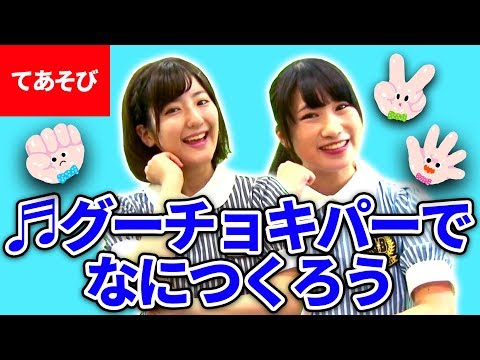
⑧ Guu Choki Paa de Nani Tsukurou — What Can We Make?
- Age range: Approx. 2 to 3.5 years
- Best scenario: Waiting time, small gaps in the day
- Goal: Finger differentiation; imagination; connecting words to hand shapes
- Delivery tip: Ask the child what to make next. “What do you think we could make with this?” is enough to open a small creative conversation. The asking is as valuable as the answer.
- Common mistake: Getting too focused on whether the hand shapes are precise. At this age, the fun is in the imagining. Let the shape be approximate and keep the energy playful.
Ages 4–5 | Songs with Interaction, Rules, and Shared Laughs
⑨ Ochita Ochita — What’s Falling?

- Age range: Approx. 3 to 6 years
- Best scenario: Group play, gatherings, mood resets
- Goal: Listening attention; reaction speed; following rules; finding shared humor in mistakes
- Delivery tip: The game changes based on what “falls” — an apple, thunder, the whole Earth — and each requires a different response. Getting it wrong is funny, not bad. Set that tone at the start and the game runs itself.
- Common mistake: Going too fast. When the pace outstrips comprehension, children don’t react — they freeze. Deliberately slow down, and give space for “one more time” requests. The warmth builds over rounds.
⑩ Nabe Nabe Soko Nuke — Around We Go

- Age range: Approx. 3 to 6 years (requires two or more players)
- Best scenario: Park, sibling play, playdates
- Goal: Coordinated movement; physical trust; the satisfaction of moving in sync with someone else
- Delivery tip: The key moment is turning around together without letting go of hands. When trying it for the first time, one person should keep their movements smaller to guide the turn. With practice, try it in a larger circle.
- Common mistake: Focusing on doing it correctly. If the turn doesn’t work, laugh about it and try again. The willingness to fumble together is part of what makes this song useful.
⑪ Antagata Dokosa — Where Are You From?

- Age range: Approx. 4 to 6 years
- Best scenario: Park, playdates, combined with ball-bouncing
- Goal: Rhythm; enjoyment of wordplay; connection to traditional folk singing games
- Delivery tip: A classic version involves bouncing a ball or performing a special action on the syllable “sa.” Without a ball, try crouching on that syllable instead — it works just as well outdoors or indoors.
- Common mistake: Adding rules before the rhythm is comfortable. Learn the chant first, enjoy the sound of it, then layer in a rule once the song feels familiar.
Antagata Dokosa is a traditional Japanese folk singing game — a type known as warabe uta — with roots often traced to the Kumamoto region. Songs like this one are still passed between generations in Japanese early childhood settings, carrying a thread of regional culture into everyday play.
⑫ Ippon Bashi Kochokocho — The Tickle Bridge

- Age range: Approx. 6 months to 4 years (enjoyment evolves with age)
- Best scenario: Physical closeness time, when a child is unsettled, before sleep
- Goal: Tactile stimulation; anticipation and release; laughter and physical comfort
- Delivery tip: Let the child choose where the tickle lands at the end. As they get older, swap roles — being the one who does the tickling is often even more exciting than being tickled.
- Common mistake: Some children are sensitive to being tickled. If there’s any reluctance, swap the ending for a gentle touch on the cheek or a pat. The anticipation still works; the tickle is optional.
⑬ Osenbei Yaketakana — Is the Rice Cracker Done?

- Age range: Approx. 3 to 5 years
- Best scenario: Parent-child play time, face-to-face games with friends
- Goal: Imitating hand-clapping patterns; rhythm; learning to match timing with another person
- Delivery tip: Begin very slowly, focusing on making the hand contact rather than keeping the beat. Smiling directly at the child while you play softens the whole interaction, especially when timing doesn’t quite work out.
- Common mistake: Picking up the pace before the child is ready. Start with movement first, add the song once hands are connecting comfortably, and only then gradually increase speed.
⑭ Otera no Oshosan — The Temple Monk

- Age range: Approx. 3 to 5 years
- Best scenario: Play with friends or siblings, when you want something with a bit more focus
- Goal: Rhythm; reaction-based play; understanding simple rules through rock-paper-scissors
- Delivery tip: The outcome changes every round because of the rock-paper-scissors element, which keeps the “what happens next?” energy alive. Frame it as: whoever loses is just as much part of the fun.
- Common mistake: Rock-paper-scissors is genuinely hard for younger children. With children who aren’t quite there yet, drop the competitive element and focus on the rhythm and movement instead. Both versions work.
⑮ Guu Choki Paa — Make Your Own Version

- Age range: Approx. 4 to 5 years
- Best scenario: When a child is in “I want to do it myself” mode; rainy-day indoor time
- Goal: Creativity; putting ideas into words; the experience of making something together
- Delivery tip: Start with “What shape do you want to make?” and go from there. The process of figuring it out together matters more than producing a polished result. Stopping halfway through is fine.
- Common mistake: Jumping in with your own idea before the child has had time to think. Receive their suggestion first — even if it’s unusual — and build from it. That sequence is what makes it feel like their creation.
A Note on the Shared Format
Each of the 15 songs above uses the same five-part structure. This format can also be useful for childcare professionals who need to document or share activity plans:
- Age range: A guideline — adjust based on your child’s actual responses
- Best scenario: Mapped to realistic home situations
- Goal: A brief link to what the activity supports developmentally
- Delivery tip: About making it enjoyable, not doing it perfectly
- Common mistake: What to anticipate and how to adjust, before it happens
Matching Songs to Moments | Morning, Waiting, Mood Resets, and Bedtime
Knowing the age tiers helps you narrow the list. Knowing the scenario helps you reach for the right song at the right moment without having to think about it.
Morning Routine Songs
Mornings are unpredictable. Children often resist transitions and the energy in the room can shift fast. Songs that are upbeat, full-body, and easy to vocalize work best as transition tools here.
The three that work most reliably in this slot are Hajimaru yo Hajimaru yo, Tonton Tonton Hige-jiisan, and Guu Choki Paa de Nani Tsukurou. Hajimaru yo in particular functions well as a cue song — paired consistently with getting dressed or coming to the table, children begin to associate it with what comes next, which makes the transition less of a negotiation.
Quiet Songs for Waiting and Public Spaces
Waiting rooms, clinics, public transport — spaces where you can’t be loud and don’t have anything with you. The songs that work here are doable while seated, effective at low volume, and prop-free.
Musunde Hiraite, Inai Inai Baa, and Ippon Bashi Kochokocho all qualify. Ippon Bashi in particular can be done on the child’s arm or leg while they’re on your lap — which makes it one of the more useful tools for waiting situations, as a first move before reaching for your phone.
Songs for Mood Resets and Transitions Out of Upset
For breaking a mood, you want something with tempo variation, a natural laugh-trigger, and a clear arc. Ochita Ochita, Pan-ya-san ni Okaimono, and Curry Rice no Uta all fit this pattern.
When energy spikes and you need an exit: decide in advance on a closing signal. A consistent phrase like “last one!” followed by a specific ending gesture builds a habit that makes stopping much easier than calling it out mid-game.
Winding Down Before Sleep
Before sleep, less stimulation is better. Slow tempo, quiet voice, reduced movement. You don’t necessarily need different songs — the same ones work in a lower register. Inai Inai Baa done very softly, or Ippon Bashi Kochokocho ending with a gentle touch instead of a tickle, become completely different experiences just through pacing and volume.
As a general guideline, high-energy songs are worth avoiding in the twenty to thirty minutes before sleep. Getting the atmosphere calm first makes a bigger difference than which song you choose.
When It Doesn’t Work | Common Problems and Practical Fixes
“I tried a fingerplay song and my child just walked away.” This comes up often. In most cases, it’s not about the song being wrong — it’s one of three things: the selection, the timing, or the delivery. All three are adjustable.
Choosing Songs That Are Too Complex
Prioritize a sense of participation over a complete performance. “Did one part of it” is a win. Lead with the easiest section, and add layers as your child becomes familiar with the pattern. Starting with hands only, or voice only, is a perfectly valid entry point.
Moving Too Fast or Over-Explaining
The instinct to teach can get in the way here. Children at this age learn through watching and copying, not through instruction. Show it first; let them mirror. Keep explanation to a minimum and let your own enjoyment carry the invitation. That’s the most natural way in.
Not Being Able to Stop Once It’s Going Well
This is actually a success problem, but it can make transitions harder. The fix is a consistent closing ritual — a set phrase, a clap, a specific final gesture that always ends the game. Once it becomes a habit, “one more time, then we stop” becomes a believable promise.
Getting Stuck on the Same Song Every Day
Repetition isn’t a failure. Children genuinely benefit from the security of knowing what’s coming. But if you’d like to expand your range without adding pressure, the most sustainable approach is to assign one song per scenario: one for mornings, one for meals, one for going out, one for sleep. You’ll accumulate a working repertoire without noticing. Seasonal variations, or swapping in a child’s favorite character or food name, are low-effort ways to introduce change within a familiar structure.
For Content Creators | 30-Second YouTube Shorts Script Templates
Fingerplay songs and short-form video are a natural match: brief, repetitive, visually clear, and easy to follow on a small screen. The templates below are designed for nursery teachers, parent creators, and family-focused social media accounts, and can be used as-is or adjusted to fit your style.
Template 1 | Parent-Facing “Try It Together” Format
[Target length: 20–30 seconds]
0–3 sec (Hook)
“Let’s try this one together — watch my hands!”
3–20 sec (Demo)
· Sing slowly while demonstrating the movements clearly
· Including the child on screen makes it more relatable
· On-screen text: lyrics + brief action notes at the bottom of the frame
20–27 sec (Wrap-up)
“You’ve got it!” / “Great for a wide range of ages.”
27–30 sec (Close)
“Save this one / More fingerplay songs this way”
Template 2 | Educator-Facing “Ready to Use in Your Classroom” Format
[Target length: 30–40 seconds]
0–5 sec (Hook)
“Great for morning circle or before lunch — no props, done in 30 seconds”
5–30 sec (Demo + context)
· Lyrics on screen + goal displayed in a corner
· On-screen note: “Works well with 2–3 year olds” or equivalent age note
30–40 sec (Summary)
Display “Goal: [X]” and “Best for: [scenario]” as a clean end card
Template 3 | Seasonal Adaptation Format
[Target length: 30–45 seconds]
Hook: “A fingerplay song for [spring / summer / autumn / winter]”
Demo:
· Take a base song and swap in seasonal actions or vocabulary
(Example: adapt the Curry Rice Song with winter hot-pot ingredients)
· On-screen text: “Good for [month range]” and “Ages [X]+”
Close:
· Link to related seasonal content or age-based song roundups
· Save / follow prompt
These templates are designed to connect naturally with TamagoDaruma’s seasonal and age-based content series. Note: if you’re publishing in Japan and using recognizable songs or existing recordings, check the rights status of each piece before posting. Japan’s music copyright organization (JASRAC) has specific guidance for video platforms.
(Reference: Music use on YouTube and video-sharing services | JASRAC)
If you’re publishing outside Japan, copyright rules vary by country — check your local licensing requirements and the policies of the platform you’re using.
FAQ | Common Questions About Fingerplay Songs
What age can you start fingerplay songs?
From birth. Newborns are already responding to voices, rhythm, and faces. “Just watching” and “just listening” are both valid forms of participation. There’s no stage that’s too early.
What if my child doesn’t want to join in?
You don’t need to push it. Watching from the side, joining for just the last movement, or drifting in halfway through — all of those count. The sweet spot is “I’d love it if you joined, but it’s fine if you don’t.” That low-pressure invitation tends to draw children in over time better than an expectation that they participate.
Do you need childcare training to do this well?
No. What matters most is expression, pacing, and repetition — not technique. If you sing slowly, keep your face engaged, and make eye contact, your child will receive it. “Doing it together” is the whole point; “doing it perfectly” is beside the point.
What should I know before posting fingerplay songs online?
Depending on the song, there may be copyright considerations — particularly around existing recordings, arrangements, or adapted lyrics. If you’re based in Japan, JASRAC provides specific guidance on music use for video uploads. If you’re posting from outside Japan, check the guidelines for your platform and country. When in doubt, original compositions or public domain material are simpler to work with.
(Reference: Music use on YouTube and video-sharing services | JASRAC)
Where to Start | 3 Songs for Right Now
Fingerplay isn’t something to perform — it’s something to show up for. A tool for being present. That’s the thread running through everything in this guide.
You don’t need to try all 15 songs. Pick one that fits your child’s age and wherever you are in the day right now.
When in Doubt: Short, Easy to Copy, and Repeatable
That’s the only criteria you need at the start. Here are three songs to begin with:
| Age | Start Here | Why It Works |
|---|---|---|
| Ages 0–1 | Inai Inai Baa — Japanese Peekaboo | Physical closeness, emotional safety, works anywhere |
| Ages 2–3 | Hajimaru yo Hajimaru yo — Here We Go | Transitions, flexible, easy to build into daily routines |
| Ages 4–5 | Ochita Ochita — What’s Falling? | Natural laughs, simple rules, works with friends too |
Once these three feel natural, you’ll find yourself looking for the next one on your own. That’s usually how it goes. The goal is just to make today’s five minutes a little more connected — and now you have the tools to do that.
A note from the TamagoDaruma team
What we want to offer through TamagoDaruma isn’t a standard for better parenting — it’s a set of practical options for making today a bit more manageable. Fingerplay songs are one of those options. No cost, no equipment, no expertise required. Just your voice and your hands, whenever you have five minutes. Pick one song and try it today.


