Table of Contents
Introduction
“My child keeps saying ‘Loveeez, Loveeez’ — what exactly is it?”
If that sounds familiar, you’re not alone. This article explains what Loveeez is, why it’s caught on so strongly with young children, and how to approach it as a parent.
Loveeez (らぶいーず) is a Japanese kawaii character series built around short animated content. It started on TikTok and has since grown to over two million combined social media followers. Why children love it comes down to three things: round, irresistibly cute character designs, short videos that are easy to rewatch, and the fact that it gives kids something to talk about with friends. Is it appropriate for young children? Based on the publicly available content, there do not appear to be overtly problematic elements, but as with any content, it helps to know what you’re dealing with. Let’s take a closer look.
What Is Loveeez? The Basics at a Glance

What Kind of Characters Are They?
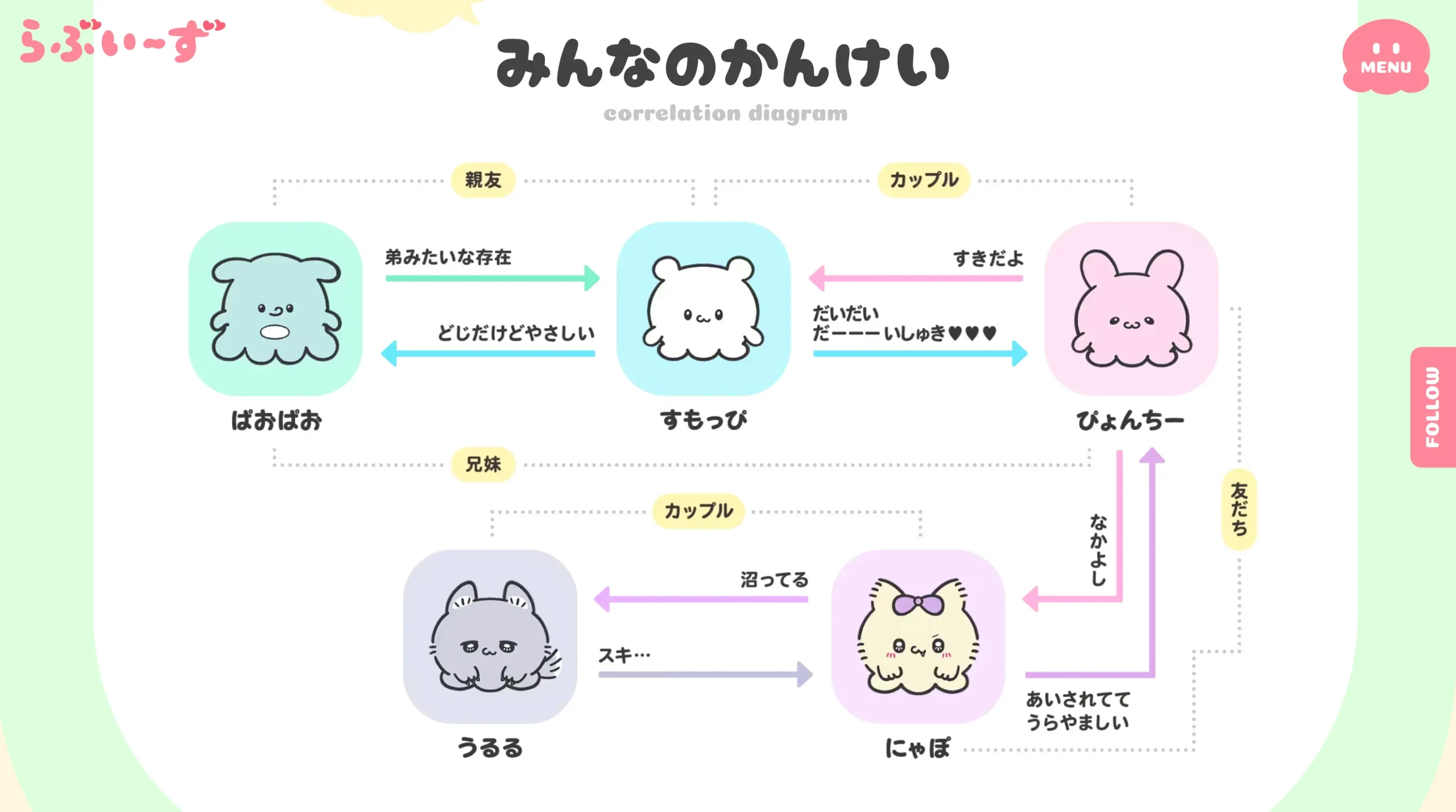
Loveeez is a Japanese character series centered on the everyday lives of a couple, told through short animated stories.
The two main characters are Sumoppi, a clingy, easily-moved-to-tears boy, and Pyonchi, a strong-willed but warm-hearted girl. Supporting characters include Ururu, Nyapo, and Paopao — each part of their own couple dynamic with distinct personalities.
The visual style is soft and rounded: blob-like forms that are neither quite animal nor human, with expressive faces that shift quickly between emotions. The overall palette is sweet and gentle, with cuteness as the clear design priority.
Where Did the Popularity Come From?
Loveeez first gained traction through TikTok. The creators began posting short animated clips around February 2023, and the TikTok account has since grown to roughly 950,000 followers or more. Official accounts followed on YouTube and Instagram, building a presence across multiple platforms simultaneously.
For young children, it’s common for the content to enter the picture through family — a parent or older sibling watching at home — before spreading by word of mouth at preschool or school.
Why Is It Showing Up Everywhere Lately?
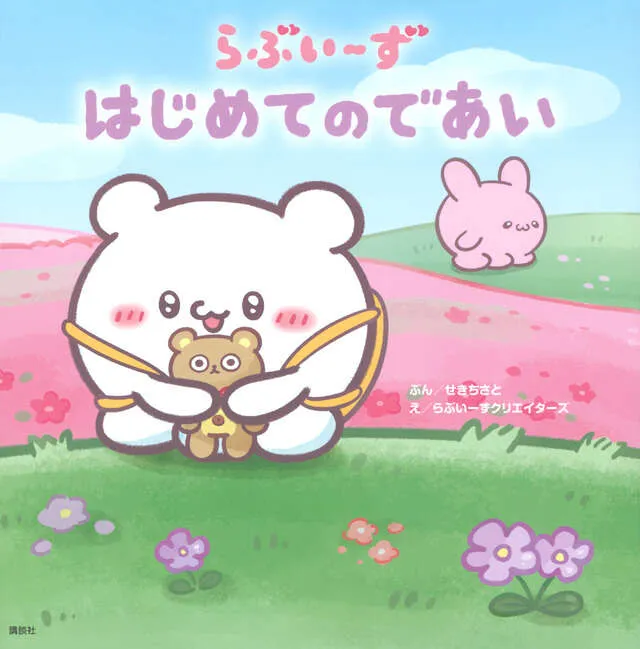
Loveeez started as a social-media-native property, but its media footprint has expanded significantly over the past year or two. In 2024, the picture book Loveeez: Our First Meeting was published and made its way into bookstores across Japan. Then in April 2026, a Loveeez anime segment began airing on Shuichi, a Sunday morning variety program on Nippon TV.
Beyond that, merchandise lines, pop-up stores, a manga serialization, and tie-ins with Shogakukan’s Ciao magazine have all contributed to the series expanding well beyond its TikTok origins. For parents who don’t use social media regularly, this broader rollout across shops, bookstores, and television is likely why Loveeez suddenly feels like it’s everywhere.
Why Young Children Love Loveeez

Simple, Instantly Recognizable Designs
The Loveeez characters are built on shapes and colors that are easy to tell apart. White and round is Sumoppi; pink and round is Pyonchi. Young children can identify them at a glance without needing to read or follow dialogue.
Emotions are also communicated clearly through facial expressions — happy, sad, sulking — in a way that reads even without understanding the words. That visual accessibility is part of what makes the content work for very young viewers.
Names and Voices That Are Easy to Copy
Names like “Sumoppi” and “Pyonchi” have a satisfying, bouncy quality that young children naturally want to say out loud. Combine that with soft, high-pitched, emotionally expressive voices and short, punchy lines, and you have content that practically invites imitation.
Children in the preschool years love becoming their favorite characters — mimicking voices, repeating phrases, acting out scenes. Loveeez is set up in a way that fits naturally into that kind of imaginative role-play and everyday conversation.
Short Episodes That Fit a Child’s Attention Span
Loveeez was designed for short-form social media, which means individual episodes are very brief. That format suits young children well — they can watch a complete story without needing to sustain attention for long, and short episodes are easy to rewatch.
The content is available on YouTube, TikTok, and TV, so there are multiple points of entry. Repeated short viewings tend to be how children develop genuine affection for characters.
Something to Talk About With Friends
“Do you know Loveeez?” “Who’s your favorite — Sumoppi or Pyonchi?” These are easy conversation starters for young children.
In preschool and early elementary settings, shared interests play a real role in how children connect with each other. Because the characters have distinct names and personalities, children can stake out preferences — “I’m a Sumoppi fan,” “I like Paopao best” — which makes the series particularly easy to share by word of mouth.
A Parent’s Perspective: What to Know About Loveeez
@loveeeeeeeeeeez あああーーーん #らぶいーず #好きな人といること #恋愛 #不安 ♬ バグッバイ – RADWIMPS
It’s a Couple-Themed Series — Is That a Problem for Young Children?
Because Loveeez is built around a romantic couple, some parents understandably wonder whether it’s really meant for small children.
Looking at the actual content, though, the stories center on feelings like loneliness, wanting to be together, or “I hate you!” (but really meaning the opposite) — emotional dynamics expressed through cute characters sulking, clinging, and making up. Based on the publicly available short videos and related content, there do not appear to be overtly problematic elements such as violence or sexual content. If you’re unsure, watching a few episodes together is the most straightforward way to get a sense of the tone.
What Children Are Actually Getting Out of It
What parents see as a romance-themed series and what children are actually responding to are often two different things.
For young children, the draw is usually the characters’ appearance, the rapid shifts in expression, the soft and high-pitched emotionally expressive voices, and the short, rhythmic lines. Most children at this age aren’t tracking the romantic storyline — they’re responding to “that’s cute” or “I like that voice” at a sensory and aesthetic level.
What Parents Probably Don’t Need to Worry About
Based on the publicly available content, the series does not appear to contain violent, sexual, or otherwise problematic material. A child developing a favorite character, picking up the picture book, and chatting about it with friends is a completely ordinary pattern of childhood interest.
Keeping an eye on overall screen time is always reasonable, but that’s true of any content — it’s not specific to Loveeez. The more useful starting point is simply understanding what your child is watching, rather than defaulting to worry.
If You Want to Watch Together
If you’re curious about the content, watching a few episodes alongside your child is the simplest approach. Asking “which character do you like best?” or “why do you like that one?” gives you a window into how your child is experiencing it.
For screen time boundaries, whatever works for your household is fine — “not before dinner,” “off an hour before bed,” and so on. The question worth sitting with isn’t so much “should I allow this?” but rather “how do we make this work in our daily rhythm?” That framing tends to be more practical in the long run.
Where to Find Loveeez: Anime, Social Media, and Merchandise

TV Anime and Short-Form Animation
From April 2026, Loveeez anime segments began airing as part of Shuichi, a Sunday morning variety program on Nippon TV, making it accessible to audiences beyond social media.
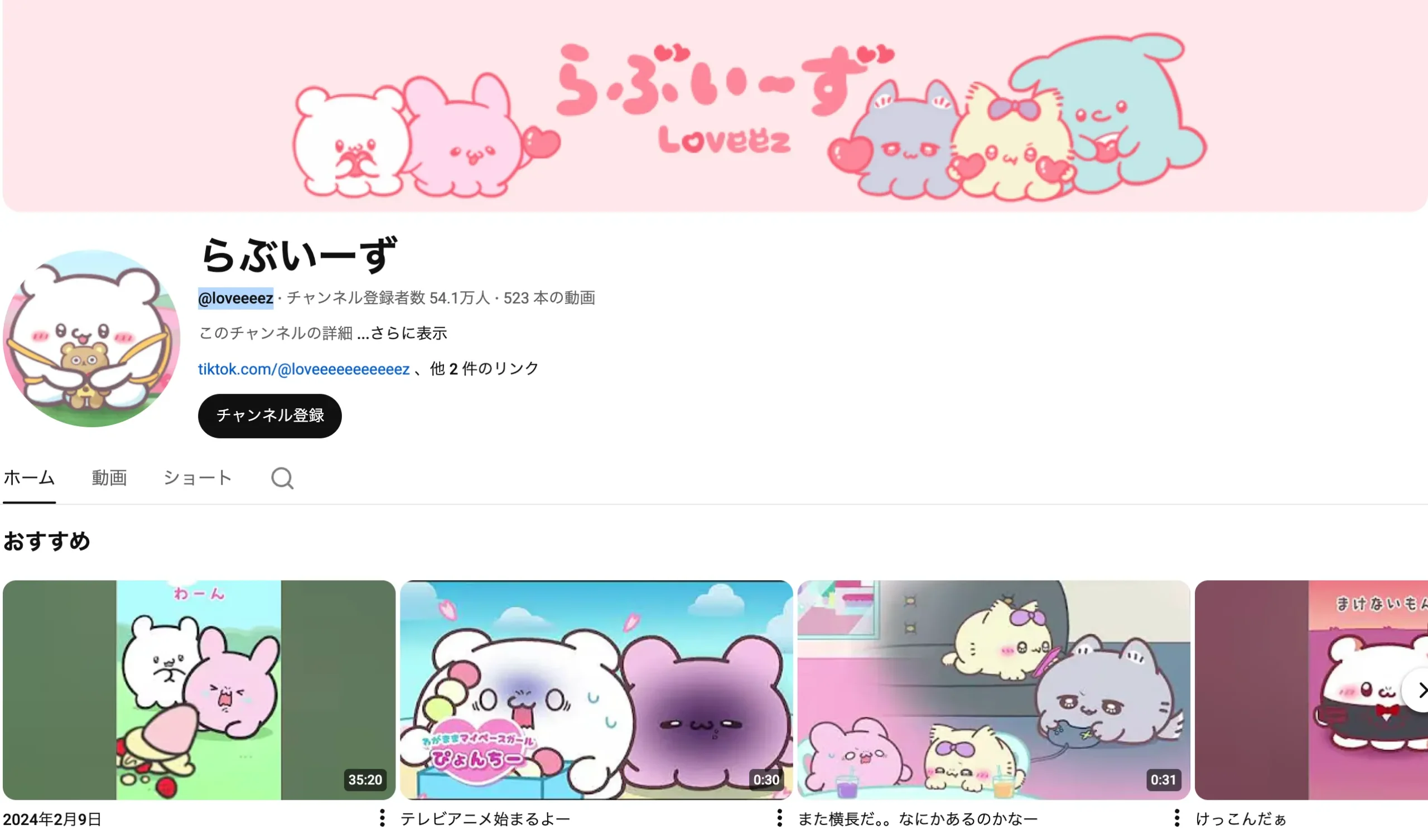
Short animated episodes are also available on the official YouTube channel, らぶいーず @loveeeez. The brevity of each episode makes them easy to slot into short pockets of the day.
How Social Media Drove the Spread
A key factor in Loveeez’s growth was its natural fit with short-form video platforms like TikTok and YouTube Shorts. Short episodes perform well because viewers are more likely to watch to the end, and shareable moments — “that’s so relatable,” “that’s adorable” — spread quickly through comments and reposts.
Fan-made content and reaction videos have further extended the series’ reach. The pattern of children knowing something their parents have never heard of is a fairly predictable outcome of how content spreads on these platforms.
Books, Merchandise, and Related Products
On the publishing side, Kodansha has released picture books including Loveeez: Our First Meeting, which are available at major bookstores and through online retailers across Japan. The books are designed to be accessible for young children, and for some families, this is how their child first encounters the characters.
Merchandise — plushies, stationery, pouches, cards — is available through toy shops, variety stores, and online. If your child starts asking for Loveeez goods, it may be worth having a loose household policy in place before the request arrives.
How to Engage When Your Child Is Into Loveeez
Start by Asking What They Like About It
When your child announces they love Loveeez, the simplest response is to ask: “Which character is your favorite?” You don’t need to know the series inside out to have that conversation.
Children are usually happy to explain — “Sumoppi is cute,” “Pyonchi seems strong” — and that exchange, however small, is a real point of connection. You don’t need to become a Loveeez expert; just being interested is enough.
Let It Feed Into Play and Creative Activities
Interest in a character often flows naturally into drawing, pretend play, or making up stories with the characters. You don’t need to orchestrate this — a simple “that drawing looks just like Sumoppi” goes a long way.
Treating a child’s enthusiasm for a popular series as a doorway into imaginative play tends to make the whole thing easier to engage with as a parent.
Set Screen Time and Merchandise Boundaries on Your Own Terms

How much screen time to allow and whether to buy merchandise are decisions each family can make at their own pace. Working it out with your child — “let’s think about it for your birthday” or “twenty minutes, then we do something else” — tends to land better than a unilateral rule, and builds some shared ownership of the arrangement.
Acknowledging that your child wants something, while calmly holding to the household’s guidelines, is a sustainable approach for the longer stretch.
Keep It in Perspective Alongside Other Interests
A popular series is one entry point among many for a child’s developing sense of what they like. A child who loves Loveeez might start wanting to read the picture books, pick up drawing, or simply have more to talk about with friends — all of which are fine outcomes.
Children’s tastes also shift. What feels all-important this month may barely be mentioned six months later. That’s a normal part of how interests develop at this age.
Frequently Asked Questions
Q. What age group is Loveeez aimed at?
Loveeez originally gained popularity among Gen Z audiences — roughly teenagers and people in their twenties — but through picture books and short anime, it has also become familiar to preschool-age children and early elementary school children. There is no officially designated age range, but in practice it tends to show up most among children from around kindergarten age through the early elementary years.
Q. Where did Loveeez originally come from?
It started as a social-media-native property, with short animated videos posted to TikTok from around 2023. It expanded to YouTube and Instagram, and has since grown into picture books, merchandise, and a TV anime segment. The TikTok-to-TV pipeline is a well-established route for character properties in Japan, and Loveeez followed a similar trajectory.
Q. Is the content appropriate for young children?
Based on the publicly available short videos and related content, there do not appear to be overtly problematic elements such as violence or sexual content. As a general starting point, it does not require unusual concern. If you want to check for yourself, watching a few episodes is the most direct approach.
Q. What kinds of merchandise are available?
The Loveeez merchandise range includes plush toys, stationery, cards, pouches, and more, available at toy retailers, variety shops, and online. Several picture books have also been published and are available at bookstores and through online retailers throughout Japan.
Q. Is there anything parents should make a point of knowing?
Getting a basic sense of what the content actually is, and asking your child what they like about it, are the two most useful starting points. Understanding what your child is watching tends to be more productive than either dismissing the interest or over-restricting it — and it opens up a natural conversation rather than closing one down.
Summary
Loveeez (らぶいーず) is a Japanese kawaii character series centered on the couple Sumoppi and Pyonchi, with supporting characters Ururu, Nyapo, and Paopao. Starting on TikTok, it has grown into a multi-platform property spanning picture books, merchandise, and a 2026 TV anime on Nippon TV — and it has worked its way into the daily conversations of young children across Japan in the process.
The reasons young children are drawn to it are straightforward: cute characters, expressive faces, voices and names that invite imitation, and the social currency of having something to discuss with friends. Most children at this age are responding to how the characters look and sound, not following the romantic storyline.
The most useful moves as a parent are also simple: find out what the content is, and ask your child what they love about it. When your child lights up and says “Sumoppi is my favorite!” — being curious enough to ask “what makes Sumoppi special?” is really all the engagement that’s needed.