
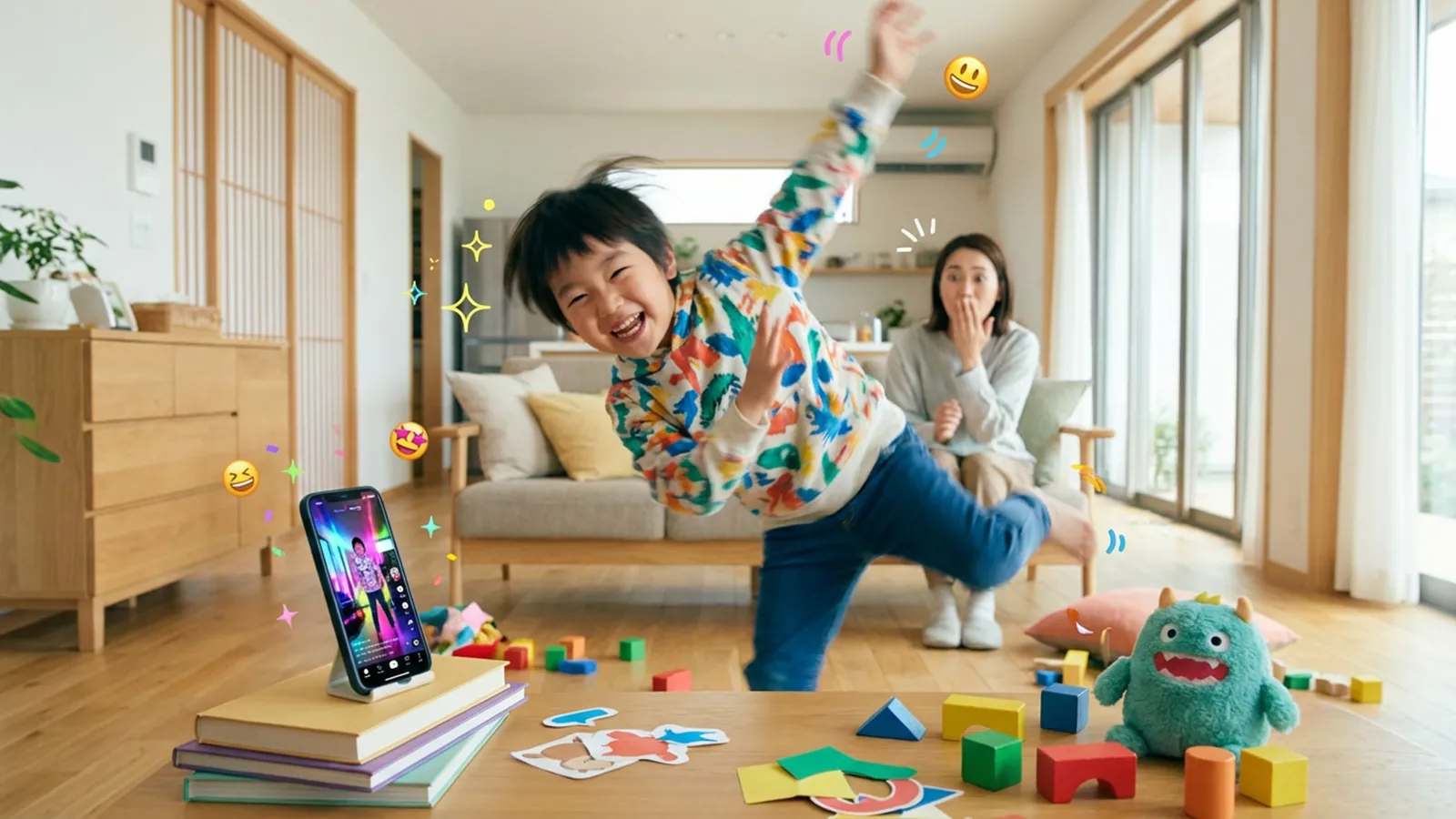
Many parents find themselves baffled when their children suddenly start repeating mysterious phrases or breaking into bizarre dances at home. As of Spring 2026, TikTok and YouTube Shorts have become major sources of trends for elementary school children, fueling an explosive rise in viral dances and internet memes.
With search queries for terms like “kids memes spring 2026” surging, understanding the origins of what your children are obsessed with is the first step toward opening up conversations at home.
This article provides a detailed look at Spring 2026’s latest trends—from the meaning of “Italian Brainrot” to the misuse of legal jargon, and how to implement effective parental controls.
- Spring 2026 Trends Highlight “Absurdist AI Memes” and Catchy Dances: Highly addictive memes are taking over, driven by advancing AI technology—such as “Italian Brainrot”—alongside viral hits like “Bachi Morina” and the “POKÉDANCE.”
- Checking the Meaning and Safety Behind the Words: Words kids use half-jokingly can sometimes originate from cyberbullying slang or the misuse of legal terms (like “Kaiji,” meaning information disclosure). It helps for parents to understand the source material.
- Create a Safer Viewing Environment with Family Pairing: Instead of dismissing your child’s interests, utilize TikTok’s restriction features and the “home rules” recommended by Japan’s Ministry of Education, Culture, Sports, Science and Technology (MEXT) to foster a safe environment that builds digital literacy.
Table of Contents
Why Parents Need to Understand Spring 2026 Kids’ TikTok Trends
Why should parents keep track of the TikTok and YouTube Shorts trends popular among children? Rather than dismissing them as “just play,” experts emphasize the need to engage with these platforms from an educational and safety perspective.
A Shared Language Between Parents and Children
For elementary schoolers, social media trends are the primary topic of conversation during recess and after school. YouTube Shorts and TikTok are massive trend factories churning out new memes constantly. If a parent immediately scolds a child for using a strange phrase at home, the child will likely close themselves off.
Conversely, showing interest by saying, “That’s that new Spring 2026 trend, right?” turns these memes into an excellent common language that bridges the generational gap. Interestingly, despite being digital natives, kids today are also embracing analog trends simultaneously, such as “Bondoro” (trading puffy, resin-style stickers with friends). Showing understanding toward your child’s multifaceted interests goes a long way in building mutual trust.

What Government Data Shows About Children’s Social Media Use
At the same time, the risks associated with kids using social media at increasingly younger ages cannot be ignored. According to government surveys, youth internet usage rates rise every year, with many elementary students accessing video-sharing sites and social media from their own personal devices.
(Source: Children and Families Agency: “Survey on the Internet Environment of Youth”)
With the culture of “Oshikatsu” (supporting and promoting favorite idols or characters) skewing younger, children continuously swiping through videos out of parental sight face risks. They may encounter inappropriate content or stumble into financial troubles, such as the “Merojoy” limited-edition merchandise resale issues. Because of this, it is helpful for parents to know the origins of trends and maintain a watchful eye for hidden dangers.
[Spring 2026 Update] 5 Viral TikTok Dances & Memes Dominating Elementary Schools
The trends of Spring 2026 have diversified from simple dances into wordplay and absurdist visuals. Here is a breakdown of five specific memes currently exploding in popularity among kids.
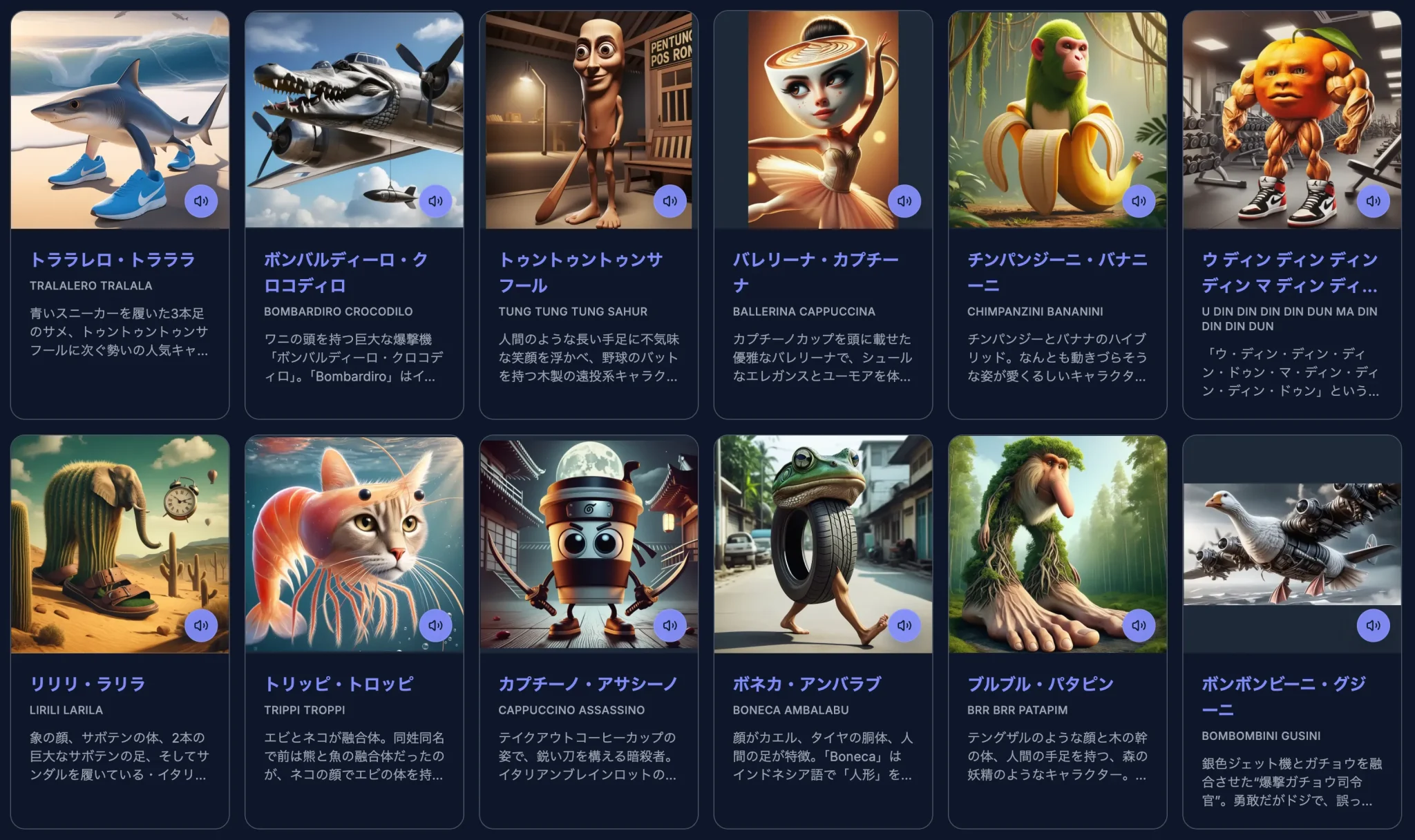
1. The Eerie Appeal of AI: “Italian Brainrot”
“Brainrot” is internet slang referring to hyper-stimulating, often meaningless content.
Recently, “Italian Brainrot”—featuring AI-generated, surreal videos of pasta dancing erratically or character faces distorting bizarrely to the tune of Italian-style background music—has become a massive hit with kids. Because it lacks any logical meaning, the sheer absurdity and sound bites make it highly addictive.
Many of these characters are now featured in merchandise and children’s games, establishing multifaceted popularity worldwide.

2. “But Now It’s Different”: A Dramatic Catchphrase Kids Repeat as a Joke
This meme mimics the dramatic moments in anime or manga where a character steels their resolve. It pairs the phrase, “I used to be [blank]… but now it’s different (squeeze!),” with the physical gesture and sound effect of clenching a fist. Kids use it as a dramatic gag to exaggerate trivial daily events, such as saying, “Until yesterday, I hadn’t done my homework… but now it’s different (squeeze!).”
3. “Kaiji Dana”: A Joke Phrase Borrowed from Legal Language
This phrase originated from a video where Japan’s top YouTuber, HIKAKIN, mentioned filing a “Sender Information Disclosure Request” (a legal step to unmask anonymous users) against cyberbullying. Among elementary schoolers, “Hai, Kaiji dana” (meaning “Yep, I’m filing a disclosure / I’m suing you”) is now used half-jokingly as a comeback or teasing threat when friends engage in minor arguments.
4. A Seasonal Meme That Resurfaces Every March: The “Dark Hinamatsuri” Parody
Dark parodies of traditional nursery rhymes, such as changing the lyrics of the classic Girls’ Day (Hinamatsuri) song to “Let’s light the lanterns with bombs…,” have resurfaced as popular TikTok audio clips. The child psychology of wanting to use slightly taboo or “edgy” language matches perfectly with the fast tempo of short videos, cementing this as a regular springtime meme.
@kemoisbest Did your area have parody songs? Yesterday was Hinamatsuri 🎎 [Notice] Birthday 🎂 Live 5/30 6 PM~ (open 5:30 PM~) Location: Imaike Mikatsuki People: Chikuwa & Yuzu, Hoshino Kaori (Kemozu) #Hinamatsuri #Mokugyo #Ukulele #Acoustic #SingerSongwriter ♬ Original Audio – Kemozu
5. Physical Fun: “Naruto Dance” and “POKÉDANCE”
Beyond linguistic memes, dances that use the whole body for expression remain a staple. This includes the “Naruto Dance,” featuring exaggerated arm movements, and the “POKÉDANCE,” which mimics various character actions. Because these often originate from official campaigns, they are generally considered safer trends.
@fz9656 Full Kemusan #FormationKemusan #chinesedance #dieunhaylangla #haidilaodance #NarutoDance @FzFenzi @WeiDe @CiDe @HeiDe ♬ Vũ điệu làng lá 一笑江湖 – FzFenzi fan
Why These Memes Are Spreading Now: Background and Predictions
Why do seemingly incomprehensible trends like “Italian Brainrot” keep emerging? The answer lies in the evolution of both platforms and technology.
How Shorts and AI Breed “Absurdist Memes”
The algorithms of YouTube Shorts and TikTok highly reward videos with long retention rates (where viewers do not swipe away). With advancements in AI, creators can quickly generate massive amounts of visually bizarre, unpredictable, and slightly eerie footage.
To capture the short attention spans of elementary school students, platforms have developed a structure that prioritizes AI-generated memes focused entirely on momentary impact and absurdity rather than meaning or narrative.
[Prediction] The Next Wave: Roblox and the Younger “Oshikatsu” Demographic
Looking toward late 2026, the next epicenter educators and parents should monitor is the metaverse gaming platform “Roblox.” Children play freely using their own avatars, and the unique jokes and slang born within this space are increasingly being exported to TikTok, turning into mainstream memes.
Regarding Age Restrictions
While many popular experiences on the platform cater to teens, Roblox allows accounts from age 5, with communication settings and content automatically filtered based on the registered age, offering tighter protections for younger users.
[Checklist] 3 Criteria to Determine if the Memes Your Child Copies Are “Safe”
When your child picks up new slang, it is natural to worry, “Is it okay to let them use this word?” Here are concrete criteria for parents to evaluate safety.
Is the Source Material Clear?
If the source is an official artist or corporate campaign, it is generally considered safe. However, extreme videos generated by amateurs using AI or memes originating from anonymous message boards often carry inappropriate underlying contexts.
Are There Hidden Slang Meanings or “Misused Legal Terms”?
Check if the words your child uses without understanding contain hidden undertones of violence or discrimination. Recently, there has been an increase in kids misusing legal terminology—such as HIKAKIN’s “Kaiji dana” (information disclosure request)—as mere “teasing slang.” This can be a good chance to teach them the weight and real-world consequences of words.
Does It Involve Dangerous Challenges?
Prioritize checking whether they are mimicking behaviors that pose physical risks. If you feel an activity is even slightly dangerous, explain exactly why it is unsafe and instruct them to stop immediately.
Enjoying Trends Safely: How to Set Up TikTok Parental Controls
To interact healthily with fast-changing meme culture, correctly configuring app settings and establishing clear household rules is essential.
How to Use TikTok’s “Family Pairing” Feature
TikTok includes a “Family Pairing” feature that links a parent’s account to a teen’s account for safety management. Through this, parents can set daily screen time limits, restrict Direct Messages (DMs), and manage searchable content and safety settings from their own device. The setup is simple, requiring you to follow on-screen instructions and scan a QR code.
MEXT Recommended: How to Create “Smartphone and Social Media Rules at Home”
Beyond system restrictions, discussing and setting rules together as a family is critical. Japan’s Ministry of Education, Culture, Sports, Science and Technology (MEXT) strongly recommends creating household rules as part of information moral education.
(Source: MEXT: “Enhancement of Information Moral Education and Rule-Making at Home”)
Rather than imposing rules unilaterally, think together about why those rules are necessary. Practical approaches include writing down moral agreements—such as “We won’t use inflammatory words because they hurt others” or “We won’t buy limited-edition items found on social media without telling parents” (to prevent resale scams)—and posting them in the living room.
Conclusion: Don’t Reject the Trends; Enjoy Them “Safely” Together
TikTok trends and memes emerge rapidly among elementary schoolers. While some absurdist content like “Brainrot” might be baffling to adults, these are important communication tools for children.
Instead of policing everything with a blanket “the internet is dangerous” mindset, it is more helpful to learn safe engagement strategies for navigating the digital world.
Taking an interest in the origins of trends, assessing risks, and watching over your child while utilizing appropriate parental controls can help children build solid digital literacy. Listen when your child asks, “Do you know this one?”, and embrace the opportunity to safely enjoy the latest trends together.
