


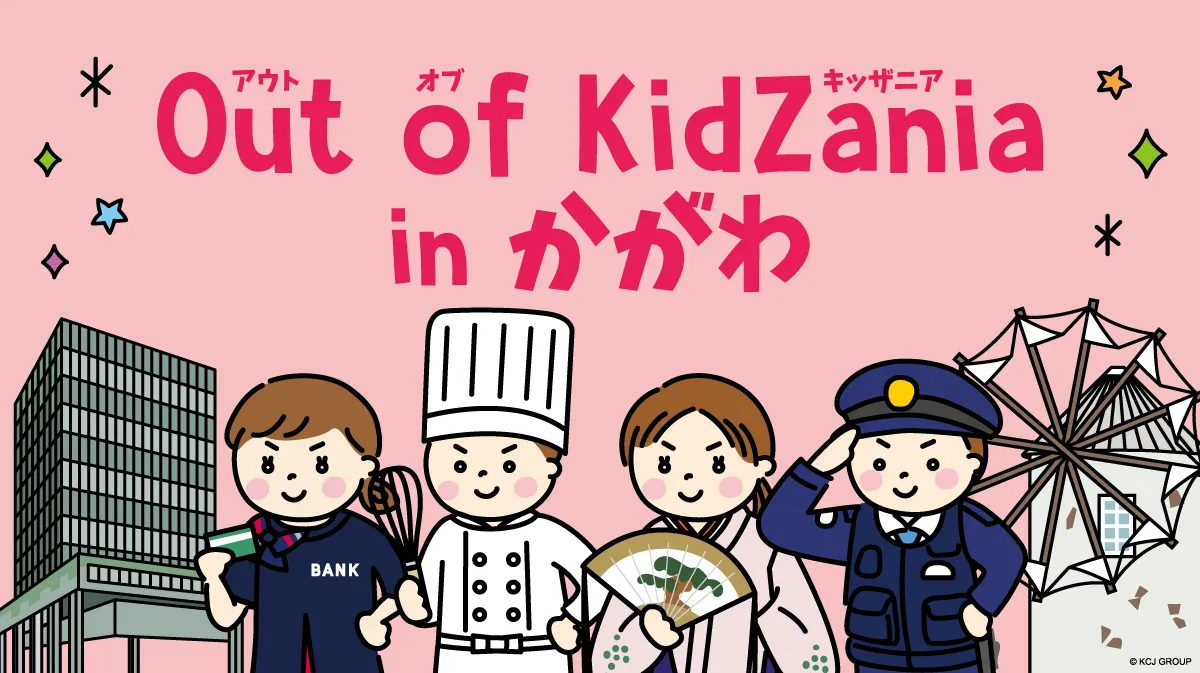
Out of KidZania in Kagawa is a limited-time career experience event where children can experience real jobs and learn how society works. Unlike the indoor KidZania facility, this event collaborates with local businesses and municipalities, using the entire city as a stage for authentic work experiences—which is one of its major attractions.
In Kagawa Prefecture, the event attracts high interest each time, and among parents considering participation, “when will it be held” and “how long will it last” are particularly pressing questions.
This article provides a careful introduction centered on the 2026 event dates and schedule considerations, so that even first-time participants can grasp the full picture.


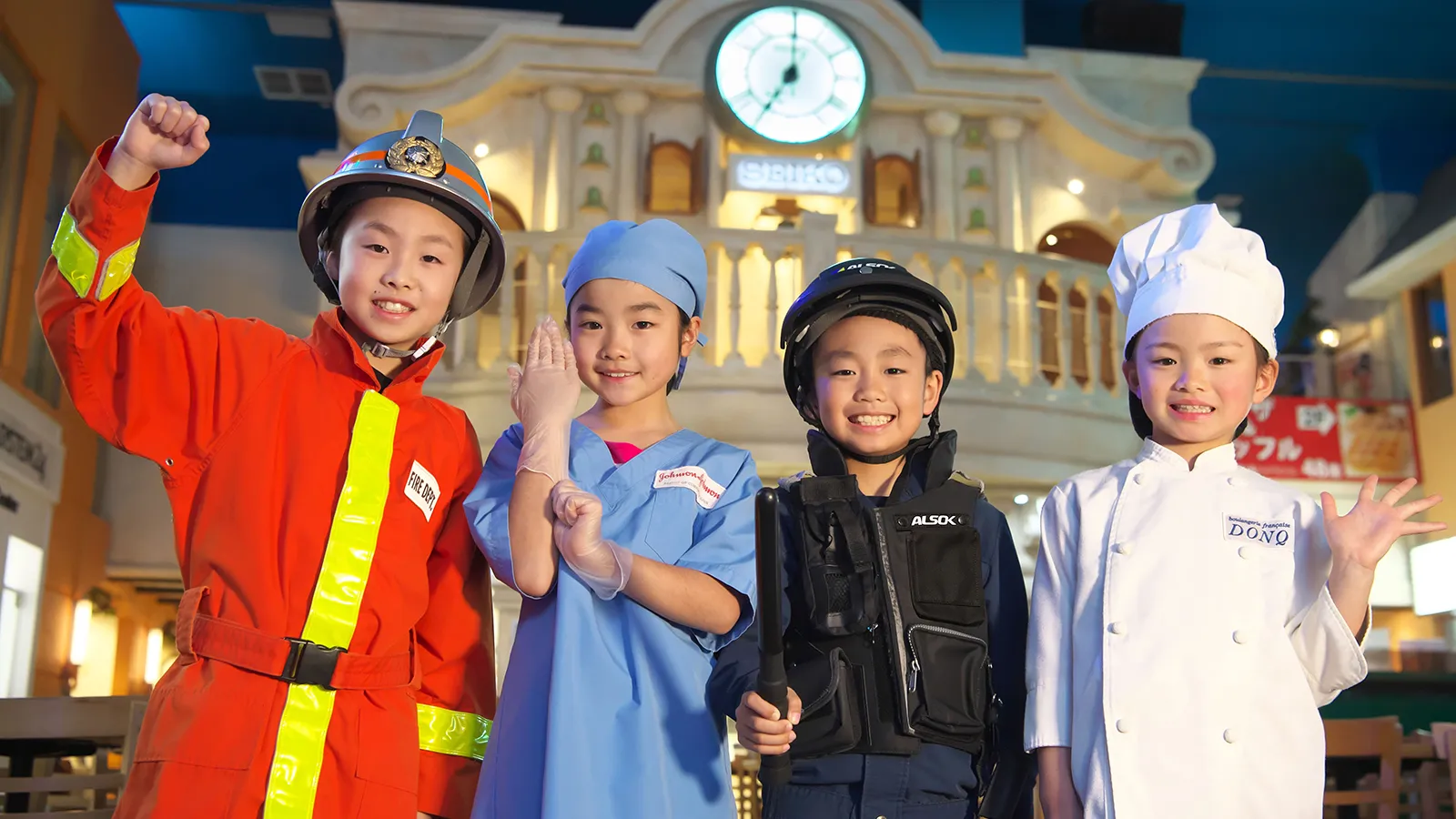
Table of Contents
What is Out of KidZania in Kagawa (Takamatsu)?
Out of KidZania in Kagawa (Takamatsu) is a limited-time career experience event where children can experience real jobs and learn how society works. Unlike typical career experiences held in indoor facilities, a major feature is that the entire city serves as the stage, with participation from actual stores and businesses.
For parents, it’s gaining attention as an experience that allows children to “learn while playing” and “develop social skills and independence.” Another attraction is the ability to interact with local industries and jobs, taking advantage of the Kagawa-Takamatsu regional character. Here, we’ll explain the differences from KidZania, the reasons for the venue location, and the conditions for children’s participation from a childcare and parenting perspective.
Basic Venue Information (Location, Season, Features)
- Name: Out of KidZania in Kagawa
- Date: March 1, 2026 (Sunday)
- Time: 10:00 AM – 4:30 PM (Registration starts at 9:00 AM)
- Location: Sunmesse Kagawa Main Exhibition Hall/Outdoor Exhibition Area/Temporary Parking Lot (2217-1 Hayashi-cho, Takamatsu City, Kagawa Prefecture)
- Eligible Ages: 1st grade elementary through 3rd grade junior high school students ※Kagawa Prefecture residents only
- Participation Fee: 500 yen (tax included) per program ※Some programs may require additional material fees
- Official Website: https://114rfd.co.jp/outofkidzania-kagawa/
- Application Method: Online advance reservation system
First round [lottery] December 23, 2025 (Tuesday) 12:00 PM –
Second round [first-come] February 6, 2026 (Friday) 12:00 PM – ※Closes when capacity is reached - Lottery Application Period: December 23, 2025 (Tuesday) 12:00 PM – January 19, 2026 (Monday) 5:00 PM
※Account registration is required for program applications.
Up to 3 siblings can apply per account.
※Winners will be selected for a maximum of 3 programs per account.
※Payment is by credit card only. - Lottery Results Announcement: February 2, 2026 (Monday)
※Results will be sent to the registered email address.
※If winners cancel, those slots will become available on a first-come basis [February 6, 2026 (Friday) 12:00 PM -].
Differences from KidZania | A System that Uses Diverse Venues Rather Than a Single Facility

While KidZania recreates a cityscape at about 2/3 scale within a dedicated facility, Out of KidZania sets up booths in main venues like gymnasiums and exhibition halls, and some programs can also be experienced at actual stores, factories, and other on-site locations.
Children select from multiple job experience programs provided by local companies and organizations based on their interests, and work while interacting with actual employees and staff. After completing their work experience, they receive payment in special currency and can shop at designated locations, creating a system where they can practically learn the meaning of work and how the economy functions.
Why is it Held in Kagawa and Takamatsu?
The background for holding Out of KidZania in Kagawa includes an initiative by the organizer, The 114 Bank, which will celebrate its 150th anniversary in 2028, with the goal of delivering dreams and hope to the next generation of children. This is the first time nationwide that a regional bank has hosted this event.
The venue is “Sunmesse Kagawa” in Hayashi-cho, Takamatsu City, a comprehensive convention facility equipped with a main exhibition hall, outdoor exhibition area, and more. The 114 Bank and 43 regional companies are exhibiting, providing diverse career experiences unique to the local area, such as “Shinto priest and shrine maiden work,” “sake brewer work,” and “relocation coordinator work.”
Additionally, Kagawa Prefecture, Takamatsu City, the Kagawa Prefecture Board of Education, the Shikoku Economic Federation, and others provide support, creating a system where the entire region supports children’s learning. It’s positioned as a valuable opportunity for children to encounter the appeal of various local jobs, broaden their thinking about careers, and learn about how society works while having fun.
Eligible Ages and Participation Conditions
Out of KidZania in Kagawa is for elementary 1st grade through junior high 3rd grade students residing in Kagawa Prefecture. Participation requires parental (guardian) accompaniment.
The application method is online advance reservation, with the first round being lottery-based (December 23, 2025 – January 19, 2026) and the second round first-come, first-served (February 6, 2026 -). The participation fee is 500 yen (tax included) per program, with credit card payment required. Some programs may have additional material fees.
Up to 3 siblings can apply per account, and in the first round (lottery), you can win up to 3 programs maximum.
Each program has set eligible grades and capacity limits. For example, “Bank employee work” is for elementary 3rd grade through junior high 3rd grade, while “Sake brewer work” is for elementary 1st grade through junior high 3rd grade—conditions vary by program. It’s important to check each program’s application requirements in advance and select ones that match your child’s age and interests.
Job Experiences Available at Out of KidZania in Kagawa

For parents, concerns include “what kind of work will they do,” “is it safe,” and “what learning will this lead to.” Here, we’ll organize information about work experiences at actual workplaces, Kagawa-specific regional programs, and the learning children gain through these experiences from a childcare and parenting perspective.
Real Job Experiences at Actual Workplaces
The job experiences at Out of KidZania in Kagawa are characterized by being held at actual stores and businesses. Children take on roles appropriate to their age as part of the staff, including customer service, manufacturing assistance, cleaning, and guidance.
Rather than following a predetermined script, they need to respond to the situation at hand, naturally requiring concentration and judgment. From a childcare and parenting perspective, “experiencing fulfilling a role among adults” becomes a major trigger for building self-esteem.
Additionally, receiving special currency or other compensation after completing work allows them to experience the basic social structure of “work → receive compensation.” Regarding safety, pre-event explanations and staff supervision are provided, creating a design that’s reassuring even for first-time participants.
Kagawa-Specific Careers and Local Business Programs


For example, opportunities are provided to experience the behind-the-scenes aspects of tourism-related work, regionally-rooted store operations, and manufacturing-related tasks that are difficult to see in daily life. From a childcare and parenting perspective, the realization that “there are these kinds of jobs in the area where I live” becomes a foundation for developing future career perspectives.
Rather than being an extension of travel or outings, the value unique to the Kagawa event is that it can be participated in as learning about the region.
Learning Children Gain Through Experience
Job experiences at Out of KidZania in Kagawa don’t stop at simple career introductions. Children learn basic skills necessary for social life through actual experience, such as greeting, keeping time, and listening to and acting on instructions.
Additionally, through emotions like “I did it well” or “that was difficult,” it becomes an opportunity to notice their own strengths and weaknesses. From a childcare and parenting perspective, the “experience of trying” itself is more important than the result.
Experiences in the real world that are difficult to obtain at home or in kindergarten become triggers for broadening children’s perspectives and fostering confidence and independence. Taking time for parent-child reflection after the experience can deepen the learning.
Basic Information Parents Should Know Before Participating
When participating in Out of KidZania in Kagawa, what parents want to know in advance includes basic information such as “when is it held,” “how do we apply,” and “what are the costs and capacity limits.” Because it’s an event that uses the entire city, the preparation and approach differ somewhat from typical indoor events.
Especially when young children participate, understanding travel distances, waiting times, and the extent of parental involvement will lead to peace of mind. Here, we’ll organize information about event timing and venue area considerations, the application process, and estimated participation costs from a childcare and parenting perspective.
Event Timing, Schedule, and Venue Area Considerations
Out of KidZania in Kagawa is a one-day-only event on March 1, 2026 (Sunday) from 10:00 AM to 4:30 PM (registration starts at 9:00 AM). The event timing is set for a weekend, making it easy for families to plan, but because the date is limited, early reservation is important.
The venue is consolidated at Sunmesse Kagawa (2217-1 Hayashi-cho, Takamatsu City) in the main exhibition hall, outdoor exhibition area, and temporary parking lot.
Out of KidZania events have two hosting formats: “main venue consolidated type” and “main venue + on-site venue distributed type,” but in Kagawa, all programs are conducted within the main venue at Sunmesse Kagawa, so travel to multiple areas throughout the city is not necessary.
Each program is conducted at designated booths within the venue, and participants need to gather at each booth 15 minutes before the work experience begins.
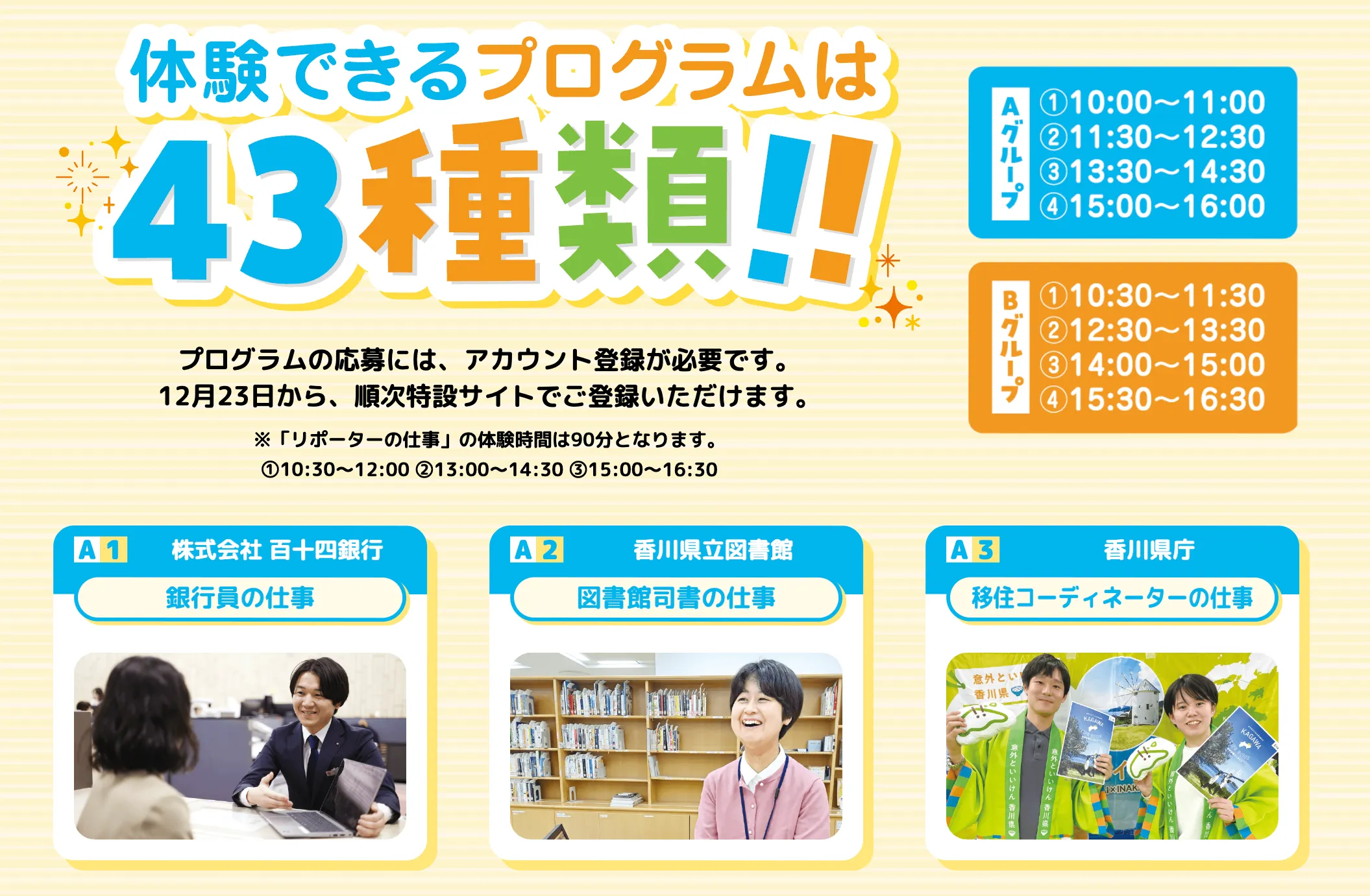
Programs are divided by time slots (for example: ①10:00-11:00 AM, ②11:30 AM-12:30 PM, ③1:30-2:30 PM, ④3:00-4:00 PM), and when participating in multiple programs, it’s important to select ones that don’t overlap in time.
Since it’s travel within the venue, checking the program time allocation in advance provides peace of mind.
Participation Method and Application Process
The participation method for Out of KidZania in Kagawa is online advance reservation with a two-stage application format.
First Stage: First Round Application (Lottery System)
The first round is lottery-based, accepting applications from December 23, 2025 (Tuesday) 12:00 PM to January 19, 2026 (Monday) 5:00 PM.
Lottery results are announced via email on February 2, 2026 (Monday). Up to 3 siblings can apply per account, with lottery winners selected for a maximum of 3 programs.
Upon winning, payment is processed simultaneously via credit card at 500 yen (tax included) per program.
Second Stage: Second Round Application (First-Come Basis)
If you don’t win the lottery, or if openings occur due to winner cancellations, a second round (first-come basis) is held starting February 6, 2026 (Friday) at 12:00 PM.
The second round has no application limit and accepts entries on a first-come basis until capacity is reached.
Important Notes
Account registration is required for application. The payment method is credit card only, with no cash payment option.
Payment is not processed for first-round lottery losers, but second-round applications are charged at the time of application.
Even if you won in the first round, you can apply for the second round.
However, you can only apply for programs that don’t overlap in time with programs you’ve already won.
Participants need to check each program’s application requirements (eligible grades, items to bring, allergy information, etc.) in advance when applying for multiple programs they want to experience.
When applying for multiple programs, it’s important to select ones that don’t overlap in time.
Estimated Participation Costs and Capacity
The participation cost for Out of KidZania in Kagawa varies by experience content and time slot, but is often set at a relatively accessible price point.
Fees may be determined by the number of job experiences and duration, requiring each family to consider “how much experience to provide.”
Additionally, each program has set capacity limits, with small groups being standard from a safety management perspective.
Therefore, participation may not be possible if there are many applicants. From a childcare and parenting perspective, it’s important to focus not only on cost but also on “whether the child can enjoy it without strain” and “whether it’s a time period they can concentrate.” Understanding the capacity and fee structure enables informed participation decisions.
Day-of Flow and Parental Involvement
On the day of Out of KidZania in Kagawa, things work a bit differently than typical events.
Because job experiences are conducted while moving around the city, understanding “the flow from assembly to dismissal” and “how much parents should be involved” in advance leads to peace of mind.
Especially for first-time participants, there are many situations where children are prone to anxiety and the parent’s positioning becomes important.
Here, we’ll organize information about the day’s flow from registration to experience completion, the scope of accompaniment, and considerations when there are siblings, from a childcare and parenting perspective.
Day’s Flow from Registration to Experience Completion
The day starts with registration at the designated time and location.
After registration, there’s typically an explanation of experience content and sharing of precautions, followed by movement to each job experience location. During the job experience, children enter actual workplaces and engage in activities while receiving staff instructions.
Experience duration varies by content, but formats involving concentrated engagement for a set time are common.
After experience completion, time may be set aside for receiving compensation and reflection.
From a childcare and parenting perspective, anticipating that “there will be waiting time” and “travel will occur” and preparing drinks and breaks provides peace of mind. Understanding the day’s flow helps children participate more calmly.
How Much Can Parents Accompany?
At Out of KidZania in Kagawa, basically children take the lead during job experiences, with parents maintaining a certain distance while watching over them.
Workplace safety management is handled by staff, so there aren’t many situations where parents directly intervene.
However, parental support is needed during registration, travel, and waiting times before and after experiences. Rather than “leaving everything to others,” it’s good to be conscious of “being close enough to be called on when in trouble.”
For children experiencing things alone for the first time, the peace of mind of having parents nearby is a significant support. It’s important to watch over them without excessive interference.
Considerations When There Are Siblings
When siblings participate, actions may be separated depending on each one’s age and experience content.
While an older child is doing a job experience, a younger child may have extended waiting time, so it’s important to think about how they’ll spend that time in advance.
Additionally, siblings who don’t meet the minimum eligible age for experiences may not be able to participate in some cases. Anticipating “who will wait where” and “how many parents are needed” prevents confusion on the day.
Thinking about appropriate involvement for each sibling and making feasible plans is key to the whole family enjoying the experience.
Why Out of KidZania in Kagawa is Valued by Parenting Families

Rather than teaching knowledge, the system of learning by actually doing it can be said to naturally support children’s growth.
Here, we’ll organize information about the value of social experiences that differ from school learning, understanding of work, and the impact on parent-child relationships from a childcare and parenting perspective.
Social Experiences Not Obtainable from Desk Study
One reason Out of KidZania in Kagawa is highly valued is that experiences can be gained in actual society.
At school and home, time inevitably centers on learning knowledge, but this event provides the experience of “fulfilling a role while interacting with people.”
The feature is being able to experientially learn skills needed in society, such as greeting, keeping time, and listening to and acting on instructions.
From a childcare and parenting perspective, such experiences remain deeper in the heart than teaching with words. The experience itself, including failures and nervousness, becomes valuable learning that promotes children’s growth.
Understanding of Work and Interest in the Future
Through job experiences, children begin to think in their own way about “what does it mean to work.”
What’s important is not just completing tasks, but being able to feel “for whom” and “for what purpose” they’re being done.
At Out of KidZania in Kagawa, because they fulfill roles at actual workplaces, it’s easier to realize that work is connected to society. Rather than specifically deciding on future career choices, what’s important is “having a positive image of working.”
Such experiences become triggers for broadening children’s interests.
Experiential Value that Naturally Increases Parent-Child Conversation
Many voices are heard saying that parent-child conversation naturally increases after Out of KidZania in Kagawa experiences.
Topics like “what kind of work did you do,” “what was fun,” and “what was difficult” arise easily, expanding conversations that don’t come up in daily life.
From a childcare and parenting perspective, such dialogue time is very valuable.
Reflecting on experiences together provides children with practice in putting their feelings into words, and allows parents to learn about aspects of their growth. It can be said that being valued as a memorable experience for both parent and child is a reason for evaluation.
Summary
Out of KidZania in Kagawa is a valuable opportunity for children to learn about how society works and the meaning of work through experiencing working in actual cities and workplaces.
Experiences not obtainable in school foster children’s confidence and interest in the future, and parent-child conversation naturally expands after the experience.
When parents grasp information in advance and are conscious of feasible involvement, it becomes a highly satisfying learning time for the family.


![Water Play Spots Near Tokyo for Babies and Toddlers [2026]](https://en.tamagodaruma.com/wp-content/uploads/2026/06/tokyo-water-play-450x253.webp "Water Play Spots Near Tokyo for Babies and Toddlers [2026]")
