


![Water Play Spots Near Tokyo for Babies and Toddlers [2026]](https://en.tamagodaruma.com/wp-content/uploads/2026/06/tokyo-water-play-1536x864.webp "Water Play Spots Near Tokyo for Babies and Toddlers [2026]")
“I’d love to take my little one somewhere to splash around this summer — but I’m nervous about getting there and finding out babies aren’t even allowed in the water.” If that sounds familiar, this article is for you. Here we compare wading pools, waterside parks, and water play spots near Tokyo — known in Japanese as jabu-jabu ike (じゃぶじゃぶ池), these are the shallow, free-access public splash areas found in many of Tokyo’s municipal parks — all reviewed through the lens of what actually matters to parents of infants and toddlers.
When choosing a water play spot near Tokyo, popularity alone isn’t the best guide — especially with a baby or toddler. What matters more is whether the place covers your practical needs: swim diaper rules, shade and rest areas, how easy it is to change clothes, how far it is from the nearest station, and how quickly you can leave when you need to. Checking these in advance — particularly for children aged 0–3 or preschool age — can mean the difference between a manageable outing and an exhausting one.
Please note that Tokyo’s public wading pools and water play facilities each set their own rules for open seasons, entry conditions, and diaper policies — and these vary by ward and by site. This article focuses on what can be verified through official sources, and marks anything that may change year to year as “confirm before visiting.” Always check each facility’s official website for the latest information before you head out.
Table of Contents
When Choosing Water Play Near Tokyo with a Baby or Toddler, These Four Things Matter
When it comes to water play with little ones, a spot that covers the practical basics will serve you better than one that simply has good reviews.
Articles about water play near Tokyo tend to feature words like “free,” “close to the station,” “spacious,” and “popular.” Those things matter, of course. But with a baby or toddler, the problems that come up on the day tend to be more specific.
For example: arriving to find that children wearing diapers are not permitted to enter. Realizing that the only shade is far from the water, so you’re standing in direct sun while your child splashes. Discovering there’s no changing area, meaning you have to dress your child in wet clothes for the journey home. Or deciding it’s time to leave, only to find the nearest station is a long walk away — and your toddler has run out of steam.
To avoid these situations, it’s worth confirming the following four things before you leave home:
- Diaper and swim diaper rules
- Shade and rest area availability
- Changing and toilet access
- Distance from the nearest station and ease of making a quick exit
Tokyo Metropolitan Government’s Bureau of Construction maintains a list of water play facilities in metropolitan parks, including Akatsuka Park, Ukima Park, Kiba Park, Komazawa Olympic Park, Toneri Park, Toyama Park, Hikarigaoka Park, Fuchunomori Park, and Mizumoto Park. It’s a useful starting point for building a shortlist — but the rules differ by facility, so individual pages need to be checked for specifics.
(Source: Water Play (Splash Pools and More) | Tokyo Metropolitan Government Bureau of Construction)
Diaper Rules Vary by Facility — Always Check Before You Go
The single most important thing to confirm before visiting any public wading pool in Tokyo is the diaper and swim diaper policy. The rules differ from facility to facility, and they aren’t always what you’d expect.
Many parents assume that a swim diaper solves the problem. That’s not necessarily the case. In Koto Ward, for example, the official guidance sets the FY2026 open season for wading pools, fountain streams, and water play areas from July 1 to September 6, and clearly states that children wearing regular diapers or swim diapers should refrain from entering.
(Source: Wading Pools, Fountain Streams, and Water Play Areas | Koto Ward)
Bunkyo Ward, on the other hand, has confirmed that its public wading pools are open for FY2026 from June 12 to September 9. At Otowa Children’s Playground, Shinmei Toden Depot Park, and Rikugi Park, children wearing swimwear with built-in diaper functionality are permitted to use the pools.
(Source: Using the Wading Pools | Bunkyo Ward)
In Sumida Ward, regular diapers are not allowed — but swim diapers are permitted, provided the child wears a swimsuit over them.
(Source: Parks with Water Play | Sumida Ward)
In short, Tokyo’s water play facilities operate under at least three different policies: no diapers of any kind; no regular diapers and no swim diapers; and swim diapers permitted with a swimsuit worn over them. If your child isn’t yet potty-trained, don’t assume the rules are the same everywhere — always verify the current policy on each facility’s official website before you go.
Don’t Assume Shade and Changing Areas Will Be Available
Water play spots look refreshing, but in practice they’re almost always outdoors — which means the supervising adult spends a lot of time in the sun while the child is in the water. It’s often the parent, not the child, who overheats first.
Even parks with plenty of shade don’t always have it close to the water play area. You might find tree cover is already taken; toilets are a long walk away; there’s no designated changing space; or there’s no clear place to leave the stroller.
Changing access matters especially with babies and toddlers. Many facilities don’t have changing rooms. Packing a wrap towel, a large bath towel, a waterproof bag, and a separate bag for wet items will all help you manage the transition out of the water without extra stress.
Editor’s Note
When taking young children to a water play spot, “which place is the most popular” matters far less than “will I be able to leave without it turning into an ordeal?” The most fun outing can turn into a difficult memory if the journey home is a battle. At TamagoDaruma, when we recommend water play spots, we always suggest planning for a short session from the start — play a little, feel good, head home.
Comparison Table: 9 Water Play Spots Near Tokyo — What Families with Young Children Need to Know
When comparing water play spots near Tokyo, it helps to separate what can be confirmed through official sources from what you’ll need to recheck closer to your visit.
The table below focuses on what matters most to families with young children: diaper and swim diaper rules, transit access, admission, and the current status of 2026 information. Open seasons and closure days may change due to weather, cleaning schedules, maintenance, or management decisions.
| Facility | Area | Diapers & Swim Diapers | Getting There | Admission | 2026 Info Status |
|---|---|---|---|---|---|
| Toyama Park | Shinjuku Ward | Open to potty-trained preschoolers only. Children wearing diapers, or those without swimwear, are not permitted. | Accessible from Nishi-Waseda or Takadanobaba Station | Free | 2025 official notice available. Confirm this year’s rules before visiting. |
| Komazawa Olympic Park | Setagaya / Meguro wards | All diapers including swim diapers are not permitted. Swimwear required to enter. | Walking distance from Komazawa-daigaku Station | Free | 2026 official notice available. |
| Shimizuzaka Park | Kita Ward | Regular diapers and infant water-play pants not permitted. | Walking distance from Higashi-Jujo Station | Free | Kita Ward official guidelines available. Confirm this year’s schedule before visiting. |
| Furukawa Waterside Park | Edogawa Ward | Check official source | Bus from Kasai or Ichinoe Station area | Free | Edogawa Ward’s FY2026 info pending update; confirm before visiting. |
| Toyosu Park | Koto Ward | Per Koto Ward: children wearing regular diapers or swim diapers should not enter. | Approx. 5-min walk from Toyosu Station | Free | FY2026: July 1–Sep 6, 10:00 a.m.–4:00 p.m. |
| Ohyokogawa Riverside Park | Sumida Ward | Regular diapers not permitted. Swim diapers allowed if worn under a swimsuit. | Accessible from Oshiage or Kinshicho area | Free | Sumida Ward official info available. Verify whether the area is open before visiting. |
| Shinmei Toden Depot Park | Bunkyo Ward | Permitted if child wears swimwear with a built-in diaper. | Accessible from Honkomagome or Sendagi area | Free | FY2026: June 12–Sep 9 |
| Rikugi Park | Bunkyo Ward | Permitted if child wears swimwear with a built-in diaper. | Accessible from Komagome Station area | Free | FY2026: June 12–Sep 9 |
| General Recreation Park | Edogawa Ward | Check official source | Bus from Kasai or Nishi-Kasai area | Free | Edogawa Ward’s FY2026 info pending update; confirm before visiting. |
For Koto Ward sites including Toyosu Park, the FY2026 season runs from July 1 to September 6, from 10:00 a.m. to 4:00 p.m. The official notice also clearly states that children wearing regular diapers or swim diapers should not enter the water.
(Source: Wading Pools, Fountain Streams, and Water Play Areas | Koto Ward)
Bunkyo Ward’s pools are open for FY2026 from June 12 to September 9, from 9:30 a.m. to 5:00 p.m. Pools are closed every Thursday for cleaning and may also close without advance notice during typhoons or heavy rain.
(Source: Using the Wading Pools | Bunkyo Ward)
For Edogawa Ward’s water play spots, this year’s opening schedule and cleaning days are subject to update on the official website. If you’re planning to visit Furukawa Waterside Park or the General Recreation Park, check Edogawa Ward’s official page before heading out.
(Source: Parks with Water Play | Edogawa Ward)
About Each Facility
Here’s a closer look at each of the nine locations in the comparison table, from the perspective of families with babies and toddlers. Open seasons and rules may change, so please verify with official sources before visiting.
[Shinjuku Ward] Toyama Park


Toyama Park is a metropolitan park in Shinjuku Ward. Its wading pool is in the Hakoneyama section — making it one of the more centrally located options for summer water play in Tokyo.
The 2025 official guidance states that the pool is open to potty-trained preschoolers only. Children still wearing diapers, or those without swimwear, are not permitted to enter. For 2026 visits, check the park’s latest announcements to confirm the current rules are the same.
(Source: Wading Pool Usage Guide | Toyama Park)
Easy to reach from central Tokyo, but families with babies and toddlers will want to check in advance on shade availability, changing access, and how the crowds look at different times of day. If you’re going solo, a short morning session is the most manageable approach.
[Setagaya Ward] Komazawa Olympic Park

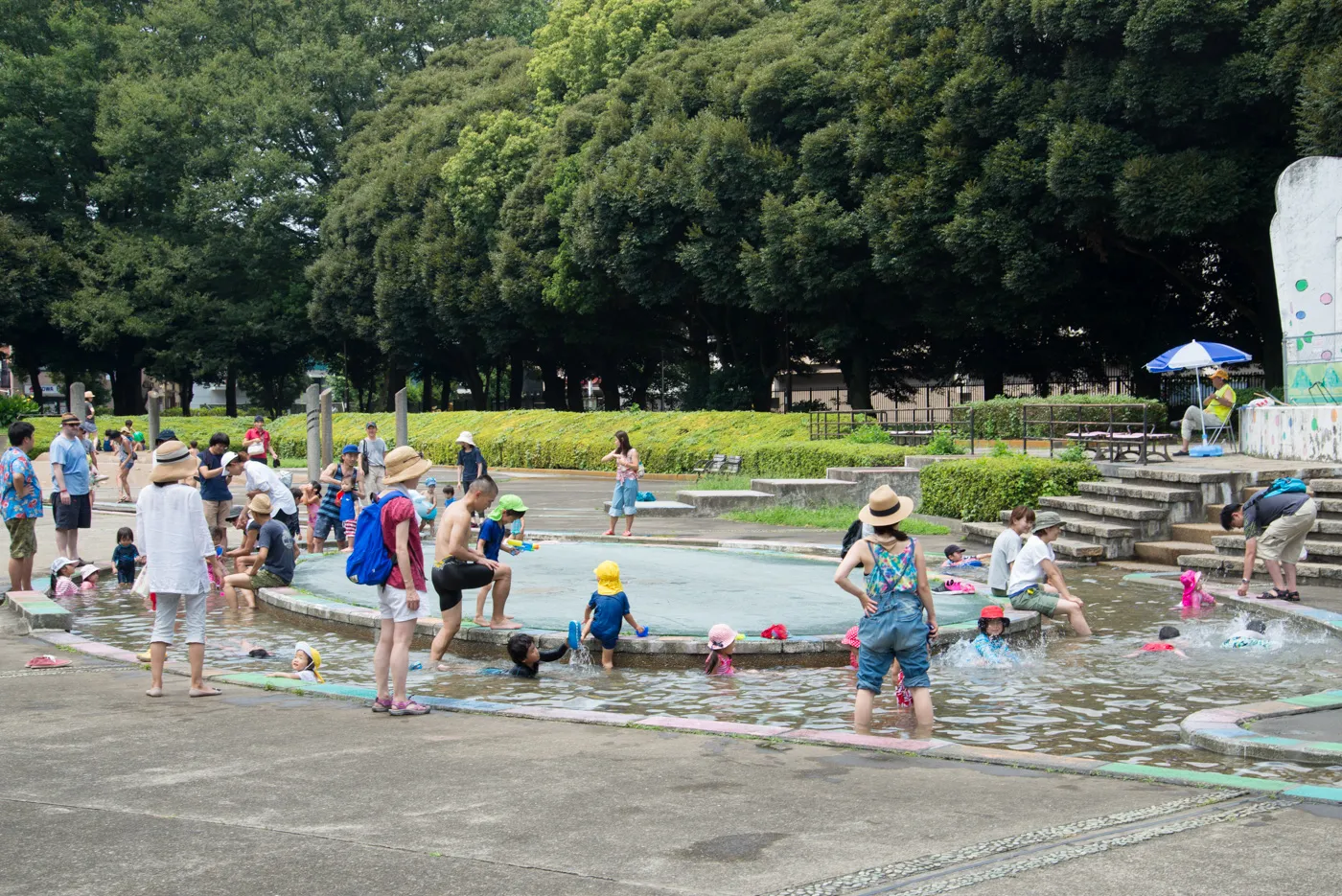
Komazawa Olympic Park is a large metropolitan park with a children’s play area alongside the wading pool, making it easy to combine water play with other outdoor activities in the same visit.
The 2026 official guidance confirms the pool is open from July 1 to September 30, from 10:00 a.m. to 4:00 p.m. The notice states that all diapers — including swim diapers — are not permitted, and that children must wear swimwear to enter.
(Source: Wading Pool Usage Information | Komazawa Olympic Park)
The park is a walk from the nearest station, so families with strollers or toddlers should plan for the return journey potentially meaning a tired child who can’t walk. Setting a firm finish time and leaving a little earlier than you think you need to tends to make the day more manageable.
[Kita Ward] Shimizuzaka Park

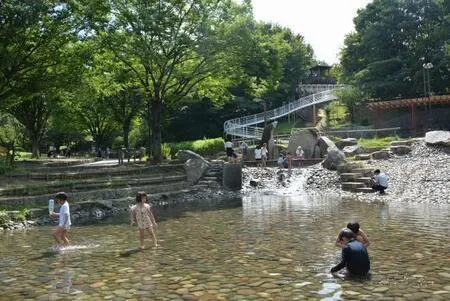
Shimizuzaka Park is a popular summer water play destination in Kita Ward. It features flowing water rather than a still pool — which gives it a different feel from a standard wading area.
Kita Ward’s official guidelines for water play facilities state that children wearing regular diapers are not permitted, and that infant water-play pants are also not allowed. Some facilities in the ward may have separate rules, so confirm the policy for the specific site you plan to visit.
(Source: Parks with Water Play | Kita Ward, Tokyo)
Running or flowing water can look very shallow but still catch a small child off balance. With one- and two-year-olds, stay close enough to offer a hand at any moment — and if siblings want to move in different directions, that can be harder to manage than it looks.
[Edogawa Ward] Furukawa Waterside Park

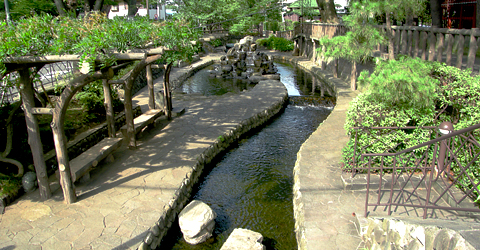
Furukawa Waterside Park is a riverside park in Edogawa Ward where children can explore the water’s edge and walk along the stream. The open, walkable layout is appealing — but for families with babies and toddlers, total walking distance and the return journey need to be part of the plan.
Edogawa Ward’s official page covers water play parks in the ward, but this year’s opening schedule and cleaning days need to be confirmed via the official update. Treat any prior-year dates as a starting point only, and always verify before heading out.
(Source: Parks with Water Play | Edogawa Ward)
If bus travel is involved, factor in boarding and alighting with a stroller — and think about what the return might feel like at the end of a hot afternoon. The outing doesn’t end when the water play does — plan through to getting home.
[Koto Ward] Toyosu Park

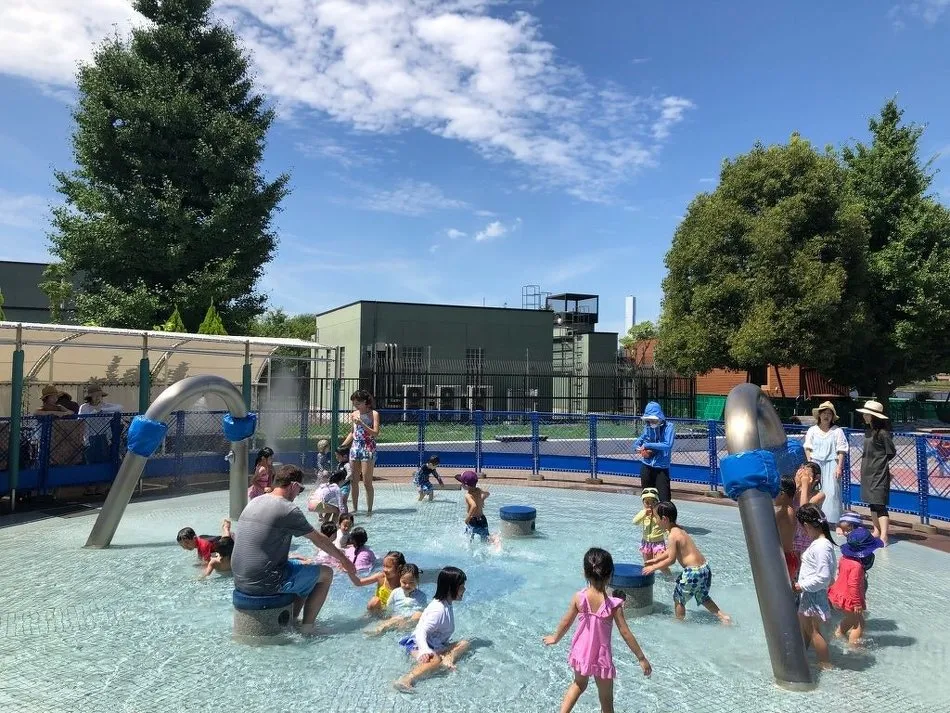
Toyosu Park is one of the more accessible options in the area, about a five-minute walk from Toyosu Station — a practical advantage for families who need to be able to leave quickly.
Koto Ward’s official notice confirms that wading pools, fountain streams, and water play areas in the ward — including Toyosu Park — are open for FY2026 from July 1 to September 6, from 10:00 a.m. to 4:00 p.m. Toyosu Park is listed as a site accessible within five minutes of Toyosu Station.
(Source: Wading Pools, Fountain Streams, and Water Play Areas | Koto Ward)
That said, Koto Ward’s official guidance is clear that children wearing regular diapers or swim diapers are not permitted in the water. If your child isn’t yet potty-trained, plan the outing around the park and surroundings rather than the pool itself.
[Sumida Ward] Ohyokogawa Riverside Park

Ohyokogawa Riverside Park is a waterside park in Sumida Ward with water play facilities. Its riverside setting makes it easy to pair with a walk or some exploring in the surrounding area.
Sumida Ward’s official guidance states that regular diapers are not permitted, but swim diapers are allowed if the child wears a swimsuit over them. The distinction matters: “no regular diapers” and “swim diapers permitted with swimwear” are two separate rules — read both carefully before you go.
(Source: Parks with Water Play | Sumida Ward)
At a waterside setting like Ohyokogawa, the water may look very shallow — but children should never be left unsupervised. Sumida Ward’s official guidance also notes that there are no lifeguards on duty, and that parents are responsible for keeping their child in sight at all times.
[Bunkyo Ward] Shinmei Toden Depot Park

Shinmei Toden Depot Park is one of Bunkyo Ward’s designated public wading pool sites. The park also has vintage Tokyo Toden streetcar vehicles on display — an extra point of interest for train-loving children.
Bunkyo Ward’s official guidance confirms that pools are open for FY2026 from June 12 to September 9, from 9:30 a.m. to 5:00 p.m. Shinmei Toden Depot Park is listed among the sites where children wearing swimwear with built-in diaper functionality are permitted to use the pool.
(Source: Using the Wading Pools | Bunkyo Ward)
The fact that children in diaper-style swimwear can enter is a meaningful reassurance for families whose children aren’t yet fully potty-trained. Just remember that pools are closed every Thursday for cleaning — check the day of the week before you finalize your plans.
[Bunkyo Ward] Rikugi Park

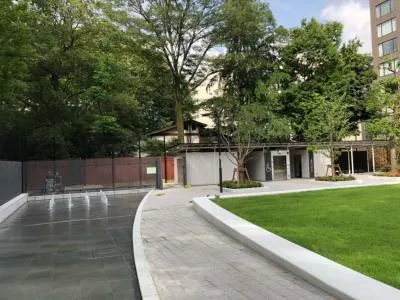
Rikugi Park is also one of Bunkyo Ward’s public wading pool sites. Like Shinmei Toden Depot Park, it is listed as a facility where children wearing swimwear with a built-in diaper are permitted to enter.
The FY2026 season runs from June 12 to September 9, from 9:30 a.m. to 5:00 p.m. The pool is closed every Thursday for cleaning and may close without advance notice during typhoons or heavy rain.
(Source: Using the Wading Pools | Bunkyo Ward)
Families with children who aren’t yet fully potty-trained may find Bunkyo Ward’s policy more accommodating than some other wards. Confirm the current rules before visiting — and check on shade, changing facilities, and how busy the site typically gets.
[Edogawa Ward] General Recreation Park

The General Recreation Park is a large park in Edogawa Ward that often comes up as a water play option for the area.
However, this year’s opening schedule and cleaning days for the park’s water facilities are listed as pending update on Edogawa Ward’s official website. Don’t rely on prior-year dates — wait for the official update and confirm before planning your visit.
(Source: Parks with Water Play | Edogawa Ward)
Large parks offer plenty to explore, but for families with babies and toddlers, distances can add up quickly. If water play is the main goal, look up where within the park the water area is before you arrive — and note where the toilets, rest spots, and nearest exit are.
Before You Go, Decide When You’ll Leave
One of the most useful things you can do before a water play outing with young children is to decide in advance what will signal that it’s time to head home.
As TamagoDaruma’s editor-in-chief, something strikes me every time I put together an article about water play spots. There are plenty of articles about where to go — but very little about deciding in advance when you’ll leave. That part rarely gets mentioned.
What really exhausts parents on an outing with young children is rarely that the plan fell apart. More often, it’s not being able to make the call to leave when the time has come. The child won’t stop crying. You’re sweltering. They’re begging for five more minutes. Most parents have been in that situation — and stayed longer than they should have.
Knowing when to head home acts as a safety valve for your outing. Setting some ground rules in advance makes a real difference. Here are a few to decide before you go:
- Wrap up after a short morning session
- Stop when your child says they want to get out
- Head home if your child stops drinking fluids
- Leave if you notice anything unusual — flushed face, glazed expression, uncharacteristic listlessness
- Leave if the crowd makes it hard to keep your child clearly in sight
- Leave when you — yourself — are struggling with the heat or the weight of the bags
- Once everyone is changed and dry, move on to lunch or start the journey home
Thinking “that’s enough for today” tends to lead to a better memory than “just a little longer.” The goal isn’t to stay as long as possible — it’s to end the day on your own terms.
Know the Signs That It’s Time to Leave
Near any body of water, keeping your child in sight is the foundation of safety. Even in a shallow public wading pool, toddlers can fall and land face-down in the water, and even small amounts of water pose a risk to very young children.
Japan’s Consumer Affairs Agency urges parents to prevent water accidents in children by maintaining close supervision at all times, not allowing children near hazardous water areas, and using life jackets where conditions call for it. Even in a managed public splash area, “it’s shallow, so it’s safe” is not a reliable assumption — keep your child within arm’s reach.
(Source: Preventing Water Accidents in Children | Consumer Affairs Agency)
For heat illness, watch for warning signs: flushed face, reduced energy, persistent crying, reluctance to drink fluids, or unusual listlessness. Your child may feel cool while in the water, but the walk there, the wait in the sun, and getting changed all expose them to heat.
Japan’s Ministry of the Environment Heat Illness Prevention Information Site notes that heat illness cases rise sharply when the WBGT (Wet Bulb Globe Temperature) reaches 28 or above, and that once it exceeds 31, the risk is serious enough that going outdoors should be avoided where possible and moving to a cool indoor space is recommended. For physical activity at 31 or above, the guidelines say in principle do not proceed — and for children, stop entirely.
(Source: What Is the WBGT? | Ministry of the Environment Heat Illness Prevention Information Site)
Plan Your Exit Route Before You Arrive
Once you decide it’s time to leave, there’s still a sequence of things to get through: getting your child out of the water, drying them off, getting dressed, sorting the wet items, making sure everyone has had a drink, and starting to move. That sequence takes time, and it’s easier when you already know what comes next.
Whether there’s shade nearby, a bench, a toilet, an air-conditioned facility, or a station or bus stop close at hand — each of these makes a real difference to how manageable the process feels.
Somewhere like Toyosu Park, where the station is a short walk away, makes it easier to wrap things up and get moving. Larger parks or facilities that require bus travel can mean a significant gap between deciding to leave and actually getting on your way.
Before you head out, confirm not just where the water play area is, but where you’ll change clothes on the way out, where you can sit and rest, and what you’ll do if your child can’t walk. Building the exit into your plan is as important as knowing how to get there.
Packing for Water Play with a Baby or Toddler — A Practical Minimum
Pack for getting home clean and dry, not just for the water. The most important items in your bag aren’t for the pool — they’re what you need to sort out a wet child quickly and leave without a struggle.
With young children, an overloaded bag becomes its own burden. What matters isn’t a complete beach kit — it’s having what you need to clean up and head home without extra stress.
Use the list below as a pre-departure checklist. Note that some facilities restrict what you can bring in — items like pop-up tents or picnic sheets should be checked against facility rules before you pack them.
10 Essentials
- Swimwear or clothes that can get wet
- Swim diaper or swimwear with a built-in diaper that meets the facility’s rules
- Full change of clothes
- Quick-dry towel or bath towel
- Sandals or footwear that meets facility rules
- Sun hat
- Drinks
- A snack or something small to eat
- Waterproof bag for wet items
- Health insurance card or medical certificate
5 Nice-to-Haves
- Wrap towel or poncho-style towel
- Wet wipes
- Something to drink for yourself
- Small first-aid kit
- Sun cover or cooling accessories for the stroller
As covered above, whether swim diapers are permitted varies by facility. Bringing one is practical, but having it with you doesn’t guarantee your child can use the pool. Always confirm the rules for your specific destination before assuming entry.
Pre-Trip Checklist
- Confirmed open dates and hours on the official website
- Checked the diaper and swim diaper policy
- Checked closure days, cleaning schedules, and conditions for weather cancellations
- Decided where and how to change clothes on the way out
- Set a return time and decided when you’ll leave
- Packed a bag for wet items
Frequently Asked Questions — Common Worries About Water Play with Young Children
A quick summary of questions that often come up for parents planning water play with babies and toddlers. Since rules vary by facility, always verify through official sources before making your final decision.
- Q. Can my child enter a public wading pool while still wearing a diaper?
- It depends on the facility. Some wards — such as Koto Ward — state that children wearing any type of diaper, including swim diapers, should not enter. Others, such as certain sites in Bunkyo Ward and Sumida Ward, allow swim diapers or swimwear with built-in diaper functionality under specific conditions. Always check the rules for the specific location you plan to visit.
- Q. Is bringing a swim diaper enough to guarantee we can use the pool?
- Not necessarily. Some facilities do not allow swim diapers at all. Others permit them provided the child wears a swimsuit over them. Verify the specific rule on each facility’s official page before you go.
- Q. What age can children start enjoying water play?
- Eligible ages vary by facility. Many public wading pools are aimed at young children through early primary school age, but some require that children be potty-trained. For children aged 0–1, it’s often more realistic to plan for being near the water rather than in it, treating the experience as sensory rather than active water play.
- Q. Can we use the pools on rainy or cool days?
- Possibly not. Koto Ward, for example, notes that facilities may close temporarily without advance notice when temperatures are low, when there are strong winds or rain, or when a special heat illness alert or Tokyo heat alert is issued.
- Q. What time is best to avoid crowds?
- Early in the morning tends to be the quieter time at most facilities. Hours vary by site, so check opening times in advance. For families with young children, getting in before the heat peaks also helps with safety and comfort.
- Q. Can we use sunscreen?
- This depends on the facility’s rules. Sunscreen may be relevant to water quality, so check the official guidelines for your chosen site. Combining a sun hat, staying in shade, and keeping visits short is often the more straightforward approach.
- Q. What should I prioritize if I’m going solo with my child?
- Prioritize proximity to a station or bus stop, confirmed toilet access, and the ability to wrap up and leave quickly. A smaller, more accessible spot that you can manage alone is a better choice than a large or popular destination that’s harder to handle on your own.
Staying Safe — Preventing Water Accidents and Heat Illness
Public wading pools are shallow — but that doesn’t mean young children are automatically safe in them.
Water depths of 10 to 30 centimeters may look harmless, but children can fall and land face-first in the water. Even with a parent nearby, a brief distraction — adjusting the bag, glancing at your phone — can mean a child is momentarily without close attention.
Japan’s Consumer Affairs Agency urges parents to prevent water accidents in children by maintaining close supervision at all times, not allowing children near hazardous water areas, and using life jackets where conditions call for it. Even in a managed public splash area, “it’s shallow, so it’s safe” is not a reliable assumption — keep your child within arm’s reach.
(Source: Preventing Water Accidents in Children | Consumer Affairs Agency)
In summer, heat illness is also a real risk. Japan’s Ministry of the Environment Heat Illness Prevention Information Site indicates that heat illness cases rise sharply when the WBGT (Wet Bulb Globe Temperature) reaches 28 or above. Once it exceeds 31, the risk is serious enough that going outdoors should be avoided where possible and moving to a cool indoor space is recommended. For physical activity at 31 or above, the guidelines say in principle do not proceed — and for children, this applies even more strictly.
(Source: What Is the WBGT? | Ministry of the Environment Heat Illness Prevention Information Site)
Young children can’t reliably tell you when they’re not feeling well. If you notice a flushed face, reduced energy, unusual crying, reluctance to drink, or signs of listlessness — stop the water play, move to a cool location, and make sure your child is hydrating. If you have any concerns about your child’s condition, consult a medical facility or appropriate support service.
Making This Summer’s Water Play a Good Memory — Editor’s Summary
Near Tokyo, there are public wading pools, waterside parks, and water play spots where families with babies, toddlers, and young children can enjoy the water together in summer. But diaper policies, open seasons, closure days, changing facilities, and eligible ages vary considerably from site to site.
What TamagoDaruma cares most about isn’t simply listing as many recommended spots as possible. It’s making sure parents can confidently answer three questions before they leave the house: Can we get there? Will my child actually be allowed in the water? Can we get home without it turning into an ordeal?
A successful outing doesn’t have to be a long one. Even thirty minutes — if your child got to touch the water and came home smiling, and you came home without being depleted — is a genuinely good day out.
What families with young children need more than a perfect plan is room to leave early. The comparison table, packing list, and leave-time guide in this article are here to make your summer water play a little more manageable — and a little easier to look back on as a good memory.
One final reminder: facility rules and open seasons can change due to annual policy updates, weather, cleaning schedules, or maintenance work. Always check the official website for the most current information immediately before you visit.


![[Spring Break 2026] 8 Best Family Outing Spots in Japan: Inclusive Parks & Hidden Gems](https://en.tamagodaruma.com/wp-content/uploads/2026/03/intro_view-450x300.webp "[Spring Break 2026] 8 Best Family Outing Spots in Japan: Inclusive Parks & Hidden Gems")