


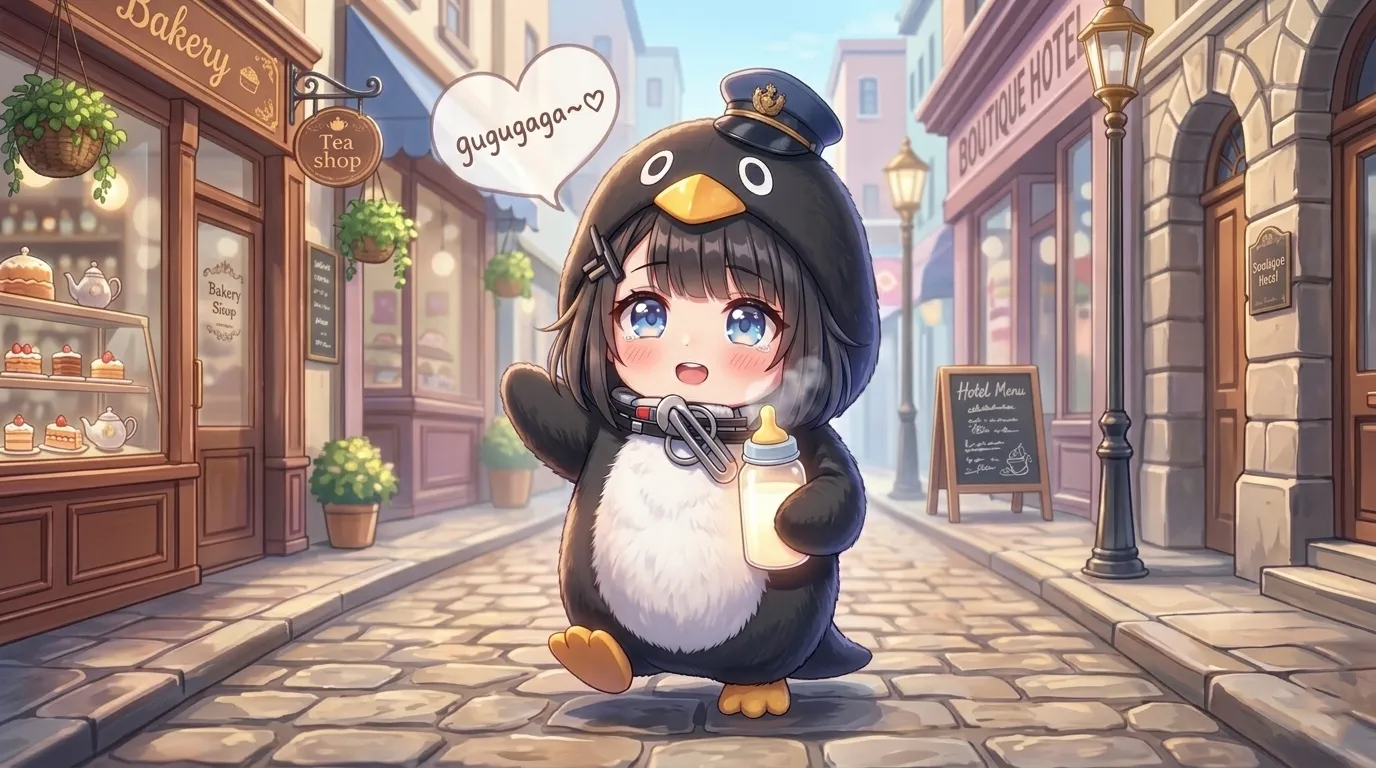
Your child suddenly starts saying “gugu gaga!” They keep watching videos of a penguin-like character on TikTok and YouTube Shorts. For parents wondering “What is this? Is it okay to let them watch?”, this article lays out what the Gugugaga Penguin meme is and how to keep an eye on it at home.
The Gugugaga Penguin is a social-media meme featuring a penguin-like character that’s been making the rounds on TikTok, YouTube Shorts, and similar platforms. Some of the spin-offs appear to be AI-generated or AI-assisted, while others may be edited, reposted, or fan-made, but whether to let your child watch isn’t something to decide by the name alone — it’s important to check the actual video content, the related videos, and how long they’re watching.
In this article, we’ll go through it in order: what Gugugaga is and the background of where it may have come from, the criteria parents can use to decide “what should I check before letting my child watch?”, and how it’s viewed in childcare settings.
Table of Contents
What is the Gugugaga Penguin? A 30-second rundown for parents

The Gugugaga Penguin is a short-video meme in which a chubby, chibi penguin-like character moves around going “gugu gaga.” It has spread mainly on YouTube Shorts, TikTok, and X, and in Japanese it’s recognized under the spellings “ぐぐがが” and “ググガガ.”
For anyone not familiar with the word “meme,” a quick note: a meme is a form of expression that spreads across the internet through repeated imitation and variation. A particular video or phrase becomes a “template” that anyone can join in on. If you think of it as a form of internet play culture, you won’t be far off.
The penguin-like character design and the ease of creating spin-off videos with AI tools are often cited as reasons the meme spread.
What does “Gugugaga” mean?
For the origin of the word “Gugugaga,” many explanations trace it to “咕咕嘎嘎 (gū gū gā gā),” a Chinese transliteration of the English baby-talk phrase “goo-goo ga-ga.” It has a sound close to the babbling (nango) babies make, and the sound itself — seeming to mean something while meaning nothing — has a charm of its own.
Its exact origin is unclear, so this article doesn’t treat that as settled fact. What can be said is that it has the character of spreading through “how good the sound feels” rather than being “a word for asserting something.” Children may say it as a pleasing sound without deeply understanding any meaning.
Where is it being talked about?
The main platforms it spreads on are TikTok and YouTube Shorts. Explainer articles also introduce it as a social-media meme that spreads mainly on these two platforms. The vertical, short, loop-friendly video format and this character’s movements pair well, in a structure that makes you want to watch it again and again.
What is a meme? If you need to explain it to a child
If your child asks “what’s a meme?”, you don’t need a complicated explanation. Just telling them “it’s something popular on the internet that everyone copies and plays with” is enough. In old-fashioned terms, it’s close to a silly pose or catchphrase that went around the class.
Let’s get to know where Gugugaga came from
It’s fine to read this as supplementary information “for those who want to know.” It doesn’t directly affect the decision about whether your child watches, but it’s useful for having an overall picture of “what they’re looking at.”
What’s said to be the origin of the penguin character?

Several possible influences have been mentioned online, including the Chinese-language expression “咕咕嘎嘎,” Endministrator-related memes from “Arknights: Endfield,” and references connected to BanG Dream! It’s MyGO!!!!!.
However, because internet memes spread as multiple posts, audio clips, fan works, and AI-generated videos pile up, it’s a genre where it’s difficult to identify a single confirmed origin. Rather than chasing down the precise first appearance, this article focuses on how to check, at home, the videos your child is watching.
(Reference: What is Gugugaga, the social-media sensation? An explanation of the penguin meme’s origins and how it’s made|CyberLink)
Why did it spread this far?
A penguin-like character design that’s easy for a wide range of people to take to, an environment where AI tools make it easy to create spin-off videos, and an ear-catching sound that rides well on the short-video format — these three points are said to combine.
It isn’t something that can be fully explained by a single creator or official setting alone; it’s easier to understand if you grasp it as a meme that spread as multiple posts, fan works, and AI-style spin-off videos piled up. This background also connects to the later discussion of “how to deal with AI-generated memes.”
Is it okay to let children watch Gugugaga? The conclusion is “judge by the content”
Let’s be direct. You can’t decide whether it’s dangerous or safe by the name “Gugugaga” alone. There are heartwarming clips of a cute penguin, and there are also cases where, under the same tag, inappropriate spin-off videos with content you wouldn’t want a child to see come up. The axis for judging isn’t the “name” but the “actual video content.”
Judge safety by the “video content,” not the “name”
When checking the videos your child is watching, here are the points especially worth looking at.
- Whether the visuals or audio have anything too scary, or violent or grotesque depictions
- Whether anything concerning appears in the comment section at the bottom of the screen or in the “related videos”
- Whether the behavior your child says they “want to copy” is safe
- Whether it includes mocking a specific person or any discriminatory nuance
Popular characters and memes have a structural trait: cute videos and content-gone-wrong spin-offs tend to be mixed in together. This isn’t limited to Gugugaga — the same can happen with any character, no matter how famous.
Also, YouTube Kids has a feature for parents to set the content level, and YouTube also has managed children’s accounts. TikTok has a parental control feature (Family Pairing) as well. Whichever service it is, you need to check the parental settings and understand what’s actually being watched. You can’t say outright that one particular service alone is safe or dangerous.
(Reference: Parental restrictions on YouTube Kids profiles|Google Help)
(Reference: Parental controls (Family Pairing)|TikTok Support)


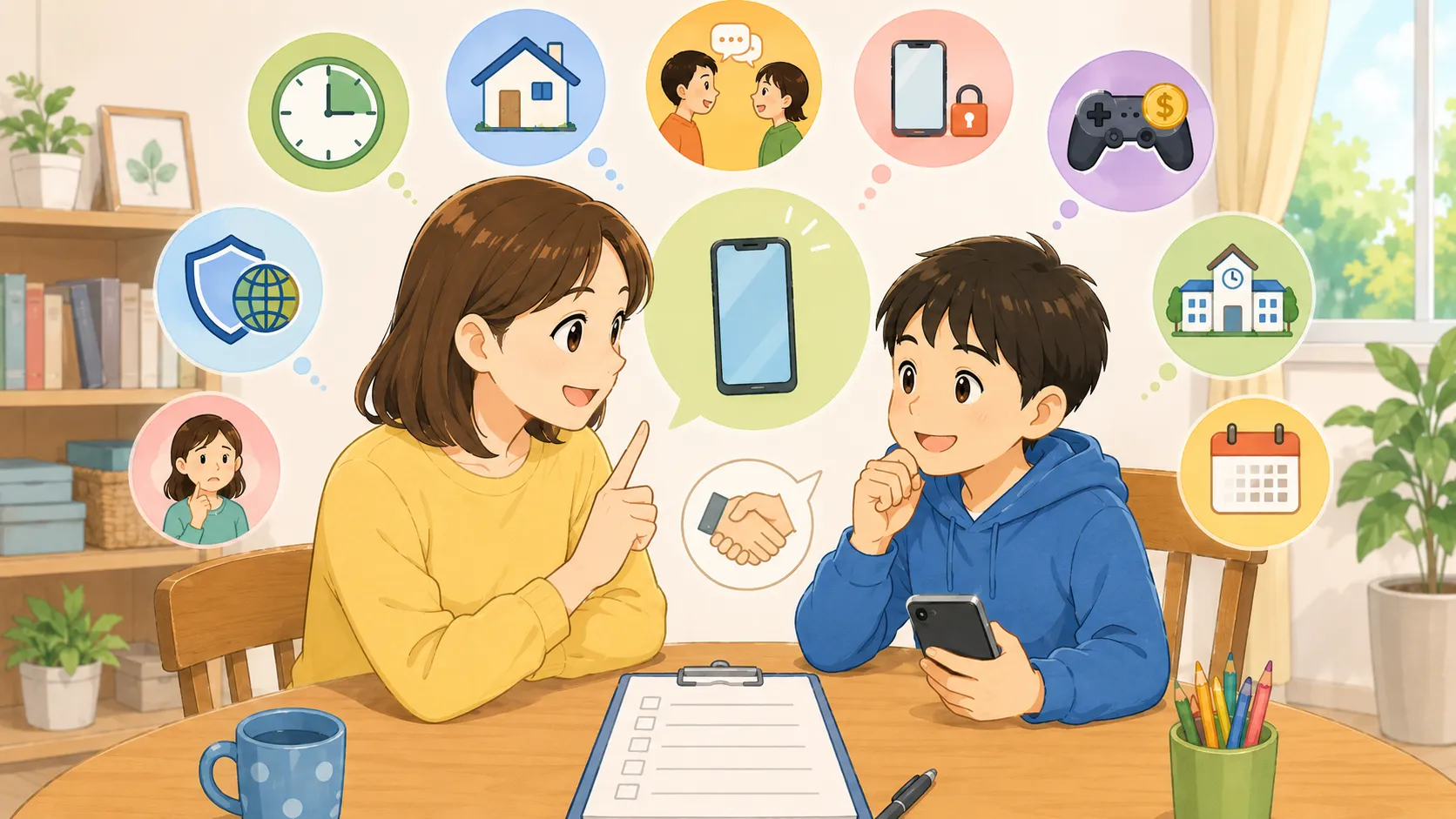
[Comparison Table] Parents’ approaches: the upsides and cautions of four types
| Approach | What it is | Upside | Caution | When it suits |
|---|---|---|---|---|
| Total ban | Don’t let them watch | Easier to avoid worrying videos | They may start watching in secret | Only when a clear problem with the content has been confirmed |
| Conditional limits | Allow it with set times and places | Realistically easier to manage | Keeping the rules going takes effort | As the basic approach for preschoolers and lower elementary grades |
| Watch together | A parent checks the content alongside them | Becomes a chance to talk, and lets you keep an eye on it | Requires the parent’s time | For a meme seen for the first time, or a video whose content you don’t know |
| Free viewing | Leave it up to the child | Respects the child’s autonomy | Makes it hard to keep track of the content | Generally not recommended for preschool to elementary-school children |
Things to note when watching, by age
You can’t decide “OK or not OK” uniformly by age, but as a rough guide, it can be organized as follows. For judgments about developmental stages, please also refer to your individual child’s situation and information from professionals.
Preschoolers (up to around age 5)
This is an age when it’s hard for them to judge for themselves whether content is good or bad. Rather than leaving them to watch alone, it’s more reassuring to watch in an environment where a parent is present.
Lower elementary grades (around ages 6–8)
This is a period when autoplay of related videos can easily carry them to unintended content. It’s reassuring to build a habit of regularly checking the viewing time and “what they’re watching next.”
Upper elementary grades and above
This is an age where it works well to talk over the content together, and to think up rules with your child, like “this is funny, but it’s better not to copy it.”
If you come across it in a childcare setting
Think of the home’s approach and the facility’s response separately. At the facility, the judgment is centered on “is it safe, and is it getting in the way of activities?”
Why do children get hooked on meaningless memes like Gugugaga?
Short sounds, repetition, how easy it is to copy, cute movements — these are elements that pair well with children’s sense of play. Even if adults feel it’s “meaningless,” that’s exactly where the reason children get hooked lies.
Precisely because it’s “meaningless,” it’s easy for children to copy
Children sometimes enjoy repeating sounds and phrases whose meaning they don’t understand. The sound “gugu gaga” has a ring close to the babbling (nango) by which babies enjoy producing meaningless sounds. It may help to grasp it as something that can function as “a password anyone can join in on, precisely because it isn’t tied to meaning.”
In old-fashioned terms, I think it’s essentially close to the nonsensical spells and word games that went around among children. What’s new now is just that the entry point for it has become social-media algorithms. Because the entry point has changed, there is a structural shift in that “it’s harder for parents to keep track.”
“Repetition” and “shortness” pair well with short video
The “gugu gaga” audio is said to be easy to remember once you hear it. It’s also explained as having a structure that pairs easily with the tempo of the visuals and tends to be watched to the end. Short, repetitive, easy-to-react-to content tends to trigger “I want to watch it again,” and not only in children. As a trait of short video as a whole, you need to be careful about long stretches of continuous watching.
Don’t immediately dismiss your child’s “nonsense”
Editor’s note
The sight of a child laughing at meaningless words, or enjoying watching something adults can’t understand over and over, is, when you think back, something that has always been around. Many people probably have the experience of going along with a child’s play while wryly thinking, “Dad has absolutely no idea what this is.”
In today’s era, that “entry point” has changed to videos made with social media and AI. That’s exactly why, before flatly dismissing it, asking once “what’s the funny part?” can also become a form of parent-child communication. Keeping a relationship where your child talks to you is the foundation of long-term media-literacy education.
In an era of more AI-generated memes, how should parents engage?
Memes like Gugugaga are a genre where AI-generated and AI-style spin-off videos can easily increase. It’s important for parents to teach their children “how to watch” rather than “how to make.”
What’s the difference between AI-generated memes and children’s videos with a clear official source or creator?
| Item | AI-generated / AI-style memes | Videos from official channels or known creators |
|---|---|---|
| How they’re made | Easy to spin off with AI tools and the like; the creator’s intent can sometimes be hard to see | Easier to confirm the source’s or program’s intent |
| Variation in content | Can change greatly from one spin-off video to another | Relatively easy to confirm within a series |
| Rights and management | Lots of editing and reposting; management can be hard to see | You can sometimes confirm the official channel or source |
| What parents should check | Check the spin-off and related videos in particular, more than the original video | Check the target age, ad content, and play time |
| Explaining to children | Tell them “this might be a video a computer made” | Easy to explain as “a program or video someone made” |
Not “ban it because I don’t know it,” but “check it together”
When your child says “I want to watch this,” we recommend watching it together first, before banning it. Here are some example questions worth asking your child at that time.
- “Where did you find out about this?”
- “What part did you think was funny?”
- “Was there anything scary?”
- “Was there a scene you wanted to copy?”
- “Shall we watch the next one together too?”
This kind of conversation turns the content into “a chance to judge it together.” Once a child has had even one experience of “watching it together,” they become more likely to tell a parent “when they see something strange.”
[Checklist] What to check when your child is watching a social-media meme
- A parent has checked the video’s content once too
- The child isn’t scared
- Copying isn’t leading to dangerous behavior
- Nothing inappropriate is appearing in the comment section or related videos
- The viewing time isn’t getting too long
- They can switch to a different activity after watching
- A viewing rule of “when, where, how many minutes” is set in the household

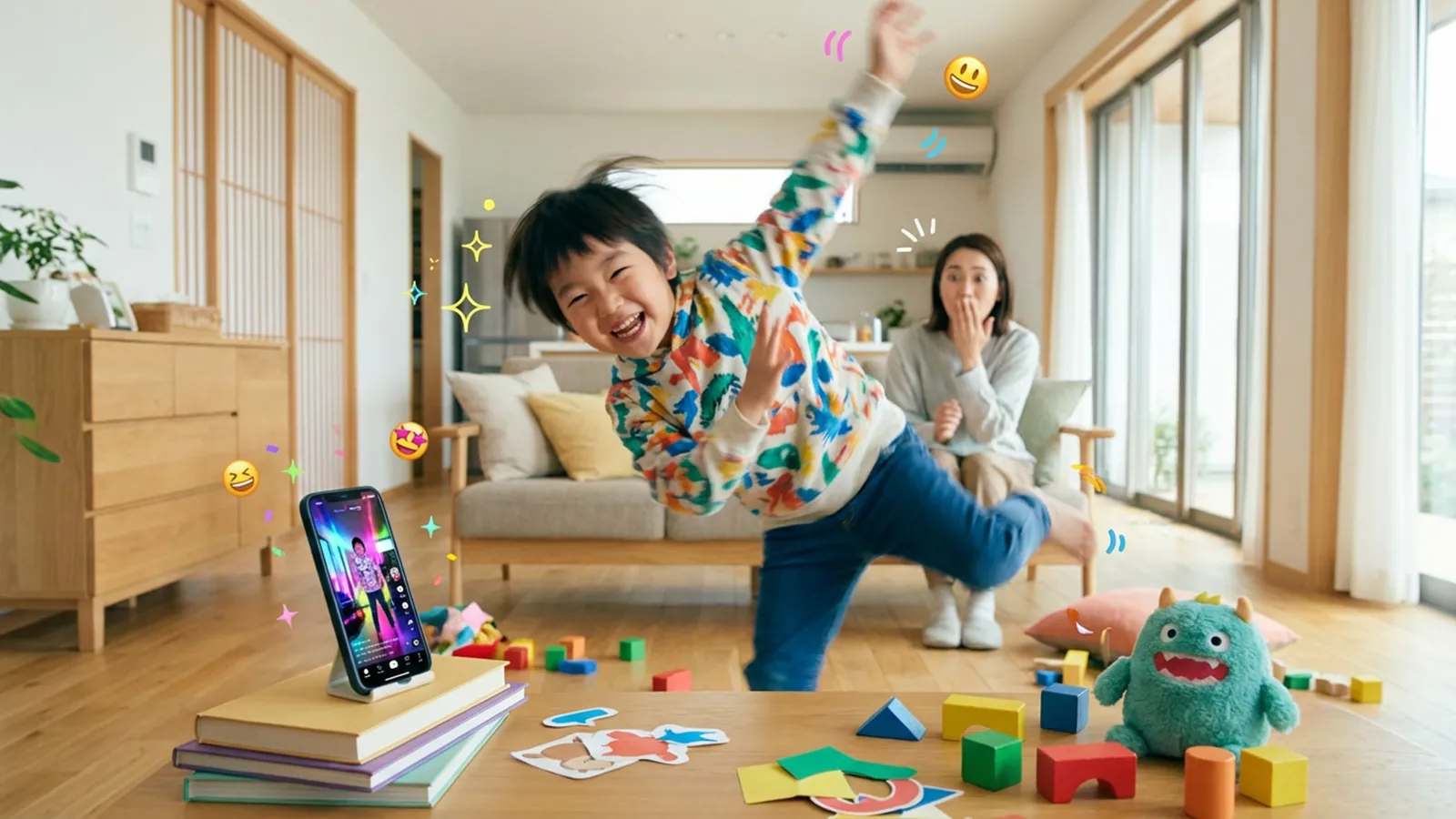
What to do if Gugugaga becomes a topic at daycare or preschool?
In childcare settings, the focus is less on the meme itself than on “dangerous copying, teasing, and gaps in perception with families.”
What to look at first is “are they just enjoying it” or “is it becoming a problem”
When children are getting excited talking about Gugugaga, the points a childcare worker should check first are the following.
- Whether it’s turning into teasing of other children
- Whether loud voices or movements are getting in the way of activities
- Whether they’re trying to copy dangerous actions
- Whether it’s turning into a flow of laughing at a specific child
- Whether any “I’m concerned about this” voices have come in from guardians
If there’s no problem with these points, it’s essentially no different from children getting excited over a buzzword or a game. There’s no need to stop it right away.
Examples of how to respond when a child asks you
When a child asks “Teacher, do you know gugu gaga?”, there’s no need to panic. Responses like the following come across naturally.
- “Oh, that’s popular lately, isn’t it. What’s the funny part?”
- “I’ve heard of it too. Can you tell me what kind of video it is?”
- “It’s nice that everyone can laugh together. Let’s make sure we don’t turn it into a way of teasing our friends.”
When a child comes to talk about something popular, receiving it with a “let’s think about it together even if I don’t know it” stance works in your favor for relationship-building too.
Examples of how to explain it when a guardian asks
“It’s a buzz phrase from social media that spread from videos of a penguin-like character on TikTok and YouTube Shorts. It’s become a topic among the children here too. Most of the videos are cute in content, but there can be variation across the spin-off videos. It’s reassuring to check together, at home, which videos they’re actually watching.”
A form that neither dismisses it nor supplies excessive anxiety, but proposes specific actions to check, leads to a sense of trust from guardians.
Rules you can use at home to keep an eye on social-media memes
At home, deciding on four things — checking the video content, viewing time, where they watch, and the conversation after watching — makes it easier to get along well with social-media memes.
Three rules to decide together as parent and child
Rule 1: Watch a meme you’re seeing for the first time together
When your child says “something seems to be going around,” that’s the chance to check. By watching together with a “let me see, show me,” you build a habit of sharing content.
Rule 2: Decide on the watching time and the “time to stop”
If you set a rule that fits the household’s rhythm — like “no short videos in the 30 minutes before bed” or “just 5 minutes before dinner” — it’s easier for the child to accept too.
Rule 3: If it’s scary, strange, or you want to copy it, tell a parent
By conveying this as a rule, your child comes to feel “this is something I’m allowed to bring up.” The key is to convey it on the premise that you won’t get angry.
Parental settings for watching YouTube Shorts and TikTok
Video apps have setting features for parents. For detailed setup methods, please check each service’s official help. We’ve organized an overview of each service’s features below.
- YouTube / YouTube Kids: parental management (Google Family Link), checking watch history, setting the content level
- TikTok: the Family Pairing feature, screen-time management, content filtering
(Reference: YouTube Kids parental settings|Google Help)
(Reference: Parental controls|TikTok Support)
The setup methods for each platform may change, so please check the official support pages for the latest information.
In the “Survey on the Internet Usage Environment of Youth” conducted by the Children and Families Agency (the FY2024 edition, published March 2025), things like youths’ use of internet-connected devices, household rules, parents’ efforts, and filtering are surveyed on an ongoing basis. When thinking about your child’s video watching, it’s important to check the rules within the household and the parental settings.
(Reference: FY2024 “Survey on the Internet Usage Environment of Youth” report|Children and Families Agency)
Frequently asked questions about the Gugugaga Penguin
We’ve organized the origins, safety, how to let children watch, and the response in childcare settings into short Q&A form.
- Q1. What is the Gugugaga Penguin?
- It’s a social-media meme in which a penguin-like character moves around going “gugu gaga.” Many of the spin-offs appear to be AI-generated or AI-assisted, and it’s become a topic mainly on TikTok and YouTube Shorts.
- Q2. Is it okay to let children watch Gugugaga?
- You can’t judge safe or dangerous by the name alone. Please decide after checking the actual video content, the related videos, the comment section, and the viewing time. It’s especially more reassuring not to leave small children watching alone.
- Q3. What’s the origin of Gugugaga?
- Several possible influences have been mentioned, including Endministrator-related memes from “Arknights: Endfield” and the Chinese-language expression “咕咕嘎嘎.” Given the nature of internet memes, it’s a genre where it’s difficult to identify a single confirmed origin.
- Q4. Why do children get hooked on memes like this?
- It’s thought to be because short sounds, repetition, and how easy it is to copy come together. The sense of “enjoying something whose meaning you don’t understand as a sound” has parts in common with children enjoying sound play and word play.
- Q5. How are AI-generated memes different from ordinary videos?
- AI-generated and AI-style memes can easily produce more spin-off videos and re-edited versions, and the variation in content can become large. Cute videos and inappropriate videos can be mixed in under the same tag, so it’s important to check not only the original video but the related videos too.
- Q6. If my child is copying Gugugaga at daycare, should I stop it?
- If they’re just enjoying it, with no teasing of other children or dangerous behavior, there’s no need to ban it right away. If it’s getting in the way of activities, or being used in a way that laughs at a specific child, address those behaviors calmly and clearly.
- Q7. What should I do if an inappropriate related video comes up?
- First, stop watching that video, and use each app’s parental settings or reporting feature. Both YouTube and TikTok have parental setting features, but with any service it’s important to keep checking the related videos and comments on an ongoing basis.
Summary|Let Gugugaga be a starting point for parent and child to think about “how to watch” rather than “whether to ban”
If we narrow what we wanted to convey in this article to three points, it comes to this.
- The Gugugaga Penguin is a penguin-like-character social-media meme that spread as game fan-work culture and internet memes piled up, with many AI-generated and AI-style spin-off videos
- Whether to let your child watch should be judged by the “actual video content, related videos, and viewing time,” not the “name”
- Before banning, watching it together and talking — “what’s the funny part?” — is the first step in long-term media-literacy education
Social-media trends will keep changing rapidly from here on. More than memorizing the name of a meme, building a habit in the household of “checking together when something new comes up” is worth more in the long run.
When your child happily says “gugu gaga!”, that’s just a moment of riding a trend. But being a parent who can say, in that moment, “what’s that? Looks fun, show me,” leads to a relationship where your child can come to you when they’re in trouble — that’s what TamagoDaruma believes.
The information in this article is as of May 2026. The specifications and setup methods of each platform may change, so please check the official sites for the latest information.


