


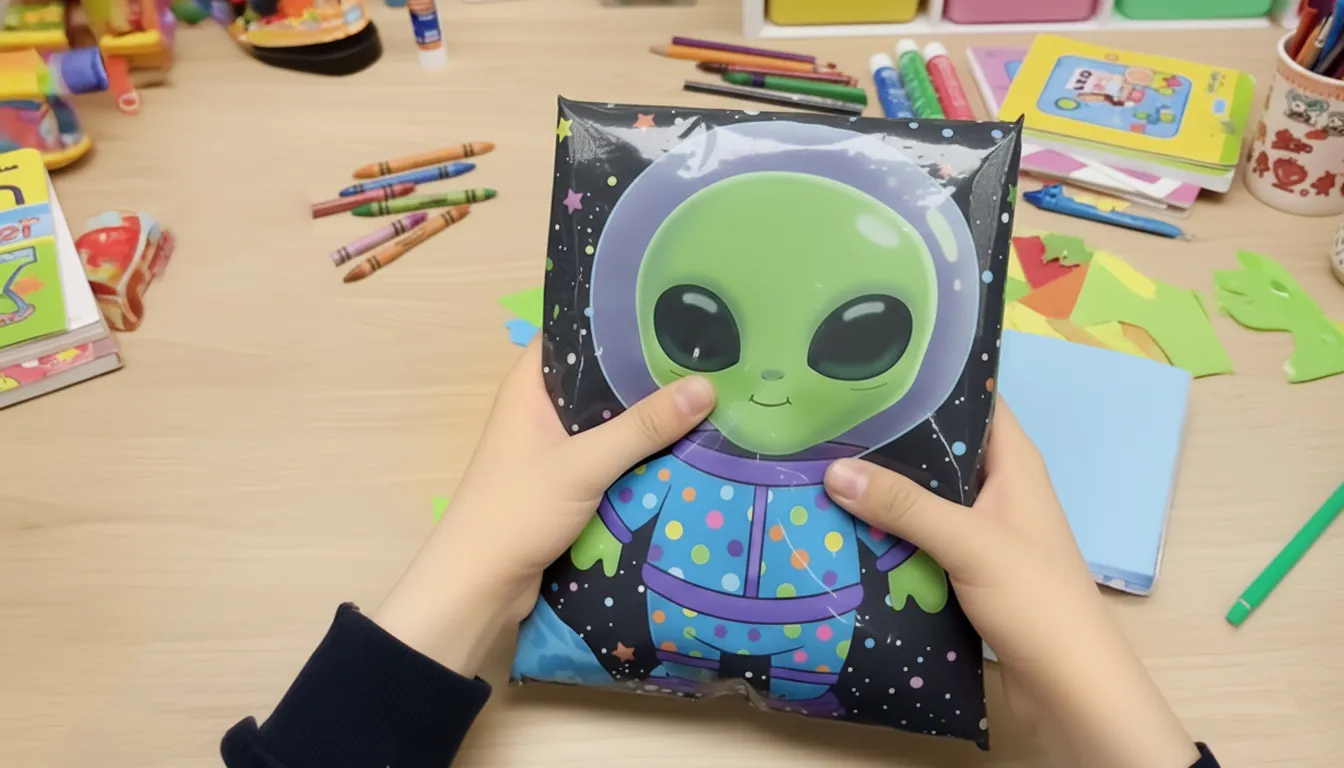
Paper squeeze is a wildly popular handmade toy that combines fluffy sensory play with drawing. Simply draw your favorite shape on paper and puff it up by sandwiching sponge or tissue inside—it’s easy enough for young children to try, and the sense of accomplishment is part of its appeal.
The “squeeze feeling” that slowly returns when pressed is soothing, and it’s said to be beneficial for emotional stability and concentration. All materials can be found at 100-yen stores, and arrangements are limitless—seasonal motifs, character-style designs, and more. This article carefully introduces the basic making process, tips for safe enjoyment, and ways to play, making it easy to understand even for first-timers.
Table of Contents
Trending Now! What Is Paper Squeeze?

Paper squeeze is a fresh DIY item with a squishy texture that allows you to freely draw, erase, and play repeatedly. The combination of squeeze-specific softness and drawing play keeps children engaged for long periods without getting bored, which has garnered significant attention.
Its popularity skyrocketed thanks to overseas videos, and it’s gradually spreading in Japan, mainly through social media, as a trending toy. Not only is it easy to enjoy at home, but it also offers the fun of creativity and sensory play, making it a new form of play that parents and children can easily embrace together.
The Appeal of This New Sensation DIY Toy Combining Sensory Play and Drawing
The greatest appeal of this squeeze is the combination of its soft, squishy texture with the freedom to enjoy drawing. While regular squeezes are just for touching, this one allows you to draw patterns and faces or add colors with special markers, greatly expanding the range of expression.
What you draw can be wiped off with tissue, so you can redraw as many times as you like. Since children can try without fear of failure, they can freely express their ideas, which also builds confidence. The softness of the squeeze stimulates the sense of touch and is said to have a relaxing effect.
The combination of multiple actions—drawing, erasing, and squeezing—helps maintain concentration, and the ability to easily incorporate sensory play at home is a key reason for its popularity.
Hugely Popular in Overseas Videos Like “LILI LEMON”! Explaining the Background of This Trend

The videos clearly demonstrate the process of drawing, erasing, and playing repeatedly, making it easy for viewers to think, “I want to try making this too,” which has contributed to its growing popularity. Additionally, overseas trending toys tend to spread easily in Japan, and the convenience of finding materials at variety shops and 100-yen stores has further accelerated this trend.
The visual appeal that’s easy to share on social media and the easy-to-follow making process for parents and children have garnered support, making it an item likely to continue gaining attention.
Why Are Kids So Hooked? The Secret Behind the Squishy Feel and Repeatable Fun
One reason children become absorbed in this squeeze is the feel-good “squishy sensation” no matter how many times they touch it. The softness when gripping it in their palm provides a sense of security and helps relieve stress.
Furthermore, the mechanism that allows you to erase what you draw creates a sense of security that “you can redo as many times as you want,” making it easy to enjoy regardless of age. By changing what you draw, the ways to play keep expanding, allowing you to continue with the same toy while feeling refreshed.
The ability to play repeatedly prevents boredom and provides opportunities to develop creativity and color sense. Playing together by drawing as a parent and child deepens communication, and it’s gaining popularity at home as an easily accessible form of sensory play.
Prepare with 100-Yen Stores! Gather Budget-Friendly Materials and Tools
Paper squeeze’s popularity stems from the fact that most materials can be found at 100-yen stores without needing anything special. By combining familiar materials like clear OPP tape and clear files, you can create a durable and easy-to-handle squeeze.
Changing the filling material like cotton or slime alters the texture, giving children the fun of choosing their preferred feel. Also, choosing the right pen is important for cleanly erasing drawn pictures, with whiteboard markers being the easiest to handle. Here, we introduce materials and tools that are easy to gather at home, along with selection tips.
Key Points for Choosing Materials Like OPP Tape and Clear Files for the Main Body
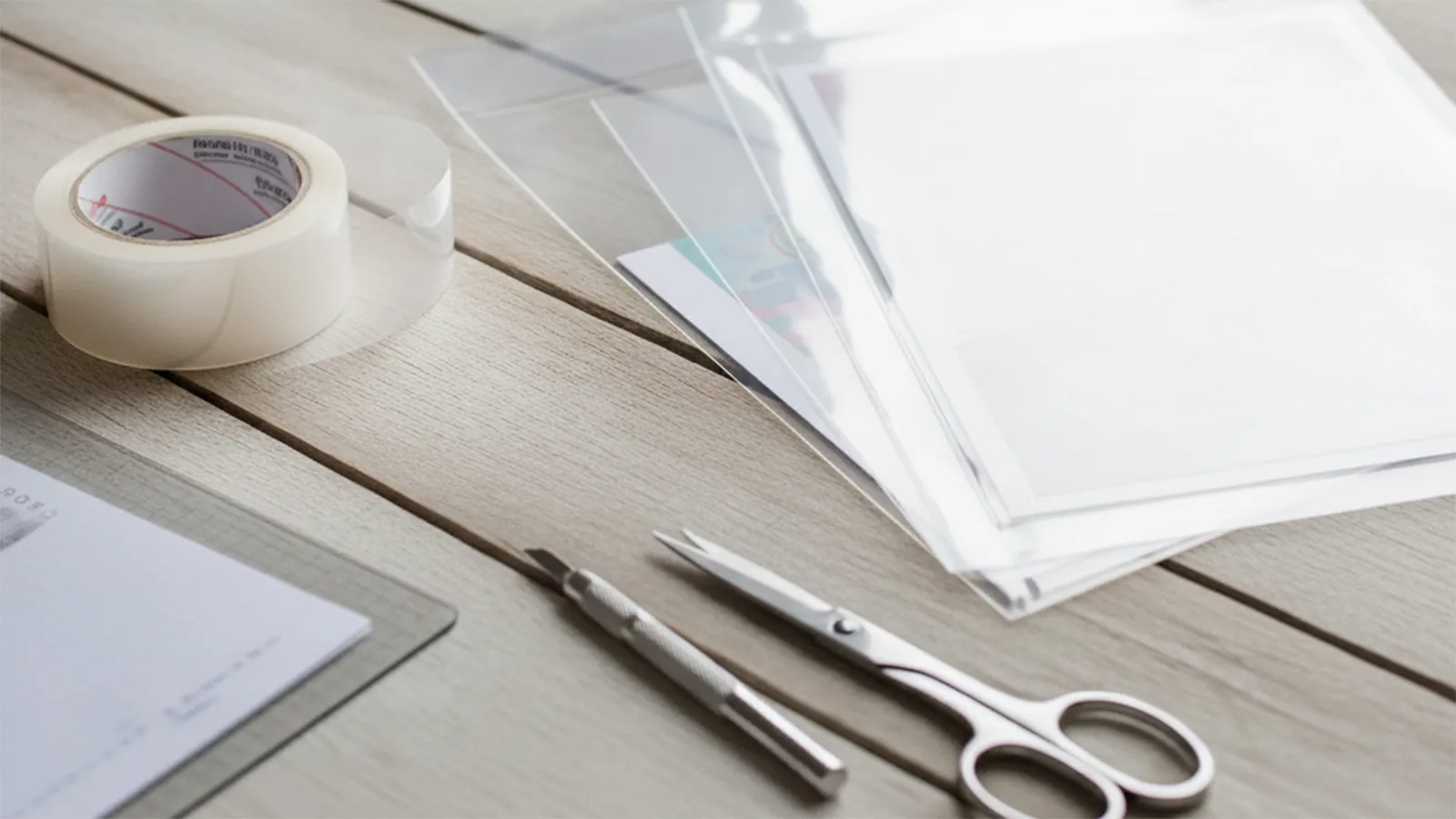
As materials for creating the outer layer of the squeeze, OPP tape and clear files are very user-friendly and readily available at 100-yen stores. OPP tape has high transparency, making drawn lines appear vivid and highlighting children’s drawings.

It’s also durable, so it won’t tear easily even with repeated squeezing and erasing. Clear files have moderate stiffness and can be processed into bag shapes to serve as the outer sheet. Choosing thicker types stabilizes the shape and prevents the internal material from shifting.
Both materials are easy to cut and can be handled with child-safe scissors, which is an advantage. Rounding the corners before creating enhances safety, making it safe for even small children to use. The transparent material looks clean and elevates the quality of the finished product.
What to Put Inside? Comparing Different Textures: Cotton, Slime, Unused Fabric, etc.
The “feel” of the squeeze varies greatly depending on the filling material. The easiest to handle is cotton, which features a fluffy, light texture. Cotton is easy to shape and tends to bounce back even when children squeeze it hard, making it suitable for first-time creation.
If you want a squishier feel, you can add a thin layer of slime, but adult supervision is necessary as it may leak if the bag isn’t properly sealed. Cutting unused soft fabric into small pieces and stuffing it creates a slightly bouncy, firm texture and increases durability.
Since the weight and feel change depending on the material, making several to compare textures helps children find their preference. Regardless of which material you choose, confirming that the bag is tightly sealed is important for safety.
Pen Selection Is Key! Whiteboard Markers and Cleaners That Erase Cleanly
Whiteboard markers are essential for enjoying “draw and erase” play. Oil-based pens don’t erase easily and leave mistakes, so always choose water-based whiteboard markers.
They have good color development and can be easily erased with tissue or specialized cleaners, making them highly reusable. Fine-tip types are good for detailed drawings, while thick-tip types make coloring smoother, so using them according to purpose expands expression possibilities.
Also, using specialized cleaners removes stubborn ink cleanly, allowing for long-term clean play. Drawing with too much force can leave marks on the sheet, so informing children beforehand to use a light touch provides peace of mind. By devising pen selection and usage methods, you can create a squeeze that’s more enjoyable and lasts longer.
How to Make a Magical Canvas You Can Draw On and Erase

“I wasn’t good at arts and crafts in school…” There’s no need to feel intimidated. The method for making this “magical canvas” drawing squeeze we’re introducing is surprisingly simple.
No sewing machine or special tools are required. All you need is paper and tape that every household has, plus the desire to “make your child happy.” We’ve divided the process into three steps and explained them carefully so that even those who aren’t good at crafts can succeed.
Relax and give it a try while imagining your child’s sparkling eyes when it’s complete. The warmth of handmade items and the mysterious mechanism that “you can draw and erase,” which you won’t find in store-bought products, will surely captivate both parent and child.
【STEP 1】Creating the Base: Tips for Making Your Favorite Illustration or Design into a Pouch Shape
- First, create the base body. Prepare drawing paper or slightly thick copy paper, and fold it in half according to your desired size. This becomes the basic “pouch” shape.
- On the surface, drawing the outline of your child’s favorite character or simply drawing a rectangular “frame” like a picture frame makes it easier to play by filling in the inside later. The key here is to draw the outline clearly using a permanent black marker rather than a water-based pen.
- Once the design is decided, attach the “bottom” and “sides” of the folded paper with cellophane tape or clear packing tape. The most important thing is to leave only the very top part (the opening) open for later stuffing.
- If you close this part, you won’t be able to insert the filling. Also, the trick is to securely tape all the way to the paper corners so the filling doesn’t pop out through gaps. Starting with simple shapes like squares or rectangles rather than complex shapes reduces the difficulty of taping and minimizes mistakes. Creating a “Name” field in the margin is also a nice touch that livens up pretend play.
【STEP 2】Surface Processing: Creating a Smooth “Draw and Erase” Surface Using Clear Tape
- Next, add the “draw and erase” function, which is the biggest feature of this craft. Wide transparent OPP tape (packing tape) is what comes in handy here. Cover the entire surface of the paper pouch made in STEP 1 with this tape without gaps. The smooth surface of the tape serves as a whiteboard-like function.
- When applying the tape, the trick to a clean finish is to press it slowly from one end using a ruler or towel to push out air bubbles. If the tape overlaps too much at the seams or conversely has gaps, it will catch when drawing with a pen later, resulting in poor drawing quality.
- Therefore, ideally use tape as wide as possible and finish with as few applications as possible. Even if wrinkles form, they become part of the handmade “character,” so don’t worry too much. Coating not only the front but also the back increases durability, making it tear-resistant, and allows drawing play on both sides. Through this process, ordinary paper evolves into a magical canvas where you can draw and erase repeatedly.
【STEP 3】Filling: The Golden Ratio for Achieving the Perfect “Squishy” Feel
- Finally, it’s time to stuff the filling. Gradually insert craft cotton through the opening left as the pouch’s mouth. The important thing here is the “golden ratio” of the amount to stuff. If you stuff it too much until it’s full, the surface will be stretched like a balloon, and the pen tip will slide, making it difficult to draw. Conversely, if there’s too little, you won’t get the expected “squishy” healing texture.
- As a guideline, the best amount is when the pouch’s bulge is plump but sinks with appropriate bounce when pressed with your finger—about 80% full. Instead of cotton, you can use finely cut kitchen sponges or crumpled used plastic bags to enjoy different textures and sounds.
- Once you achieve your preferred firmness, seal the opening with clear tape securely. Here too, it’s important to apply it without gaps so air doesn’t leak. Finally, lightly knead the entire thing with your hands to shape it, and you’ve completed your one-of-a-kind squeeze with an addictively squishy texture.
Endless Play Possibilities! Various Play Ideas with Paper Squeeze
Paper squeeze, which you can draw on and erase, is appealing not just for its tactile enjoyment but also for its ability to develop into various activities like drawing, quizzes, and pretend play. The squishy texture captures children’s interest, and the ability to erase drawn pictures immediately provides “reassurance that you can try as many times as you want,” which encourages creativity.
Simply changing expressions or patterns makes characters seem to transform, helping play continue, which is popular with parents and children. It’s easy to incorporate not only at home but also in childcare settings, and it can be adapted for different ages. Here we introduce various ways to play that are unique to paper squeeze.
“What’s This?” Drawing Quiz Competition Utilizing the Draw-and-Erase Feature
Taking advantage of the draw-and-erase characteristic, one way to play is enjoying a “drawing quiz” with family or friends. One person draws picture hints on the paper squeeze, and others guess—it’s a simple game, but since you can erase drawn pictures immediately, you can challenge multiple times even in a short period.
Having others guess using only shapes like circles or triangles, adjusting difficulty according to age, makes it more exciting. Also, adding a time limit or creating prompt cards makes the play more authentic. Since redrawing is free, children are less likely to feel “I can’t draw well” and can express themselves freely.
Drawing repeatedly makes hand movements smoother and provides opportunities to develop imagination and creativity.
Pretend Play Evolves! Using It as a Menu for Store Play or as Name Tags
Paper squeeze also shines in children’s beloved pretend play. For example, in “cafe play,” using it as a menu allows realistic play like adding seasonal limited menus or marking items as sold out since it can be rewritten.
Furthermore, using it as name tags for staff and customers makes roles clear and deepens the world of pretend play. Since it has a soft texture, it has more presence than just paper tags and is easier for children to handle without getting bored.
In childcare settings, it can be used as an activity to develop communication, such as having children take turns being the staff. Since you can change play settings just by redrawing pictures, the same material can be enjoyed long-term.
Practice Emotional Expression? Play by Changing Character “Expressions”

Looking at drawn faces and expanding conversation with questions like “What kind of feeling is this?” or “Why did this face happen?” develops the ability to verbalize emotional movements. Since you can erase and redraw pictures, the ability to continue creating while trial-and-error is also an advantage.
Creating multiple characters can develop into story play or enjoying theater play with family. Since you can play even if you’re not good at drawing, it’s an expressive play that can be easily incorporated regardless of age.
More Than Just Play! Unexpected Benefits and Educational Effects That Delight Parents
Paper squeeze, which you can draw on and erase, is a toy with many elements for learning while playing. Repeating movements like gripping, drawing, and erasing using fingertips contributes to brain development and the growth of creativity.
Also, since you can play repeatedly without using paper, a sense of security that allows free experimentation is born, helping create an environment where children can challenge without fear of failure. Furthermore, time spent making together as parent and child deepens communication and becomes an important opportunity for learning to naturally spread at home. Here we introduce unexpected benefits and educational effects that have value beyond play.
Good Effects of “Sensory Play” Using Fingertips and “Drawing Actions” on Brain Development
Paper squeeze provides good stimulation for brain development in early childhood because it uses fingertips in detail while enjoying the unique squishy texture. Movements like gripping and pressing promote tactile development, and drawing actions also connect to wrist control training and fine motor skills.
Furthermore, the experience of combining colors and shapes through drawing develops visual cognitive abilities, and the process of giving form to images you want to express becomes the foundation of creativity. The mechanism that allows erasing and redrawing is useful for repeated learning and makes it easier to accumulate successful experiences by trying many times.
Also, the major appeal is that children enjoy the trial-and-error of “devising and changing things themselves,” which naturally expands independent play.
The Eco Aspect of Not Wasting Paper and Self-Esteem from the Security of Being Able to Erase Mistakes
Paper squeeze is attracting attention as an ecological play because you can draw, erase, and play repeatedly without needing to use large amounts of paper. The mechanism that allows unlimited redrawing provides great reassurance to children and reduces the anxiety of “what if I make a mistake.”
Being able to challenge without fear of failure naturally increases trial-and-error, makes it easier to gain a sense of “I did it!” accomplishment, and connects to the development of self-esteem. Also, because of the high degree of freedom in redrawing, children can freely utilize their imagination and enjoy creating works freely.
Without wasting resources and with low emotional barriers to participation, it’s a play that’s easy to continue at home long-term.
The Process of Making Together as Parent and Child Is the Best Learning for Developing Planning Skills and Cooperation
Making paper squeeze has many elements that require parent and child cooperation, such as material selection, shaping, and drawing processes, making it ideal for collaborative creation. Through consulting about what design to make or dividing roles, communication naturally deepens, and children gain experience listening to others’ opinions and taking turns.
Also, since the work has a sequence for each process, and a systematic approach is required like “first make the pouch, insert the filling, and finally draw pictures,” the ability to plan ahead develops. Even when things don’t go well along the way, thinking about solutions together helps cooperation and perseverance grow.
The joy of sharing the completed squeeze is significant, and it becomes a precious time to share the sense of accomplishment as parent and child.
Conclusion
Paper squeeze, which you can draw on and erase, is an attractive play that combines sensory play with drawing, naturally drawing out children’s creativity and expressive abilities. Because there’s reassurance that you can redraw repeatedly, you can challenge without worrying about mistakes, which also connects to the development of self-esteem.
Furthermore, materials can be easily gathered at 100-yen stores, and the high degree of freedom in how to play makes it highly accessible for home use. The process of making together as parent and child itself becomes learning and becomes good time developing planning skills and cooperation. It’s a recommended craft activity gaining attention now that connects to growth while enjoying play.


