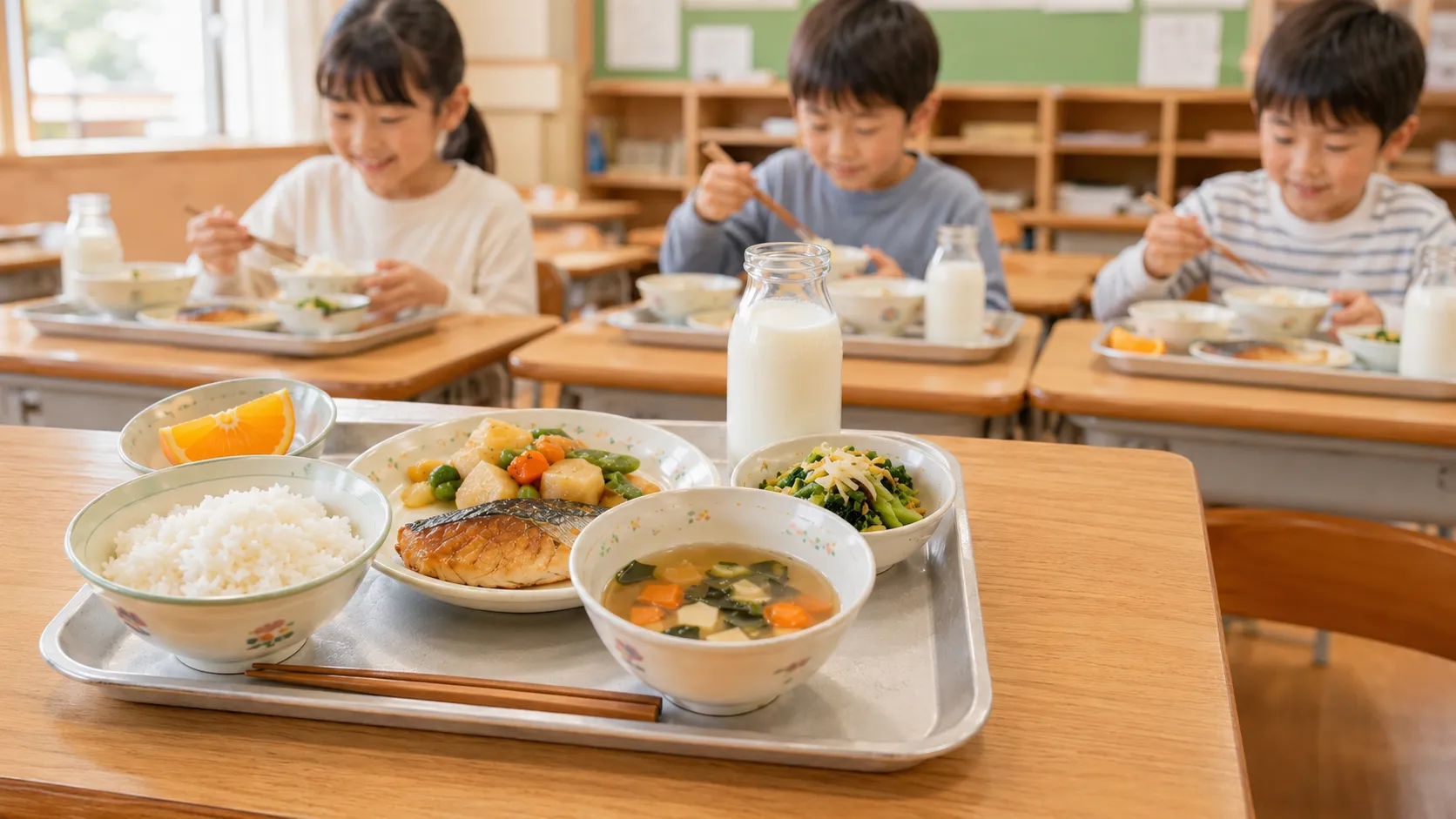
Summer break lunches for toddlers get easier to keep up with when you build a simple rotation around a staple, a protein, and a go-to side — it cuts down on the parent’s load.
Once summer break starts, lunch for the toddler suddenly becomes a bigger job at home. Kindergartens (yochien) and certified centers for early childhood education and care (nintei kodomoen) typically close for an extended break, while licensed daycare (hoikuen) tends to stay open since it’s tied to parents’ work needs — but between daycare absences and family-care days, there are more times when meals normally covered by the center’s lunch program have to be made at home.
Standing in the kitchen in the heat is exhausting on its own. Then there’s the worry that relying on retort pouches and frozen food too often isn’t good enough. Or the discouragement of cooking something and having the child not eat it. None of this comes from being bad at cooking. Summer lunch is hard because it has to happen every single day.
This guide treats toddler lunch during summer break not as something that has to be freshly cooked from scratch every day, but as a household system you can run without strain. It covers no-heat, time-saving recipes, combinations you can put together with just a microwave, a lunch rotation chart, food-support information such as kodomo shokudo (community-run “children’s cafeterias”) and food pantries, and safety points worth keeping in mind — all based on primary sources available at the time of publication.
Japan’s Children and Families Agency has outlined the importance of addressing extreme heat and food support together during the summer break, combining access to a cool place where children can feel safe with food-support measures. In other words, the summer lunch problem isn’t something a household has to handle entirely on its own — it connects to support available through the community and local government too.
(参照:Heatstroke Countermeasures and Food Support During the Summer School Break | Children and Families Agency)
Table of Contents
Summer Break Lunch for Toddlers Doesn’t Need a Different Menu Every Day

Summer lunch is easier to keep up with when you rotate familiar go-to meals rather than cooking something new every day.
To get straight to the point: summer lunch for a toddler doesn’t need a different menu every day. Deciding on 3 to 5 patterns — things the child eats easily, things the parent can prepare easily, things that are easy to keep stocked at home — lightens the load on the whole household.
Many parents searching “summer break lunch toddler” or “quick recipes” aren’t just looking for cooking ideas — they’re carrying the fatigue of a lunch routine that keeps going tomorrow, and the day after that. What’s needed here isn’t more recipes. It’s fewer decisions to make.
TamagoDaruma Note
We see the summer lunch problem as a question of household systems, not cooking skill. In childcare and parenting settings, what matters isn’t just the food itself — it’s an environment where the child can eat with a sense of security, and a system the parent can keep running without burning out. Having a lunch format that keeps the parent from exhausting themselves and lets the child eat calmly is more realistic for summer break than trying to cook something different every day.
What Tires Parents Out Isn’t the Cooking — It’s Deciding Every Day
What wears parents out during summer lunch isn’t just cooking time.
- What to make today
- Whether it’s okay to serve udon again when we had it yesterday too
- Whether there’s enough vegetables
- Worrying the child won’t eat what you made after all that effort
- Whether you’re relying on retort pouches or frozen food too much
These small decisions piling up every day are a major source of the fatigue. That’s exactly why it helps to think of summer lunch not as “planning a menu every day” but as “running a format you’ve already decided on.”
For example: rice balls on Monday, udon on Tuesday, bread on Wednesday, a rice bowl on Thursday, a retort-pouch day on Friday. Change the small details, but keep the format the same. Just this cuts down a lot of the hesitation before lunchtime.
Toddlers Feel Safer with Food They’re Used To
At this age, children feel more reassured by familiar flavors and shapes than adults do. There are days they’ll enjoy something new, but sometimes even a small difference in appearance or texture is enough for them to refuse it.
That’s why, for summer lunch, it’s more realistic to make small variations on go-to meals your child already eats than to try lots of new menus.
For rice balls, vary things with shirasu (whitebait), salmon flakes, tuna, nori, or furikake seasoning. For udon, add egg, tofu, frozen vegetables, or wakame seaweed. For bread, combine it with cheese, tuna, banana, or yogurt. Even with the same staple, changing what goes with it is enough variation within a household.
If you want to expand your options for side dishes toddlers eat easily, a related article on TamagoDaruma may help.


Think of Toddler Lunch as Staple + Protein + a Fixed Side
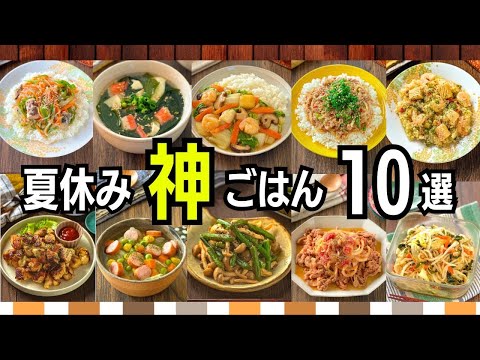
Rather than aiming for a perfect meal, lining up staple, protein, and side-dish options makes it easier to put together a balanced lunch even when you’re short on time.
You don’t need to overthink toddler lunch during summer break. The basics come down to three things: a staple, a protein, and a fixed side.
A day when lunch is just the staple isn’t an immediate problem. But since summer break goes on day after day, it helps to build a habit of adding just a little something. Pairing rice or noodles with tofu, egg, tuna, shirasu, natto, yogurt, fruit, or frozen vegetables lets you put together a full lunch even when you’re short on time.
| Lunch pattern | Cooking effort | Use of heat | How easy for a toddler to eat | Easy to add | Good for |
|---|---|---|---|---|---|
| Rice ball + tofu + fruit | Low | None to minimal | High | Staple, protein, fruit | Days the parent is tired |
| Frozen udon + tuna + frozen vegetables | Low | Mainly microwave | High | Staple, protein, vegetables | Hot days |
| Bread + cheese or tuna + yogurt | Low | None | High | Staple, protein, dairy | Before heading out |
| Retort-pouch curry + cherry tomatoes + banana | Low | Mainly microwave | Depends on the child | Staple, fruit, side | Days before grocery shopping |
| Natto rice + soup with plenty of ingredients | Moderate | Yes | Depends on the child | Staple, protein, vegetables | Days with a little more energy to spare |
The combinations in this table are just examples of the approach. Adjust them to your child’s allergies, age, chewing ability, and your household’s eating habits.
Staple Options: Rice, Udon, Somen, Bread, Frozen Rice
Choose a staple that your child is used to eating and that’s easy to keep on hand. Rice, frozen rice, udon, somen (thin wheat noodles), sliced bread, and bread rolls are all workable options.
Keeping frozen rice or frozen udon stocked gives you an out on days you feel like there’s “nothing in the house.” That said, if days of just somen or bread alone stack up, protein and vegetables can end up falling short.
Add tuna, shirasu, egg, or tofu to somen. Add cheese, tuna, yogurt, or fruit to bread. Add natto, tofu, or salmon flakes to rice. Thinking in terms of just “topping” or “adding a little something” is enough.
Protein Options: Egg, Tofu, Tuna, Shirasu, Natto, Ground Chicken
Proteins that work well for toddler lunch include egg, tofu, tuna, shirasu, natto, and seasoned ground chicken (tori-soboro).
Egg is convenient, but pay attention to allergies, age, and how thoroughly it’s cooked. Tofu is easy to serve as-is and pairs well with rice bowls or udon. Tuna and shirasu go with rice, udon, or bread alike, which makes them good candidates to keep stocked over summer break.
Natto divides opinion, but for children who eat it, it’s a strong ally. Tori-soboro, made when you have some energy to spare and kept refrigerated or frozen, turns into lunch just by spooning it over rice.
That said, storage needs extra care in summer. The Ministry of Health, Labour and Welfare advises not leaving food at room temperature for long either before or after cooking, and watching for uneven heating when using a microwave.
(参照:Preventing Food Poisoning at Home | Ministry of Health, Labour and Welfare)
Fixed Sides: Fruit, Yogurt, Frozen Vegetables, Cherry Tomatoes, Hearty Soup
The side dish is the part you don’t need to make fresh every time. If anything, fixing it in advance is what makes this sustainable.
Bananas, mandarin oranges, apples, yogurt, frozen broccoli, frozen corn, cherry tomatoes, and hearty soup are all easy options.
When you feel like “today’s lunch doesn’t have enough vegetables,” trying to properly cook a side dish every single time adds to the load. So it helps to decide on fixed sides in advance.
- Add a banana or yogurt
- Warm frozen vegetables in the microwave
- Cut cherry tomatoes smaller according to age and add them
- Make the previous day’s miso soup with plenty of ingredients
- Serve tofu as a small side dish
Round foods like cherry tomatoes and grapes shouldn’t be served whole to toddlers — they need to be cut smaller according to age and chewing ability. If you’re unsure about food size or firmness, check with the daycare or kindergarten, your child’s doctor, or your local government’s consultation service.
If you’d like more detail on sizes and packing methods that work for younger children, the article below may help.


What Kind of Day Is a No-Heat, Time-Saving Recipe Good For?
On hot days or days the parent is tired, planning a no-heat lunch in advance makes summer break easier to get through.
What matters for summer lunch isn’t the cooking on days you can push through — it’s having an option for the days you can’t. Extreme heat, before heading out, a day the younger sibling is fussy, a day you’re preparing lunch between work tasks. Planning a “no-heat lunch” in for days like these from the start takes some of the pressure off.
“No heat” here means not standing in front of a gas stove or IH cooktop for long. Combining the microwave, cold running-water noodles, pantry staples, frozen food, and store-bought items lowers the cooking load on hot days.
The Ministry of the Environment’s Heatstroke Warning Alert flags children as a group especially prone to heatstroke, and calls for staying in a cool environment, taking in water and salt, and checking the heat index. On hot days, making lunch itself needs to be designed so it doesn’t push anyone too hard.
(参照:Heatstroke Warning Alert | Ministry of the Environment Heatstroke Prevention Information Site)
Lunches You Can Make with Just a Microwave

Using the microwave lets you serve a warm lunch without using the stove.
- Frozen udon + tuna + frozen vegetables
- Frozen rice + retort-pouch curry + yogurt
- Frozen rice + tofu + shirasu
- Frozen udon + wakame + shirasu
- Retort-pouch rice bowl topping + cherry tomatoes + fruit
With microwave cooking, pay attention to the container, uneven heating, and heating time. For foods that don’t heat evenly, stir partway through and check that it’s heated all the way through — safety checks any household can do.
Lunches You Can Make Without a Knife or Heat

A lunch that needs neither a knife nor the stove is useful on days the parent has little energy to spare.
- Small rice balls + tofu + banana
- Tuna sandwich + yogurt
- Natto rice + cherry tomatoes cut small
- Shirasu rice + frozen vegetables heated in the microwave
- Bread + cheese + fruit
- Store-bought toddler food + yogurt
For toddlers, watch for shapes and textures that are easy to choke on, and adjust by cutting, flaking apart, or softening food to match their age and chewing ability. For anything safety-related that you’re unsure about handling on your own judgment, check with the daycare or kindergarten, your child’s doctor, or your local government’s consultation service.
How to Think About Days You Use Retort Pouches or Frozen Food
There’s no need to feel too guilty about using retort pouches — shelf-stable, ready-to-heat meal pouches widely sold in Japan — or frozen food. Depending on how you choose and combine them, they’re a legitimate option for getting through summer lunches.
What matters is not avoiding packaged or frozen food altogether — it’s whether you can add one small thing without strain. Add yogurt to retort-pouch curry. Add tuna to frozen udon. Add fruit alongside frozen fried rice. Even this much changes how reassuring the lunch feels.
TamagoDaruma Note
We think the phrase “cutting corners” puts pressure on parents that it shouldn’t. Summer lunch isn’t a place to reproduce a center’s well-rounded school lunch at home every single day. If combining store-bought and frozen items lets the child eat and keeps the parent from wearing themselves out, that’s a genuinely realistic way to support the household. What matters isn’t polish — it’s having a system you can keep running without strain.
Making a Summer Lunch Rotation Chart Makes Menu Decisions Easier
Deciding on 3 to 5 patterns in advance makes you less at the mercy of shopping, cooking, and how your child reacts on any given day.
The single best way to make toddler lunch easier over summer break is to build a rotation chart.
A summer lunch rotation means fixing lunch during the break into combinations of staple, protein, and side dish, to reduce the mental load of deciding.
A rotation chart isn’t a detailed recipe table. If anything, it’s fine to keep it rough.
- Monday: rice ball day
- Tuesday: udon day
- Wednesday: bread day
- Thursday: rice bowl day
- Friday: retort-pouch day
This much is enough. Decide it around your child’s likes and dislikes, your household’s shopping habits, and the parent’s work schedule.
Sample One-Week Rotation
As one example, it could look like this:
| Day | Lunch format | Example |
|---|---|---|
| Mon | Rice ball day | Shirasu rice ball + tofu + banana |
| Tue | Udon day | Frozen udon + tuna + frozen vegetables |
| Wed | Bread day | Tuna sandwich + yogurt + fruit |
| Thu | Rice bowl day | Natto rice + cherry tomatoes cut small + hearty soup |
| Fri | Retort-pouch day | Retort-pouch curry + yogurt + frozen vegetables |
| Sat | Leftovers day | Whatever staple and protein are in the fridge |
| Sun | Eating out or buying in | Deli food, takeout, whatever the family agrees on |
What matters here isn’t sticking to the days exactly. It’s having a format to fall back on when you’re not sure what to do.
If you think “I can’t today,” it’s fine to move Friday’s retort-pouch day earlier. If your child says they want udon, it’s fine to make udon even if it’s not Tuesday. A rotation chart isn’t meant to lock a household in — it’s meant to help the parent.
Stock-Up List
Stocking up on a bit of the following before summer break starts gives you some peace of mind.
- Frozen rice
- Frozen udon
- Sliced bread, bread rolls
- Canned tuna
- Shirasu
- Natto
- Tofu
- Eggs
- Yogurt
- Fruit such as bananas
- Frozen vegetables
- Retort-pouch curry
- Store-bought toddler food
The trick to stocking up is mixing in things that become a dish without the parent cooking. Buying only raw ingredients means you’ll end up needing to cook anyway. Keeping things on hand that just need opening, warming, or adding as-is helps on the days that are hard.
Free Download: “Summer Break Lunch Rotation Chart”


TamagoDaruma publishes free downloadable materials for use at home or in childcare settings, including a daycare-visit checklist and an age-by-month list of OK and NG weaning foods.

If you’re building one to match this article, a “Summer Break Lunch Rotation Chart” free download fits best.
- Day
- Staple
- Protein
- Fixed side
- Backup menu for when you’re stuck
For example, just writing “Monday: rice ball / shirasu / banana / retort-pouch curry on hard days” cuts down the hesitation before lunch.
As a checklist to keep on hand, the following format works well.
- Today’s staple is on hand
- Added one protein
- Added one of vegetables, fruit, or dairy
- Prepared something to drink
- Haven’t left what you made at room temperature for long
- The parent isn’t pushing themselves too hard
- Noted down one support contact to check when stuck
Summer lunch is a string of small daily decisions. That’s exactly why putting it on paper and sticking it somewhere visible lightens the mental load.
When Food Costs or Cooking Feel Too Heavy, It’s Fine to Check Local Food Support
The burden of feeding a child over summer break isn’t a household’s problem to carry alone. Checking food support from your local government or community is a legitimate option.
When thinking about summer lunch, recipes alone don’t solve things for every household. Food costs weigh heavily, work makes preparing lunch difficult, the heat makes both going out and cooking exhausting, there’s no one nearby to rely on. None of these situations come from a lack of individual effort.
Japan’s Children and Families Agency has noted growing concern about children’s health and living conditions worsening during the summer break, and about securing opportunities for meals, and has called on local governments to make use of national programs and systems in response.
(参照:Heatstroke Countermeasures and Food Support During the Summer School Break | Children and Families Agency)
In addition, the Regional Program to Strengthen Living Support for Children outlines a “safe-space model,” which provides meals in a safe location equipped with heat countermeasures during long breaks, and a “home food-delivery model,” which provides meals through kodomo takushoku (home food-delivery services for children) and food pantries.
(参照:Regional Program to Strengthen Living Support for Children | Children and Families Agency)
What matters here is not assuming that “using support = only for special-case households.” Who’s eligible, the conditions for use, and whether reservations are needed all vary by area. That’s exactly why it’s important to check official information first.
Start by Checking Your Local Government’s Site
When looking for food support, start by checking the official site of the municipal government (jichitai) where you live.
Combining search terms like the following makes it easier to find:
- [your city/ward name] + kodomo shokudo
- [your city/ward name] + food pantry
- [your city/ward name] + summer break food support
- [your city/ward name] + children’s safe space
- [your city/ward name] + parenting support food
- [your city/ward name] + single-parent food support
Depending on the municipality, information may be held by the child and family center, the council of social welfare, the parenting support division, or the community welfare division. If you can’t find a page, you can also contact the municipality’s general inquiry desk or parenting support desk and ask about meal support and safe spaces for children during summer break.
Finding a Kodomo Shokudo or Food Pantry

Opening days, who’s eligible, cost, and how to reserve a spot at a kodomo shokudo or food pantry vary a lot by area.
Japan’s Ministry of Agriculture, Forestry and Fisheries has set out a policy for promoting food education in communities in partnership with kodomo shokudo, encouraging communities and local governments to understand the value of these efforts and to provide the support and information they need.
(参照:Promoting Community Food Education in Partnership with Kodomo Shokudo | Ministry of Agriculture, Forestry and Fisheries)
A 2025 survey by Musubie, the national support center for kodomo shokudo, put the number of kodomo shokudo nationwide at 12,602. This is reference information showing that kodomo shokudo have been spreading across communities. That said, availability isn’t the same in every area, so always check the latest information from the individual organization or your local government.
(参照:Confirmed 2025 Nationwide Count of Kodomo Shokudo | Musubie (National Support Center for Kodomo Shokudo))
A food pantry is support where you receive food items directly. Eligible households, what’s distributed, and whether advance registration is needed all vary by organization. Don’t rely on social media alone for information — check the official site, the local government’s page, and the council of social welfare too.
What to Check Before You Go
Before using a kodomo shokudo or other food support, checking the following points in advance gives you peace of mind.
- Age range served
- Whether a parent needs to accompany the child
- Whether a reservation is required
- Cost
- Date and time
- Location
- Whether allergies are accommodated
- What to bring
- Whether it’s a meal served on-site or food distributed to take home
- How to get in touch for a first-time visit
For toddlers especially, a parent may need to accompany them. Allergy accommodation also isn’t guaranteed. Since this affects safety directly, checking in advance is necessary if your child has a food allergy.
TamagoDaruma Note
We think it’s worth not treating food support as only a last resort for once things have gotten desperate. Simply knowing what options exist in your community brings a sense of security to a parenting household on its own. Knowing where to turn isn’t a sign of parental weakness — it’s preparation for protecting your household.
What Safety Points Matter for Lunch on Hot Days?
Summer lunch isn’t just about saving time — food-poisoning prevention and heat precautions matter too. When you’re unsure, check official information.
For summer lunch, safety matters just as much as saving time. In summer especially, it’s worth watching for issues around make-ahead food, leaving things at room temperature, carrying food while out, loss of appetite, and heatstroke.
That said, there’s no need to be overly anxious. The basics are: wash your hands, heat food thoroughly, don’t leave it at room temperature for long, avoid the heat, and stay hydrated. When in doubt, check official information. That’s the realistic approach.
Don’t Leave What You’ve Made at Room Temperature for Long
One thing worth watching for with summer lunch is leaving what you’ve made at room temperature for too long.
Making something in the morning and leaving it out until lunch, leaving leftovers sitting out for a while, or thawing frozen food by leaving it on the counter — handling food this way can raise the risk of food poisoning.
The Ministry of Health, Labour and Welfare lays out six points for food-poisoning prevention at home: purchasing, storing, prepping, cooking, eating, and handling leftover food. For the eating stage specifically, it lists washing your hands before eating, using clean utensils and dishware, and not leaving food at room temperature for long either before or after cooking.
(参照:Preventing Food Poisoning at Home | Ministry of Health, Labour and Welfare)
If you’re making food ahead of time, decide in advance on your household’s rules for refrigerating or freezing it, reheating it, and how long to keep it. It also matters not to force yourself to serve something you’re unsure about.
On Hot Days, Prioritize Hydration and a Cool Environment
On hot days, the environment where a child eats matters just as much as what’s on the plate.
The Ministry of the Environment’s Heatstroke Warning Alert calls for particular caution around children as a group prone to heatstroke, staying in a cool environment, taking frequent breaks along with water and salt, and checking the heat index.
(参照:About the Heatstroke Warning Alert | Ministry of the Environment Heatstroke Prevention Information Site)
A child’s appetite can drop on hot days. When that happens, rather than rushing to make sure they “eat properly,” prioritize hydration, a cool spot, and food that’s easy to eat.
One approach is serving small amounts of things a child tends to accept easily — udon that isn’t too cold, soft rice, tofu, yogurt, fruit. That said, if poor condition continues, the child seems listless, or they can’t keep fluids down, don’t judge it within the household — check with a medical provider or a consultation service.
If Poor Condition or Loss of Appetite Continues, Turn to a Specialist
A drop in appetite during summer break isn’t unusual on its own. That said, if a child continues not eating or drinking, or shows fever, vomiting, diarrhea, listlessness, or reduced urination, consult a specialist promptly.
This article covers lunch ideas households can put into practice, but it doesn’t cover medical judgment. If you’re worried about your child’s condition, check with your child’s doctor, your local pediatric emergency phone consultation, or your local government’s consultation service.
TamagoDaruma Note
What a household can handle and what should be handed to a specialist need to be considered separately. Meal ideas are something a household can manage. But judging a child’s medical condition isn’t something a household needs to carry alone. Having somewhere to turn when you’re unsure is an important part of preparing for parenting too.
Frequently Asked Questions: Summer Toddler Lunch and Food Support
This section covers points parents often find themselves unsure about — homemade cooking, frozen food, nutrition, food support, and safety.
- Q1. Does toddler lunch during summer break have to be homemade every day?
- No. It doesn’t need to be homemade every day. What matters is combining frozen food, retort pouches, store-bought deli items, yogurt, and fruit into a format the parent can keep up without strain.
- Q2. Is it okay to use retort pouches or frozen food?
- Yes, it’s fine to use them. If you’re concerned, adding one item — protein, fruit, yogurt, or frozen vegetables — makes it easier to round out the meal. Check labeling, the recommended age, and allergen information.
- Q3. Is it okay if lunch is just somen sometimes?
- Yes — just one day isn’t something to over-worry about. But if it becomes a pattern, adding tuna, shirasu, egg, tofu, or frozen vegetables makes it easier to fill in protein and vegetables.
- Q4. What should I serve a toddler with an inconsistent appetite?
- Start with a staple your child is used to as the base. It works well to build around something they eat with ease and reassurance — rice balls, udon, bread, rice — and add a small amount of protein or a side. It also matters not to force too many new menus in at once.
- Q5. Any tips for preparing lunch without using the stove?
- Keeping frozen rice, frozen udon, tuna, tofu, natto, yogurt, fruit, and frozen vegetables stocked is convenient. Thinking in terms of “staple + protein + fixed side” makes it easy to put together lunch without using the stove.
- Q6. Where can I turn if food costs are difficult to manage?
- Start by checking your local government’s parenting support desk, the council of social welfare, the child and family center, and information on local kodomo shokudo and food pantries. Eligibility and conditions for use vary by area, so always check official information.
- Q7. Can anyone use a kodomo shokudo?
- It depends on the area and the organization. Some are open to anyone, while others have conditions around eligible area, age, reservations, cost, or needing a parent present. Check the official site or the organizing group before visiting.
- Q8. Anything to watch for when making food ahead in summer?
- Yes. The basics are not leaving it at room temperature for long, using clean containers, refrigerating or freezing it, and reheating it properly. Don’t force yourself to use anything you’re unsure about, and check the Ministry of Health, Labour and Welfare’s food-poisoning prevention information too.
- Q9. How should I think about a hot day when my child has no appetite?
- Prioritize a cool environment and hydration first. For food, it’s fine to serve small amounts of whatever’s easy for your child to eat. That said, if they can’t keep fluids down, seem listless, or their condition doesn’t improve, check with a medical provider or a consultation service.
Summer lunch isn’t a test of a parent’s cooking ability. Having a format you can keep running, rather than making a different menu every day. Using retort pouches or frozen food on the hard days. Checking local support when it’s needed. All of these are realistic options for protecting the child and the household.
At TamagoDaruma, we’d rather prioritize “parent and child getting through summer break without burning out” over “cooking properly.” If toddler lunch during summer break has you stuck, start by building a rotation of 3 to 5 patterns.
If you’d like to check age-appropriate food guidance or see free checklists you can use at home, the articles and page below may help too.