


June in Tokyo often overlaps with the start of the rainy season (tsuyu), so rainy and cloudy days become more frequent. Even when you think “I’d like to take the kids somewhere,” a rainy day means thinking through travel, meals, toilets, nursing, diaper changes, and even nap timing — and just choosing where to go can wear you out.
So in this article, we’ve organized rainy-day outing spots near Tokyo that are easy to visit with children in June 2026, not as single venues but as “indoor-friendly areas where a parent and child can comfortably spend half a day.”
We introduce five areas — Tokyo Dome City, Odaiba, Toyosu, BIGFUN Heiwajima, and around Shinagawa Station — judged on the range of indoor facilities, ease of eating and resting, how well they work for different ages, and how easily you can call it a day in the rain.
The information in this article is based on official sites and venue information that could be confirmed at the time of publication. Opening hours, prices, target ages, whether reservations are required, event status, and facility details may change. Always check each official site for the latest information before you head out.
Table of Contents
In June 2026, which areas near Tokyo are easy to visit with kids on a rainy day?
For a rainy-day outing with children, choosing a place where “play, eat, rest, and go home” can be completed within the same area — rather than a single venue — makes it easier to reduce the strain on parent and child.
Think in terms of an area where you can spend half a day, not just one venue
What often goes wrong on a rainy-day outing is settling on just one “fun-looking venue.” If the place turns out to be crowded, the child gets bored quickly, the younger one gets sleepy, or you can’t find somewhere to eat, then on a rainy day even moving on to the next thing is hard work.
That’s why, for a rainy-day outing with kids, it’s important to think of your destination as an “area” rather than a “venue.” If the indoor play space is crowded, you can move to a meal. If the older child still wants to play, you can go to another venue. If the younger one gets tired, you can wrap up quickly. The more a place has these fallback options, the more practical it is for a rainy-day family outing.
This article assumes families with infants and toddlers aged 0–3, families with daycare (hoikuen) and preschool (yōchien) children, and families with older elementary-school siblings, and narrows things down to five indoor-friendly areas near Tokyo where you can comfortably spend half a day.
How we chose our ranking
In this article, we organize the areas near Tokyo by the following criteria. Rather than simply lining up famous venues, we focused on whether a parent and child can actually move around easily on a rainy day.
- ① Range of indoor facilities: are there several indoor places to play even in the rain?
- ② Handling age differences: does it work well for families with an age gap — 0–3 years, preschoolers, older elementary-school siblings?
- ③ Ease of eating and resting: are there food courts, restaurants, cafés, and rest spaces in the same area?
- ④ Ease of leaving early: can you wrap up quickly to match the child’s mood or condition?
- ⑤ Nursing, diaper changing, and stroller access: is it easy to confirm the facilities infants and toddlers need from official information?
- ⑥ June seasonality and events: are there events held in June 2026, or elements that are useful during the rainy season?
On a rainy day, “places to play” matter — but so does “how many fallback options there are”
Editor’s note
When you go out with children on a rainy day, it’s not only about “where is the most fun.” If anything, how easily you can move to the next option when things don’t go as planned is just as important.
For example, if the indoor play space is crowded, have lunch first. If the child gets tired, just do some shopping and head home. If the older child still wants to play, move to another indoor venue. On a rainy-day outing, this “number of fallback options” is what gives a parent and child peace of mind.
These five picks aren’t just a list of spots — we chose them from the perspective of how to put together “play, eat, rest, and go home” on a rainy day.
[Comparison Table] Five areas near Tokyo where a parent and child can comfortably spend a rainy day
First, let’s organize the five areas in a comparison table. Since the right place changes depending on the child’s age and how you travel, please read it as a table for choosing the area that suits your own family — not as “which one is the single best.”
| Rank | Area | Core venues | Families it suits | Rainy-day strengths | Things to note |
|---|---|---|---|---|---|
| 1st | Around Tokyo Dome City | ASOBono!, food court, hero shows, Tokyo Dome City Attractions, etc. | Ages 0–6, families with infants and toddlers, families with siblings | Easy to combine an indoor kids’ facility at its core with meals, rest, and nearby venues | At busy times you may not be able to enter ASOBono!. Some outdoor travel is involved |
| 2nd | Around Odaiba | The Kids, LittlePlanet, Tokyo Joypolis, LEGOLAND Discovery, etc. | Preschoolers to elementary-school children, families with mixed-age siblings | Many indoor options, so it’s easy to switch where you play | You may go outdoors when moving between venues. On heavy-rain days, narrow it down to fewer venues |
| 3rd | Around Toyosu | KidZania Tokyo, LaLaport Toyosu, cinema, Senkyaku Banrai, Manyo Club, etc. | Ages 3+ to elementary-school children, families wanting to spend half a day to a full day | Easy to combine job experiences, meals, shopping, a movie, and a hot-spring facility | For families with only 0–2-year-olds, KidZania doesn’t easily become the main purpose |
| 4th | Around BIGFUN Heiwajima | TONDEMI Heiwajima, Kids’ Dream Shopping Street, hot spring, game arcade, cinema, etc. | Families with older elementary-school siblings, children who want to move their bodies | Works well as an amusement complex for half a day, with a June-only event too | Less of a first choice if your focus is 0–3-year-olds. Check each venue’s age and height conditions |
| 5th | Around Shinagawa Station | Maxell Aqua Park Shinagawa, Ecute Shinagawa, etc. | Families wanting a short outing, families prioritizing being close to the station | Easy to combine a station-side indoor aquarium with in-station dining and shopping | Ecute Shinagawa includes shops inside the ticket gates. On heavy-rain days, check the routes around the station |
(Reference: ASOBono! official site|Tokyo Dome City, Decks Tokyo Beach|official site, KidZania Tokyo|official site, BIGFUN Heiwajima|official site, Maxell Aqua Park Shinagawa|official site)
Choose your ranking by “the ages in your family”
This ranking doesn’t mean that the No. 1 spot is the best fit for every family. The easiest area to use changes for families with only 0–2-year-olds, families with older elementary-school siblings, families traveling by car, and families traveling by train.
With infants and toddlers, you’ll prioritize nursing, diaper changing, ease of short stays, and distance from the station. From age 3, facilities where they can move their bodies and hands-on venues also become options. If you have older elementary-school siblings, it helps to look at how usable a place is as a larger destination — including where the younger child waits and where you can take meal and rest breaks.
1st|Around Tokyo Dome City: a well-balanced area for families with ages 0–6

The area around Tokyo Dome City is relatively easy to navigate even on a rainy day for families with children aged 0–6. At its core is the indoor kids’ facility ASOBono!, but the surrounding area has a food court, restaurants, shops, hero shows, Tokyo Dome City Attractions, and more, so a strength is how easily you can rearrange your plans to match the child’s age and the crowds on the day.
The core venue is ASOBono!
ASOBono! is an indoor kids’ facility within Tokyo Dome City. The official site introduces it as one of the largest indoor kids’ facilities in Tokyo that parents and children can enjoy together, with several play areas including an ocean area, a forest area, a town area, a station area, and a baby-only area.
What’s especially significant for families with infants and toddlers is the “Hi-Hi Garden” area for babies aged 0–24 months. The baby room has a diaper-changing table, a nursing room, and hot-water facilities, and the rest area also has vending machines for drinks, baby food, and the like. There’s a stroller parking area too, though the official site asks you to fold strollers before leaving them.
(Reference: Area guide|ASOBono! | Tokyo Dome City)
Opening hours are given as basically 10:00–18:00 on weekdays and 9:30–19:00 on Saturdays, Sundays, and holidays, but the last-entry time and operating days may vary. The official site asks you to check the operating-days calendar, so be sure to confirm before you set off.
(Reference: Indoor kids’ facility ASOBono!|Tokyo Dome City)
Meals, rest, and facilities for older children are easy to combine too
A strength of Tokyo Dome City is that it doesn’t end with ASOBono!. The official kids’ page brings together hero shows, Tokyo Dome City Attractions, the GO-FUN food court, kids’ menus, information for going out with babies, and more.
For example, you might have the younger child play in ASOBono! for a short while, while the older one enjoys a hero show or an attraction. On a heavy-rain day, don’t center your plan on outdoor attractions; if it’s crowded, eat first — being able to switch plans to suit the situation takes a lot of the pressure off a rainy-day family outing.
The GO-FUN food court has several restaurants, making it a practical option around the child’s mealtimes. Even at an age when eating out is difficult, the ease of switching to a short stay is part of what makes the Tokyo Dome City area work so well.
(Reference: Kids|Tokyo Dome City, GO-FUN Food Court|Tokyo Dome City)
Things to note|check crowds and outdoor travel in advance
One thing to note is that ASOBono! may have an entry wait, or be unable to admit you, when crowded. Since people tend to gather at indoor facilities on rainy days and holidays, it helps to check the official site’s operating information and crowd guidance before setting off.
Also, Tokyo Dome City as a whole has places where outdoor travel is involved. It’s not a place where you can keep moving entirely indoors on a rainy day, so prepare an umbrella, a raincoat, and a stroller rain cover, and plan not to try to visit too many venues.
2nd|Around Odaiba: many indoor options, strong for families with siblings

The Odaiba area has many indoor options for spending a rainy day with children. Around Decks Tokyo Beach and DiverCity Tokyo Plaza, there are indoor play spaces, an indoor amusement park, a hands-on LEGO facility, a digital theme park, and more — gathered together so it’s easy to choose by age, from preschoolers to elementary-school children.
The Kids and LittlePlanet are easy for preschoolers too
A good option for families with preschoolers in Odaiba is The Kids, Odaiba Decks Tokyo Beach branch. The official page introduces it as an indoor play space on the 3rd floor of Decks Tokyo Beach Island Mall, with a giant jungle gym, a ball pool, bouldering, a trampoline, a play-house corner, a food and rest corner, and more.
Opening hours are given on the official page as 11:00–19:00 on weekdays and 11:00–20:00 on holidays. However, since this may change depending on the season, please check the official information before visiting.
(Reference: The Kids Odaiba Decks Tokyo Beach branch|The Kids official site)
DiverCity Tokyo Plaza also has LittlePlanet DiverCity Tokyo Plaza. The official page introduces it as a next-generation kids’ theme park where you can enjoy everything from games that use your head, like AR sandbox play, to ones that use your whole body, like an adventure-style ball pool. The fact that it’s presented as a facility you can visit without worrying about the weather or temperature is also a point that makes it well suited as a rainy-day option.
(Reference: LittlePlanet DiverCity Tokyo Plaza|LittlePlanet)
Choose Tokyo Joypolis and LEGOLAND to match the age
For families with elementary-school or older children, Tokyo Joypolis and LEGOLAND Discovery Center Tokyo are also worth considering.
Tokyo Joypolis is an indoor amusement park within Decks Tokyo Beach. The official site introduces it as having more than 20 kinds of attractions — thrill rides, shooting, horror, and more — and, being an indoor amusement park, as enjoyable even on a rainy day. Rather than being aimed at small children, it leans more toward children old enough to enjoy the attractions, and toward adults, so check the height limits, target ages, and attraction details in advance.
(Reference: Tokyo Joypolis|official site)

LEGOLAND Discovery Center Tokyo is an indoor attraction facility within Decks Tokyo Beach Island Mall. The official FAQ introduces it as an indoor attraction facility using more than three million LEGO bricks, with family-friendly attractions such as a shooting game and a 4D cinema. It also notes that adults cannot enter on their own and must be accompanied by a child.

For access, it’s a 2-minute walk from “Odaiba-kaihinkoen” Station on the Yurikamome, and a 5-minute walk from “Tokyo Teleport” Station on the Rinkai Line. It’s appealing for children who like LEGO, but check the official site for crowd conditions and ticket terms.
(Reference: Questions about the facility|LEGOLAND Discovery Center Tokyo, Access|LEGOLAND Discovery Center Tokyo)
Things to note|watch for travel between venues and crowds
While Odaiba has many indoor options, you may go outdoors when moving between venues. On a heavy-rain day, it helps to narrow your range of movement from the start — for example, completing your visit within Decks Tokyo Beach, or within DiverCity Tokyo Plaza.
Odaiba is also an area that tends to get crowded on holidays and during events. Precisely because it has many indoor facilities, families with the same indoor goal tend to gather there on rainy days. For venues where you can book ahead, check on reservations, and think through an exit route for when the child gets tired.
3rd|Around Toyosu: from age 3, you can spend half a day with KidZania and a shopping complex

The Toyosu area is a rainy-day option suited to families with children aged 3 and up. At its core are KidZania Tokyo and urban dock LaLaport Toyosu. Job experiences, meals, shopping, a movie, and rest are easy to combine within the same area, making it well suited to a half-day to full-day outing.
KidZania Tokyo is strong for ages 3+ to elementary-school children
KidZania Tokyo is a facility where children can experience how work and society function. The official site explains that it operates in two sessions — Part 1 and Part 2 — and that web reservations are possible right up until just before arrival. Part 1 can be reserved until 12:00 on the day of your visit and Part 2 until 18:00 on the day, but sales end once they sell out, so if you’ve settled on a day you want to go, you’ll need to check early.
(Reference: KidZania Tokyo|official site, KidZania Tokyo ticket reservations|official site)
KidZania is a facility suited to children aged 3 and up. For families with a child aged 2 or under, how to occupy the younger one while the older child takes part becomes a challenge. For families with only 0–2-year-olds, rather than making KidZania the main purpose, centering on meals, shopping, and rest at LaLaport Toyosu may involve less strain.
At LaLaport Toyosu, you can also choose meals, shopping, and a movie
urban dock LaLaport Toyosu is a large shopping complex that’s easy to combine with KidZania Tokyo. The official site gives hours of 10:00–21:00 for goods and services, and 11:00 to as late as 23:00 for the food court and restaurants, with the food court until 21:00. Since hours differ by store, check individually for any store you plan to use.
(Reference: urban dock LaLaport Toyosu|Mitsui Shopping Park)
What’s good about LaLaport Toyosu is that, beyond KidZania, meals, shopping, a movie, and rest are easy to combine within the same facility. On a rainy day, it becomes easier to take options like “waiting until the KidZania session,” “the child is tired, so just eat and head home,” or “the older one watches a movie while the younger one rests.”
Also, the 2026 renewal information notes a plan to add a kids’ park where children can play in the complex’s central courtyard. However, since it may include outdoor or semi-outdoor elements, check on-site information or official guidance for whether it can be used on a rainy day.
(Reference: urban dock LaLaport Toyosu renewal information|Mitsui Shopping Park)
For Senkyaku Banrai and Manyo Club, check conditions for children on the official site

In the Toyosu area, Toyosu Senkyaku Banrai and Tokyo Toyosu Manyo Club are also nearby options. Combining a hot-spring facility and dining venues adds breadth to how you spend a rainy day.
The official pricing page for Tokyo Toyosu Manyo Club lists fare categories such as adults, elementary-school students, ages 3 to preschool, and under 3. However, since hot-spring (onsen) facilities have many points to check — children’s ages, bathing rules, crowds, length of stay, late-night charges, and so on — be sure to check the official information if you’ll use one with children.
(Reference: Pricing information|Tokyo Toyosu Manyo Club)
Toyosu is quite easy to navigate for children aged 3 and up. On the other hand, for families with only 0–2-year-olds, it falls outside KidZania’s experience age range, so Tokyo Dome City or Shinagawa may be better suited for a short outing.
4th|BIGFUN Heiwajima: an amusement complex suited to families with older elementary-school siblings

BIGFUN Heiwajima isn’t only the venue for the “Kids’ Dream Shopping Street” — it’s an amusement complex bringing together TONDEMI Heiwajima, a game arcade, a cinema, a hot spring, restaurants, Don Quijote, and more. It suits families with older elementary-school siblings, and families with children who want to move their bodies even on a rainy day.
Many options: TONDEMI, a game arcade, a cinema, a hot spring, and more
The official BIGFUN Heiwajima site introduces it as an amusement complex bringing together various amusement facilities and Japanese, Western, and Chinese restaurants. Within the complex, it lists Tennen Onsen Heiwajima, Cinema Sunshine Heiwajima, Taito Station, karaoke, SPACE ATHLETIC TONDEMI, restaurants, Don Quijote, Gyomu Super, and more.
(Reference: BIGFUN Heiwajima|official site, Floor guide and facility list|BIGFUN Heiwajima)
TONDEMI Heiwajima is an indoor athletic facility with a trampoline, climbing, a rope area, and more. The official page indicates that for the kids’ area, children aged 2 and up and 120 cm or under in height are the eligible users. Children aged 0–1 can enter for free but admission only, and since the areas where they can play are limited, be sure to check the usage conditions.
(Reference: TONDEMI Heiwajima|Bandai Namco Amusement)
Tennen Onsen Heiwajima is also introduced as a facility with a natural hot spring welling up from 2,000 m underground, a relaxation lounge, and more. A hot spring is an appealing option for parents, but if you’ll use one with children, check the ages, prices, bathing etiquette, crowds, and length of stay in the official information.
(Reference: Tennen Onsen Heiwajima|official site)

June 6 and 7: the “Kids’ Dream Shopping Street” is held too

On Saturday, June 6 and Sunday, June 7, 2026, the “Kids’ Dream Shopping Street” (Kodomo Yume no Shōtengai) is held at BIGFUN Heiwajima. The official Ōta City page introduces it as a career-education event where elementary-school children experience and learn about starting a business and getting a job. The hours are 10:40–16:40, in two sessions: morning and afternoon.
(Reference: Guide to the June 2026 “Kids’ Dream Shopping Street”|Ōta City)
This event is aimed at elementary-school children. As a destination for going out with only 0–3-year-olds or preschoolers, it’s less of a first choice, and it’s natural to consider it as an option for families with older elementary-school siblings. Admission is free, but taking part in the “jobs” or running a stall costs money depending on the type of participation, so check the official event page for how to take part and the fees.
(Reference: 20260606 BIGFUN Heiwajima|Kids’ Dream Shopping Street)
Things to note|less of a first choice if your focus is 0–3-year-olds
BIGFUN Heiwajima is appealing as a complex, but for families with only 0–3-year-olds, it isn’t necessarily as easy to use as Tokyo Dome City or Shinagawa. TONDEMI has age, height, and usage conditions, and the Kids’ Dream Shopping Street is for elementary-school children too. If you have small children, think in advance about where the younger one will wait while the older one takes part in the event, and how you’ll handle meals and rest.
On the other hand, there’s a way to use it for families who have older elementary-school siblings and are bringing the younger child along too. The older one enjoys the Kids’ Dream Shopping Street, TONDEMI, the game arcade, a movie, and so on, while the younger one takes short rest breaks. If you can put a plan together like that, it becomes a candidate for a half-day rainy outing.
5th|Around Shinagawa Station: easy to combine an aquarium and in-station shops for a short outing
The area around Shinagawa Station suits families who want a short outing rather than a long day out. At its core is Maxell Aqua Park Shinagawa, and its appeal is the easy access — about a 2-minute walk from the Takanawa exit of Shinagawa Station. It’s a place where it’s easy to view the aquarium briefly, then eat and shop around the station before heading home.
Maxell Aqua Park Shinagawa is a station-side indoor aquarium
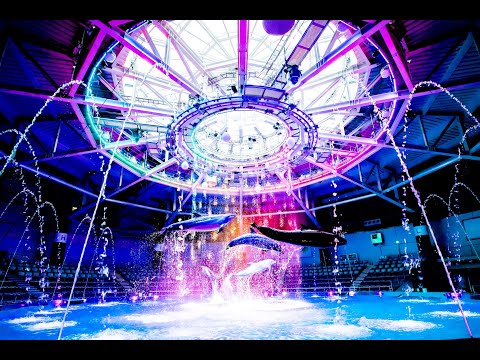
Maxell Aqua Park Shinagawa is an indoor aquarium within the Shinagawa Prince Hotel. The official access page gives it as about a 2-minute walk from the Takanawa exit of Shinagawa Station, served by the Shinkansen, JR lines, and the Keikyū Line. On a rainy-day outing with children, being close to the station is itself a big source of reassurance.
(Reference: Access|Maxell Aqua Park Shinagawa)
From Saturday, April 25 to Sunday, June 28, 2026, “FLOWER AQUARIUM by NAKED” is being held. The official event page introduces it as an event where you can experience a space in which flowers and underwater creatures are fused through visual production. As a seasonal event you can enjoy indoors even on a rainy day, it’s an easy choice for a June outing.
(Reference: FLOWER AQUARIUM by NAKED|Maxell Aqua Park Shinagawa)
The facility services page notes that the nursing room is inside The Stadium on the 2nd floor, that there are diaper-changing spaces at 6 locations in the building, and stroller parking at 3 locations. Since some areas run counter to the visiting route, check the facility services guide before visiting if you’ll use a stroller.
(Reference: Facility services|Maxell Aqua Park Shinagawa)
Ecute Shinagawa works as a supporting route for meals and shopping
What’s easy to use as a supporting option around Shinagawa Station is Ecute Shinagawa. On the official site, you can find categories such as bento and prepared foods, bakeries, cafés and restaurants, bookshops and stationery, and baby and children’s clothing. You can consider it as a route for getting meals or shopping done before or after Aqua Park Shinagawa.
(Reference: Ecute|official site, Shop list and floor map|Ecute Shinagawa)
However, Ecute Shinagawa includes shops located inside the ticket gates (ekinaka). The official access page notes that to use the inside-gate shops from outside the gates, you need to enter using a ticket that includes JR East’s Shinagawa Station in its route, a platform-entry ticket, or the “Touch de Ekinaka” IC entry service. Since there are conditions on the usage time of platform-entry tickets and the IC entry service, check the route in advance if you’ll combine it with Aqua Park Shinagawa.
(Reference: Access|Ecute Shinagawa)
Things to note|check inside-gate facilities and outdoor travel
The area around Shinagawa Station is convenient for being close to the station, but Maxell Aqua Park Shinagawa and Ecute Shinagawa are not directly connected within exactly the same building. On a heavy-rain day, it helps to check in advance the walk from the station to Aqua Park, stroller travel, and movement inside and outside the ticket gates.
Also, while Aqua Park Shinagawa is appealing as an aquarium, there are sound and light effects in the building. Depending on the infant or toddler, the stimulation may feel strong, so it involves less strain to plan a shorter visit, watching how the child is doing, rather than assuming a long stay.
Looking at it by age, which area should you choose?
The right rainy-day outing spot changes with the child’s age. In particular, families with 0–2-year-olds, 3–6-year-olds, and older elementary-school siblings each prioritize very different points.
For ages 0–2, Tokyo Dome City and Shinagawa are convenient
If you’re going out with a 0–2-year-old, you’ll want to prioritize the nursing room, diaper changing, a short stay, and distance from the station. In that sense, the area around Tokyo Dome City, with ASOBono!’s baby-only area and baby room, and the area around Shinagawa Station, which is close to the station and easy for a short stay, are good options.
On the other hand, KidZania Tokyo in Toyosu, TONDEMI at BIGFUN Heiwajima, and the Kids’ Dream Shopping Street lean heavily toward elements for ages 3 and up or elementary-school children, so for families with only 0–2-year-olds they may not easily become the main purpose.
For ages 3–6, Tokyo Dome City, Odaiba, and Toyosu
From ages 3–6, the options widen — indoor play spaces where they move their bodies, digital experiences, job experiences, exhibition-style facilities, and more. Tokyo Dome City’s ASOBono!, Odaiba’s The Kids and LittlePlanet, and Toyosu’s KidZania Tokyo are places this age group can enjoy.
That said, even as the age rises, you still need to handle naps, toilets, meals, and crowds. Rather than cramming in a long schedule, combining one main venue with meals and rest is sometimes just right for a rainy day.
If you have older elementary-school siblings, Odaiba, Toyosu, and BIGFUN Heiwajima
In families with older elementary-school siblings, matching only the younger child can bore the older one, while matching the older one can tire out the younger one. For such families with an age gap, Odaiba, Toyosu, and BIGFUN Heiwajima — which have several options — are worth considering.
Odaiba has a wide range of options, from indoor play spaces to Joypolis and LEGOLAND, and Toyosu is an area where it’s easy to combine KidZania with a shopping complex. BIGFUN Heiwajima is easy to combine with elementary-school events, TONDEMI, a game arcade, a movie, a hot spring, and more, so it’s easier to consider when the siblings are elementary-school age and up.
What to check before you set off on a rainy-day outing with kids
On a rainy day, it’s important to decide not only where to go but also how you’ll move around on the day, in advance. Especially when going to a complex, it helps to think through which place will be your main one, where you’ll move if it’s crowded, and where you’ll eat.
Pre-departure checklist
Before a rainy-day outing, check the following items.
Checking venues and events
- Checked opening hours and closed days on the official site
- Checked whether reservations are required and how to buy tickets
- Checked target ages, height limits, and usage conditions
- Checked the locations of nursing rooms and diaper-changing spaces
- Checked whether it’s easy to move around with a stroller
- Checked the route from the station on a rainy day
- Thought of an alternative for if you can’t get in when it’s crowded
Plan for the day
- Narrowed the main venue down to one
- Decided on a place to eat and rest
- Assumed it’s fine to wrap up in 1–2 hours
- Thought of an exit route for when the younger child gets sleepy
- Checked how to get home by both car and train
Rainy-day packing checklist
On a rainy day, you tend to carry more than on a sunny day. But since carrying too much makes getting around hard, organize the bare minimum you need.
For the child
- A change of clothes (one set, top and bottom)
- Towel
- Plastic bags
- Diapers and baby wipes
- Baby carrier
- Stroller rain cover
- Snacks and drinks
- A small toy or picture book
For parents / shared
- Mobile battery
- Health insurance card, medical certificate, and other necessary documents
- Folding umbrella or raincoat
- A bag for wet items
- A note on transport options in case you’re tired on the way home
For international families in Japan, what should you check?
For international families in Japan, what tends to cause trouble on a rainy-day outing with kids is less the venues themselves than “how hard the information is to find.” Even when there’s an English page, it may not go into detail on reservation methods, payment methods, stroller-use rules, or the location of nursing rooms.
What to check before checking for English support
- Whether there’s an English page: can you confirm not just basic information but prices, hours, and access?
- Reservation method: can you book in English, or is it Japanese-page only?
- Payment method: which of credit card, e-money, and cash can you use?
- Stroller-use rules: can you use one inside the building, and is there a place to park it?
- Nursing room and diaper changing: can you confirm the locations on a floor map?
- Whether you can bring food in: can you bring in baby food or snacks?
- Entry limits when crowded: can you enter without a reservation, or are there same-day entry limits?
Among the five areas here, some venues — around Tokyo Dome City, Odaiba, Toyosu, and Shinagawa Station — do have English pages or multilingual routes. However, having an English page and being able to fully confirm all the information for going out with children in English are two different things. Check the official site before you set off, and if you have concerns, it helps to contact the venue.
Frequently asked questions|June, rainy days, and indoor outings with kids in Tokyo
We organize the points parents tend to get stuck on for a rainy-day outing with kids, from the perspective of choosing an area.
- Q1. On a rainy day, is a single venue or a larger area better for going out with kids?
- For 0–3-year-olds or families with siblings, a larger area can make it easier to switch plans. If the indoor play space is crowded you can eat, and if the child gets tired you can just shop and head home — because there are fallback options. On a heavy-rain day, though, it helps to choose a place with little travel between venues.
- Q2. Which area is easy to recommend for going out with a 0–2-year-old?
- If you prioritize a nursing room, diaper changing, and a short stay, the area around Tokyo Dome City or around Shinagawa Station are good options. In particular, ASOBono! has a baby-only area for ages 0–24 months, and Maxell Aqua Park Shinagawa is convenient as a station-side indoor aquarium.
- Q3. If there’s an age gap between siblings, where works well?
- For families with an age gap, areas with several indoor facilities and dining places — like Odaiba, Toyosu, and BIGFUN Heiwajima — work well. Also check whether you can secure a place for the younger child to rest and a place to eat while the older one plays.
- Q4. Does the recommended area change between traveling by car and by train?
- It does. If you travel by train, Shinagawa, Tokyo Dome City, and Odaiba — which are close to the station — are good options. If you travel by car, after checking parking and ease of movement within the complex, Toyosu and BIGFUN Heiwajima also become easier to consider.
- Q5. What should you bring on a rainy-day outing with kids?
- It helps to prepare a change of clothes, a towel, plastic bags, diapers, baby wipes, a baby carrier, a stroller rain cover, snacks, drinks, a mobile battery, and a health insurance card and medical certificate. So your bags don’t get too heavy, also check the facilities at your destination.
- Q6. Even when the child is slightly under the weather, is it okay to go out if it’s an indoor facility?
- If the child isn’t feeling well, it’s important not to force an outing. If there’s a fever or clearly poor condition, avoid going out. If you’re unsure how to judge, consult your regular doctor or a public consultation service.
- Q7. Are there June-only events?
- On June 6 and 7, 2026, the “Kids’ Dream Shopping Street” for elementary-school children is scheduled at BIGFUN Heiwajima. Also, Maxell Aqua Park Shinagawa is holding “FLOWER AQUARIUM by NAKED” until June 28, 2026. Event status may change, so check the official sites for the latest information.
About the information in this article|please check official information before publication and before you go
Event information and facility details may change. Please assume confirmation at the time of publication and your own official check before setting off.
Primary sources we checked
This article is based on the following primary sources.
- Tokyo Dome City and ASOBono! official site
(Reference: ASOBono!|Tokyo Dome City) - Decks Tokyo Beach, The Kids, LittlePlanet, Tokyo Joypolis, and LEGOLAND Discovery Center Tokyo official sites
(Reference: Decks Tokyo Beach|official site) - KidZania Tokyo, urban dock LaLaport Toyosu, and Tokyo Toyosu Manyo Club official sites
(Reference: KidZania Tokyo|official site) - BIGFUN Heiwajima, TONDEMI Heiwajima, Tennen Onsen Heiwajima, and Ōta City official pages
(Reference: BIGFUN Heiwajima|official site) - Maxell Aqua Park Shinagawa and Ecute Shinagawa official sites
(Reference: Maxell Aqua Park Shinagawa|official site)
Note on the information posted
The event and facility information in this article is posted based on official information confirmed at the time of publication. Event dates, opening hours, prices, target ages, whether reservations are required, and facility details may change, so always check each official site before you head out.
Summary
On a rainy-day outing with kids, trying to complete everything at just one venue can leave both parent and child worn out when things don’t go well. That’s exactly why, for a June outing, it’s important to think in terms of “an indoor-friendly area where you can spend half a day” rather than a single venue.
For ages 0–2, Tokyo Dome City and Shinagawa are good options; for ages 3–6, Tokyo Dome City, Odaiba, and Toyosu; and if you have older elementary-school siblings, Odaiba, Toyosu, and BIGFUN Heiwajima. Whichever area you choose, it helps to check the nursing room, diaper changing, places to eat, travel routes, and whether reservations are required in advance.


![Water Play Spots Near Tokyo for Babies and Toddlers [2026]](https://en.tamagodaruma.com/wp-content/uploads/2026/06/tokyo-water-play-450x253.webp "Water Play Spots Near Tokyo for Babies and Toddlers [2026]")
![[Spring Break 2026] 8 Best Family Outing Spots in Japan: Inclusive Parks & Hidden Gems](https://en.tamagodaruma.com/wp-content/uploads/2026/03/intro_view-450x300.webp "[Spring Break 2026] 8 Best Family Outing Spots in Japan: Inclusive Parks & Hidden Gems")